ReBoot’s Legacy Rescued: Tech Triumph Restores 90s CGI Gem
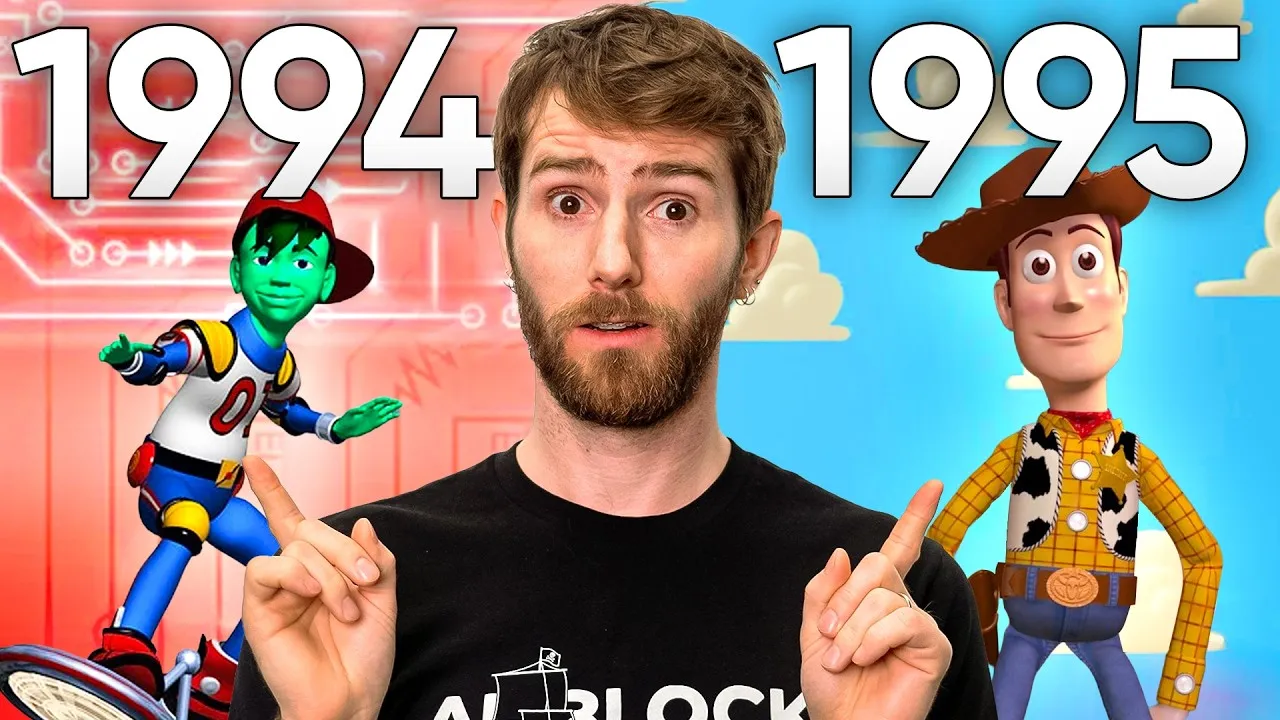
While 1995’s Toy Story rightly holds the title of the first fully computer-animated feature film, a groundbreaking achievement in television animation predates it by a full year. In 1994, Canadian studio Mainframe Entertainment unleashed ReBoot, the world’s first fully computer-animated TV series. This quirky, heartwarming, and adventurous show explored imaginative worlds, but its legacy has been frustratingly obscured.
Poor media preservation practices and limited initial distribution meant that for decades, the best available quality was often a pirated Russian DVD. Now, thanks to a dedicated fan effort and crucial technological support, ReBoot is finally receiving the high-quality restoration it deserves.
The Herculean Task of Data Recovery
The journey to restore ReBoot began not with a grand plan, but with a desperate plea. The creators of the ReBoot Rewind documentary, Jacob and Raquel, discovered that Mainframe still possessed the original master tapes. However, accessing the data held within these tapes proved to be an immense challenge.
The studio’s original equipment for reading these tapes had been discarded years ago, leaving the filmmakers with a collection of master tapes and no means to access them. Their Hail Mary was a public Facebook post seeking a D1 tape deck, a professional-grade, but now largely obsolete, piece of video technology.
This plea resonated with a community that understood the importance of preserving such a significant piece of animation history. Fortunately, a D1 deck surfaced in Germany.
The real hurdle, however, was acquiring and repairing these complex machines. This is where Kioxia, a company passionate about data integrity, stepped in, partnering with the ReBoot Rewind project to fund the acquisition of not one, but three D1 decks and the necessary rare parts for their restoration.
Diving into the Deep End: The D1 Tape Format
The D1 format, developed by Sony in 1986, was the pinnacle of professional digital video recording for its era. Physically, D1 cassettes are massive, and the format itself was designed for uncompressed, digital video – essentially bitmap images directly to tape, bypassing the need for codecs. This uncompressed nature is why Kioxia’s high-capacity CM7R SSDs were essential, capable of handling the massive 40GB of raw video data per tape without bottlenecks.
The D1 decks themselves are engineering marvels of the 1980s. Weighing around 250 lbs each and consuming 650W of power, these machines are packed with technology, including multiple Intel 80186 processors communicating over an internal Ethernet network. A new D1 deck would have cost upwards of a third of a million dollars in today’s money, making the $15,000 acquisition price, despite their broken state, a relative bargain.
Restoration Under the Magnifying Glass
The restoration process required specialized expertise. Mark, the proprietor of Disappearing Inc., a company dedicated to classic computer restoration, proved to be a linchpin.
With an estimated 100 people qualified to work on D1 decks at their peak, Mark might be one of the last remaining experts, particularly under the age of 40. His journey began with a community college course and a childhood fascination with fixing discarded electronics.
The challenges were numerous. Initial issues included error messages related to the clock signal, which turned out to be tied to the machine’s braking system.
More critically, the tape heads, rated for only 500 hours of use, had clocked over 650 hours on the most functional deck. The solution came from a retired technician in Germany who had a pair of brand-new, never-used refurbished BTS heads – a $8,000 acquisition that was crucial, as these parts are now exceptionally rare and highly sought after by other companies maintaining this legacy equipment.
The Final Capture and the Future of ReBoot
The project culminated in the capture of the very last ReBoot episode tape. This event was marked by the presence of Gavin Blair, one of ReBoot‘s co-creators, who expressed his profound gratitude for the preservation efforts.
The team faced a final hurdle with the tapes themselves, suffering from ‘sticky shed syndrome,’ where the binder holding the magnetic particles deteriorates over time. This necessitates careful handling and immediate capture.
Brian, another key member of the restoration team, developed custom software to manage the D1 decks, track errors, and streamline the capture process. Kioxia’s high-performance SSDs significantly boosted the workflow, enabling near real-time playback (25-35 frames per second) compared to the 7 FPS achieved with traditional spinning hard drives. This speedup is crucial for managing the immense task of processing 260 tapes, which include not only the 47 episodes but also multiple edits and bonus content.
The restoration team is also addressing technical challenges inherited from the original broadcast, such as interlacing artifacts visible on modern displays. They are essentially performing a quasi-re-edit to smooth out these issues while remaining true to the source material. The success of this project is proof of the power of fan dedication, technological innovation, and the critical role of companies like Kioxia in preserving digital heritage.
Who Should Care?
For animation historians and fans of 90s television, this is a monumental victory. It allows a new generation to experience ReBoot in the quality it was intended, and it secures a vital piece of animation history.
For technologists and archivists, the project is a compelling case study in the challenges and triumphs of digital preservation, highlighting the ingenuity required to rescue data from aging and obscure formats. The collaboration between fans, specialized technicians, and forward-thinking tech companies like Kioxia demonstrates a powerful model for future preservation efforts.
Specs & Key Features
- Original Series: ReBoot (1994-2001), first fully computer-animated TV series.
- Restoration Format: D1 Digital Component VTR (Sony, 1986).
- D1 Tape Cassette: Large physical size, uncompressed digital video.
- D1 Deck: Professional use, 250 lbs, 650W power consumption, multiple Intel 80186 processors.
- Restoration Hardware: Kioxia CM7R SSDs for high-speed data transfer (approx. 25-35 FPS capture rate).
- Challenges: Tape deterioration (sticky shed syndrome), aging D1 deck components (tape heads, brakes), obsolete technology.
- Total Tapes: 260 tapes containing episodes, alternate edits, and bonus content.
The ReBoot Rewind documentary is available, and fans can support the ongoing restoration project through donations. The restored episodes are being made available on YouTube, showcasing a significant win for digital preservation and a beloved animated series.
Source: Before Toy Story… There was ReBoot (YouTube)