The Unseen Psychology Behind Our Fascination with ‘Punch’
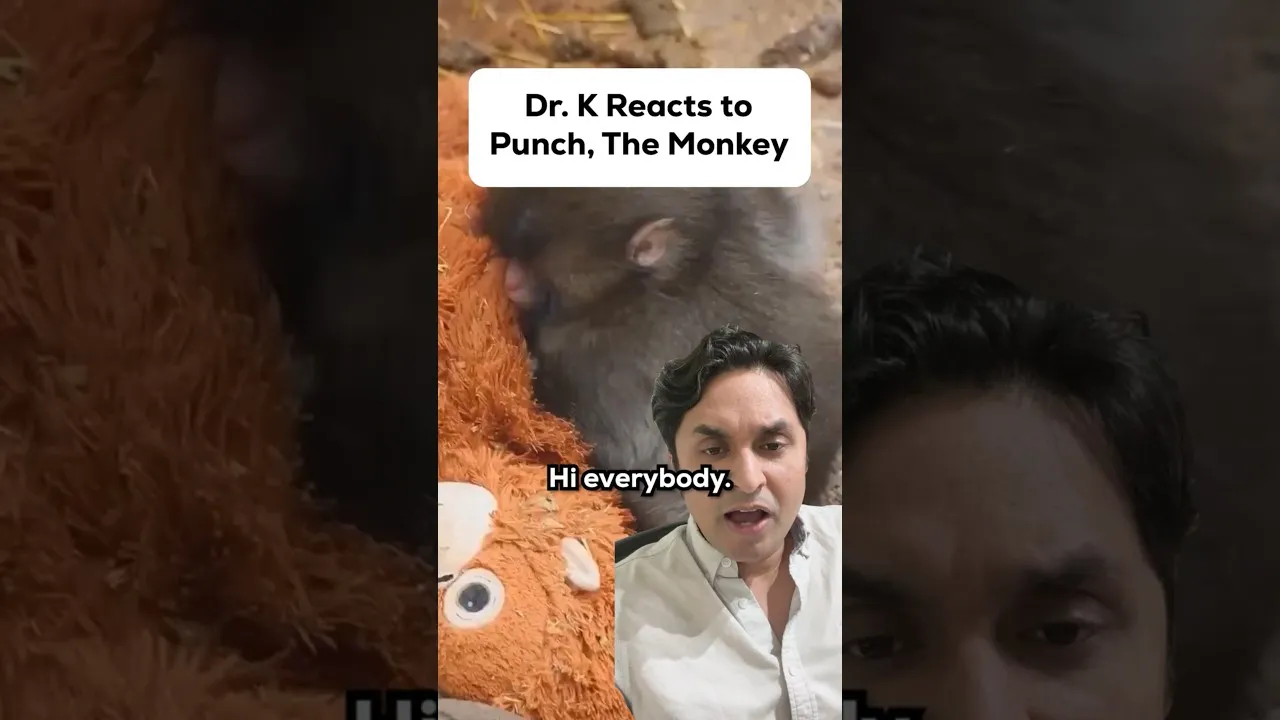
In a world saturated with digital content, certain characters and narratives capture our collective attention. One such phenomenon is the viral sensation known as ‘Punch.’ Dr. K, a psychiatrist specializing in technology addiction, offers a compelling psychological analysis of why this particular character resonates so deeply with audiences. The appeal of ‘Punch,’ he explains, stems from a complex interplay of innate human drives and sophisticated psychological defense mechanisms.
The ‘Cute’ Factor: Our Innate Compassion for the Vulnerable
Fundamentally, our attraction to ‘Punch’ is rooted in a fundamental aspect of human evolution: our predisposition to find babies and the vulnerable incredibly endearing. ‘We’ve evolved to think babies are incredibly cute,’ Dr. K notes. This innate response triggers feelings of compassion and protectiveness. When we see ‘Punch,’ a character depicted as a helpless infant, these deeply ingrained psychological circuits are activated, making us feel a strong sense of empathy and a desire to nurture.
Empathizing with Rejection: ‘Punch’ as a Mirror
Beyond its cuteness, ‘Punch’s’ narrative taps into a more profound and perhaps darker aspect of the human experience: the feeling of being ostracized and rejected. The story of ‘Punch’ involves a young being who is cast out and rejected by its own mother, finding solace only in an inanimate object. Dr. K draws a parallel between this narrative and the experiences of many individuals in contemporary society, particularly younger generations.
‘Does that sound like any generation that we know? Can you think of anyone who’s doing that?’ he asks, prompting viewers to consider their own potential feelings of alienation. The character’s struggle to find comfort in non-human entities—whether it be AI, video games, or other forms of digital escapism—resonates with those who have felt marginalized or disconnected from their communities.
This shared experience of seeking comfort in the face of rejection fosters a powerful sense of identification: ‘We empathize with Punch. We are Punch.’
Reaction Formation: Transforming Negativity into Perceived Goodness
Perhaps the most intriguing aspect of Dr. K’s analysis is the concept of ‘reaction formation,’ a psychological defense mechanism where individuals unconsciously transform undesirable impulses or traits into their opposites. He posits that our collective fascination with ‘Punch’ might be a manifestation of this mechanism, with audiences subconsciously identifying not with the vulnerable ‘Punch,’ but with ‘Punch’s’ mother.
‘I think the reason we all love Punch is because we are subconsciously identifying with Punch’s mom,’ Dr. K suggests. He elaborates on this by framing it as a way to process and distance ourselves from potential negative behaviors. The idea is that by expressing strong compassion for the rejected ‘Punch,’ we are, on a subconscious level, assuaging any guilt or awareness of our own potential to ostracize others, or perhaps even engage in similar behaviors.
The Mirror Test: Justification and Projection
To illustrate this point, Dr. K proposes two thought experiments. The first involves considering the perspective of ‘Punch’s’ mother. ‘Do you think that Punch’s mom in their monkey brain has a good reason to ostracize Punch? Is Punch’s mom justified in her mind to reject her child?’ He suggests that individuals who have experienced narcissistic parenting often recognize the way such justifications are constructed, leading to the conclusion that ‘the answer is always yes’ from the perspective of the parent.
The second experiment involves observing the reaction of someone who habitually ostracizes or victim-blames when presented with the story of ‘Punch.’ Dr. K predicts that such individuals would exhibit an ‘abundance of compassion’ for ‘Punch,’ highlighting the hypocrisy and the subconscious nature of reaction formation. This demonstrates how people may project their own negative behaviors onto others while simultaneously condemning similar actions in a narrative, thereby reinforcing their self-image as compassionate individuals.
Understanding Subconscious Motivations
‘Reaction formation is completely subconscious,’ Dr. K emphasizes. ‘When we ostracize someone, that negativity that we have, we have to turn into kindness somewhere else.’ The widespread love for ‘Punch’ may therefore indicate a collective, albeit unconscious, need to process and externalize feelings related to exclusion, rejection, and the potential for cruelty that exists within human nature. By engaging with ‘Punch’s’ story, audiences might be indirectly confronting these darker aspects of themselves and society, channeling any uncomfortable self-awareness into a seemingly innocent act of digital consumption.
Who is this Information For?
This psychological exploration is relevant to anyone who consumes popular media and engages with online content. It is particularly insightful for individuals interested in psychology, the impact of technology on behavior, and the dynamics of addiction.
The concepts discussed, such as empathy, ostracism, and defense mechanisms, are universal human experiences. While the discussion touches upon themes relevant to those who have experienced difficult family dynamics or social exclusion, it is not intended as a diagnostic tool.
Key Health Takeaways
- Innate Compassion: Humans are naturally wired to feel compassion for the vulnerable, which contributes to our attraction to characters like ‘Punch.’
- Empathy for the Rejected: Narratives involving ostracism and rejection can resonate deeply, prompting viewers to empathize with characters who mirror such experiences.
- Reaction Formation: This subconscious defense mechanism may explain why we sometimes express strong positive emotions towards others’ perceived wrongdoings while potentially engaging in similar behaviors ourselves.
- Self-Awareness: Understanding these psychological drives can foster greater self-awareness regarding our own emotional responses to media and social interactions.
- Seeking Comfort: In modern society, many individuals seek comfort in digital mediums when feeling isolated or rejected, a behavior mirrored in the ‘Punch’ narrative.
Disclaimer
This article is for informational purposes only and does not constitute medical advice. The views and opinions expressed by Dr. K are his own and based on his expertise in psychiatry and technology addiction.
If you have concerns about your mental health, technology use, or any other health-related issues, please consult with a qualified healthcare professional. Always seek the advice of your physician or other qualified health provider with any questions you may have regarding a medical condition.
Source: Dr. K Reacts To Punch The Monkey (YouTube)