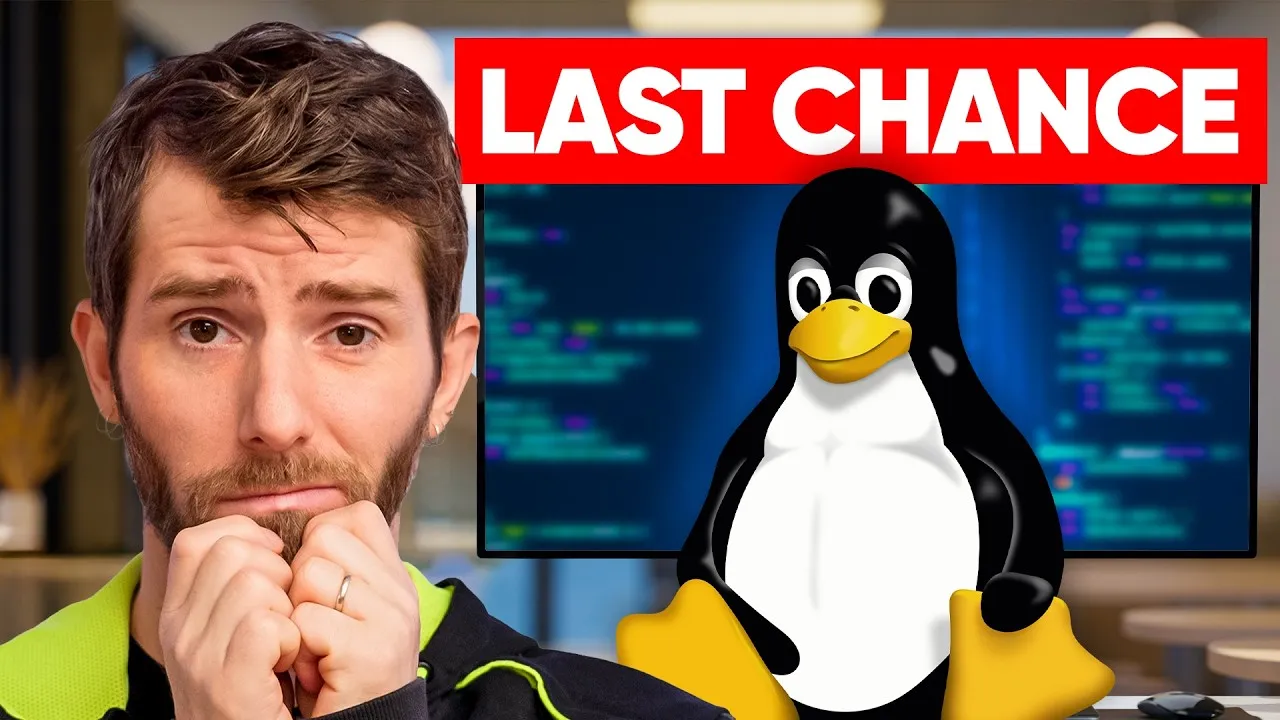
Linux’s Ambitious Return: A Month-Long Challenge Begins
In a bold move to escape the perceived privacy concerns and bloat of Windows 11, a prominent tech personality has embarked on a month-long challenge to switch his primary gaming PC to Linux. This isn’t the first time Linux has been put to the test in this environment, but with significant advancements in the open-source ecosystem, particularly driven by companies like Valve, the hope is that this attempt will yield a more seamless experience for gamers and everyday users alike.
Navigating the Distro Deluge: The First Hurdle
The initial and perhaps most daunting challenge for newcomers to Linux is the sheer volume of choices. With dozens of ‘distros’ (distributions) available, each tailored to different user needs and preferences, the selection process can lead to ‘choice paralysis.’ While enthusiasts might revel in the customization, the average user can find it overwhelming.
Previous attempts to guide users through this selection process via online articles have been criticized for their quality, often presenting biased or unhelpful recommendations. This time, the experimenters turned to a variety of sources, including AI like ChatGPT and community forums like Reddit, to find the best fit.
The Contenders: Pop!_OS, Manjaro, and the Rise of Gaming-Focused Distros
After sifting through numerous recommendations, a few key contenders emerged for a gaming-centric Linux experience:
- Pop!_OS: Based on Ubuntu LTS, it’s known for its user-friendly approach and has been a consistent recommendation. However, past experiences with a critical bug have left some hesitant.
- Manjaro: An Arch-based distro, Manjaro benefits from extensive documentation and a large community, making troubleshooting potentially easier.
- ChimeraOS: This distro leans heavily into a console-like experience, which may not suit all desktop users.
- SteamOS: While still considered a potential major shift for the Linux desktop, its primary focus on the Big Picture mode and limited hardware support make it less ideal for a broad range of desktop users.
- Casio OS: Another Arch-based option, it’s relatively new but gaining traction with strong community support and guides.
- Bazite: Explicitly designed for gaming, Bazite boasts baked-in support for HDR, variable refresh rates, and easy integration with non-Steam launchers and emulators. It’s based on Fedora.
The Verdict: Initial Choices and Early Stumbles
The initial choices for the challenge participants varied, highlighting the subjective nature of distro selection:
- One participant, influenced by ChatGPT’s recommendations and a desire for a familiar base, opted for Pop!_OS, despite a previous negative encounter.
- Another, seeking to expand their experience with Arch Linux, chose Casio OS, drawn by its gaming focus and community buzz.
- The primary participant, after much deliberation and weighing ease of use against cutting-edge features, settled on Bazite with the KDE desktop environment. This choice was influenced by Bazite’s gaming-first approach and seemingly more digestible documentation.
However, the transition was far from smooth. Early installation attempts were plagued by issues ranging from hardware detection problems (a drive not being recognized) to unexpected errors like ‘Verifying shim sbate date failed’ and the need to disable Secure Boot. One participant even encountered a corrupted drive, turning a planned quick setup into a troubleshooting nightmare.
Gaming Woes and Audio Oddities
Once installations were finally complete, the real test began: gaming and general usability. While some applications like Discord and OBS installed and worked with surprising ease (though Discord’s security warning was noted), the gaming experience proved more challenging.
Problems encountered included:
- Games failing to launch or exhibiting graphical glitches.
- Audio issues, ranging from no game volume to incredibly low Discord audio, requiring complex troubleshooting and restarts.
- Display scaling problems that seemed tied to refresh rate adjustments.
- A specific issue with Valve’s own Left 4 Dead 2, requiring a workaround involving Vulkan to function correctly, despite being a first-party title.
- Frustratingly, a game session abruptly ending with an inability to type or control the mouse, forcing a return to Windows for immediate needs.
Glimmers of Hope and the Linux Advantage
Despite the significant hurdles, there were positive aspects:
- Driver Support: For many, essential hardware like GPUs (both AMD and Nvidia) and audio interfaces were detected and configured automatically, a stark contrast to the manual driver hunting often required on Windows.
- Open Source Transparency: The explicit security warnings for applications like Discord, while alarming, were seen as a valuable transparency feature, alerting users to potential risks.
- Cosmic Store: The promise of an integrated app store, like Pop!_OS’s Cosmic Store, offers a potentially more user-friendly experience than the Windows Store.
- Network Shares: Mounting network shares (SMB) was remarkably easy and intuitive for some users.
- Performance: When games did run, performance was generally good, and the underlying system felt responsive.
The Verdict So Far: A Work in Progress
After the initial phase of the challenge, the consensus is that while Linux has made massive strides, particularly in gaming thanks to efforts like Valve’s Proton, the path to a seamless Windows-replacement for gamers is still paved with potential frustrations. The initial setup and troubleshooting can be unforgiving, and even seemingly simple tasks can devolve into complex problem-solving.
However, the core advantages of Linux – its open-source nature, transparency, and the power of its community – remain compelling reasons for users to keep trying. The month-long challenge is ongoing, and whether Linux can ultimately conquer the desktop, especially for demanding users like gamers, remains to be seen.
Specs & Key Features (Distro Focus)
Pop!_OS
- Base: Ubuntu LTS
- Key Features: User-friendly, good hardware support out-of-the-box, Cosmic Store (upcoming).
- Target User: New Linux users, gamers, general desktop users.
Bazite (KDE Plasma)
- Base: Fedora
- Key Features: Gaming-first optimizations, HDR support, VRR support, easy non-Steam launcher integration, emulation-friendly, KDE Plasma desktop.
- Target User: Gamers seeking a streamlined Linux experience.
Casio OS
- Base: Arch Linux
- Key Features: Console-like experience, strong community support, actively developed.
- Target User: Gamers looking for a dedicated gaming OS, Arch enthusiasts.
Availability and Pricing
All mentioned Linux distributions (Pop!_OS, Bazite, Casio OS, Manjaro, Fedora, Ubuntu) are free and open-source. They can typically be downloaded as ISO images from their respective official websites and installed on compatible hardware. The challenge involves installing these on existing gaming PCs, replacing or coexisting with Windows.
Who Should Care?
This challenge is crucial for:
- Gamers: Curious about ditching Windows for a more private and potentially more customizable gaming environment.
- Privacy-Conscious Users: Those concerned about data collection and telemetry in mainstream operating systems.
- Tech Enthusiasts: Anyone interested in the evolution of Linux and its increasing viability as a mainstream desktop OS.
- Developers: Linux remains a powerful and flexible platform for software development.
The ongoing experiment will provide valuable insights into the current state of Linux gaming and desktop usability, offering a balanced perspective for those considering the switch.
Source: FINE! I’ll Try Linux ONE MORE TIME…. (YouTube)