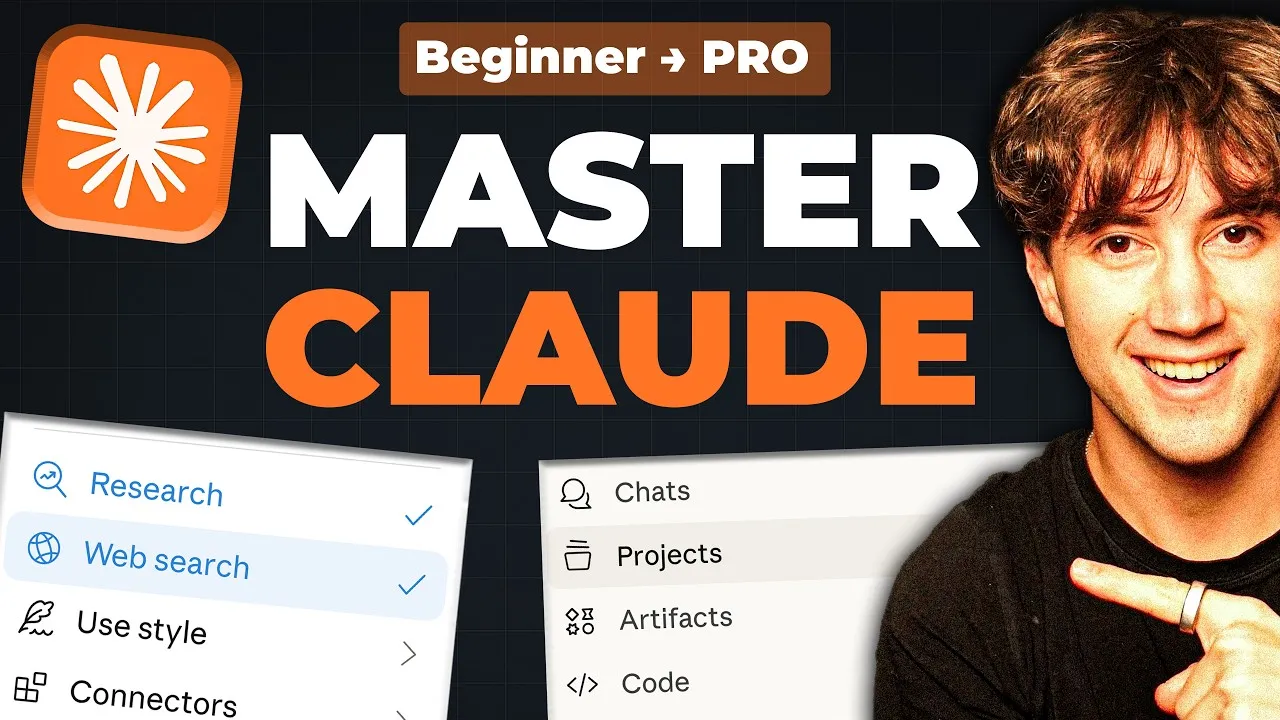
Claude 3.5 Powers Advanced AI Integration for All Users
Anthropic’s latest advancement, Claude 3.5, is poised to transform how individuals and businesses interact with artificial intelligence. Moving beyond simple conversational AI, Claude 3.5 introduces a suite of powerful, integrated features designed to act as a personal executive assistant, streamlining complex tasks and enabling users to build their own AI operating systems.
Understanding Claude’s Tiers and Pricing
Getting started with Claude is accessible, with a robust free plan that includes access to Claude Sonnet, web search, file uploads, and artifacts. This tier is ideal for exploring Claude’s capabilities. For users looking to unlock the full potential and get the most out of the platform, Anthropic offers paid plans.
The recommended upgrade, often around $20 per month when billed annually, marks a significant step up in performance and utility, making users feel more invested and enabling them to leverage the AI’s advanced features more effectively. The company emphasizes that users should upgrade when they begin hitting limits on the free plan, signaling a natural progression in their AI utilization.
Mastering the Art of the Prompt
The effectiveness of Claude, like any advanced AI model, hinges on the quality of user input. The transcript highlights a critical distinction between basic, generic prompts and detailed, context-rich instructions. A prompt like “How do I go viral on social media?” yields superficial, widely available advice.
In contrast, the “Goal, Context, Action, Output” (GCAO) framework provides a blueprint for significantly better results. This involves specifying the target audience, the user’s business context (e.g., coaching business, $15k monthly revenue, Instagram/LinkedIn presence), current challenges (e.g., generic engagement, likes from non-buyers), and desired outcomes.
By detailing the action required (e.g., “Identify specific content types that attract buyers”) and the precise output format (e.g., “Three content angles with one-sentence explanations, no generic advice on consistency or hashtags”), users can elicit highly tailored and actionable responses. This iterative approach, where users refine prompts based on AI output, is key to maximizing Claude’s utility.
Unlocking Advanced Capabilities: Web Search and Vision
Claude 3.5 elevates itself beyond a text-based chatbot with two groundbreaking features: real-time web search and visual understanding (Vision). The web search capability allows Claude to access and synthesize current information from the internet, transforming it into a powerful research and analysis tool.
Users can prompt Claude to investigate competitors, research market trends, or gather up-to-date information on any topic, receiving synthesized reports directly within the chat. This feature, activated via a simple toggle, ensures responses are relevant and grounded in current data, mitigating the risk of outdated or fabricated information.
Vision adds another layer of intelligence by enabling Claude to analyze images. Users can upload screenshots, photos, or documents, and Claude can provide feedback, identify issues, or extract information.
For instance, Claude can analyze a YouTube thumbnail to suggest improvements for click-through rates, assess the condition of plants from a photo, or review website designs for conversion optimization. This visual intelligence opens up a vast array of applications, from marketing analysis to practical problem-solving.
Artifacts: Building Interactive Tools with Natural Language
Perhaps the most revolutionary feature introduced is ‘Artifacts.’ This capability allows users to create functional tools, calculators, dashboards, forms, and interactive documents directly within the Claude interface, using only natural language prompts. Without writing a single line of code, users can describe their desired tool, and Claude will generate a working version. For example, a user could request an ROI calculator for an AI automation agency, specifying inputs like hourly rate and hours spent on manual tasks.
Claude would then build a dynamic calculator that can be published and shared. This feature drastically reduces the time and technical expertise required to develop custom applications, enabling rapid prototyping and deployment of solutions that would traditionally take developers days.
Custom Instructions: Crafting Your Personal AI Assistant
The ultimate personalization comes with ‘Custom Instructions.’ This feature allows users to provide Claude with permanent guidelines and preferences that it will adhere to across all conversations. By setting up a custom profile, users can define their identity, communication style, goals, daily schedule, and specific avoidances. This transforms Claude from a general-purpose AI into a bespoke assistant that understands the user’s unique needs and working style.
For example, a user could instruct Claude to always communicate in a direct style, prioritize tasks related to a specific business goal, or avoid jargon. This persistent memory and tailored interaction style are crucial for building an effective AI operating system, where the AI acts as a true thinking partner rather than just a reactive tool.
Building Your AI Operating System
The culmination of these features—advanced prompting, web search, vision, artifacts, and custom instructions—allows users to construct their personal ‘AI Operating System.’ This involves defining the AI’s persona and operational parameters through custom instructions, then leveraging the other tools for specific tasks like research, content creation, or tool development. The goal is to create a seamless workflow where the AI proactively assists the user, anticipating needs and delivering highly relevant, personalized support. This approach fundamentally shifts the user’s relationship with AI, moving from instruction-giver to collaborator.
Why This Matters
Claude 3.5’s integrated approach signifies a major leap in making advanced AI accessible and practical for everyday use. By consolidating powerful features like real-time web research, image analysis, and no-code tool building within a single platform, Anthropic is lowering the barrier to entry for sophisticated AI applications.
The ability to create custom AI operating systems means that individuals and small businesses can leverage AI as a strategic partner, automating complex tasks, gaining deeper insights, and accelerating innovation without requiring extensive technical expertise or a suite of disparate tools. This democratization of advanced AI capabilities has the potential to significantly boost productivity and unlock new creative possibilities across all industries.
Source: FULL Claude Tutorial for Beginners in 2026! (Become a PRO!) (YouTube)