Explore the Universe’s Loneliest and Scariest Places
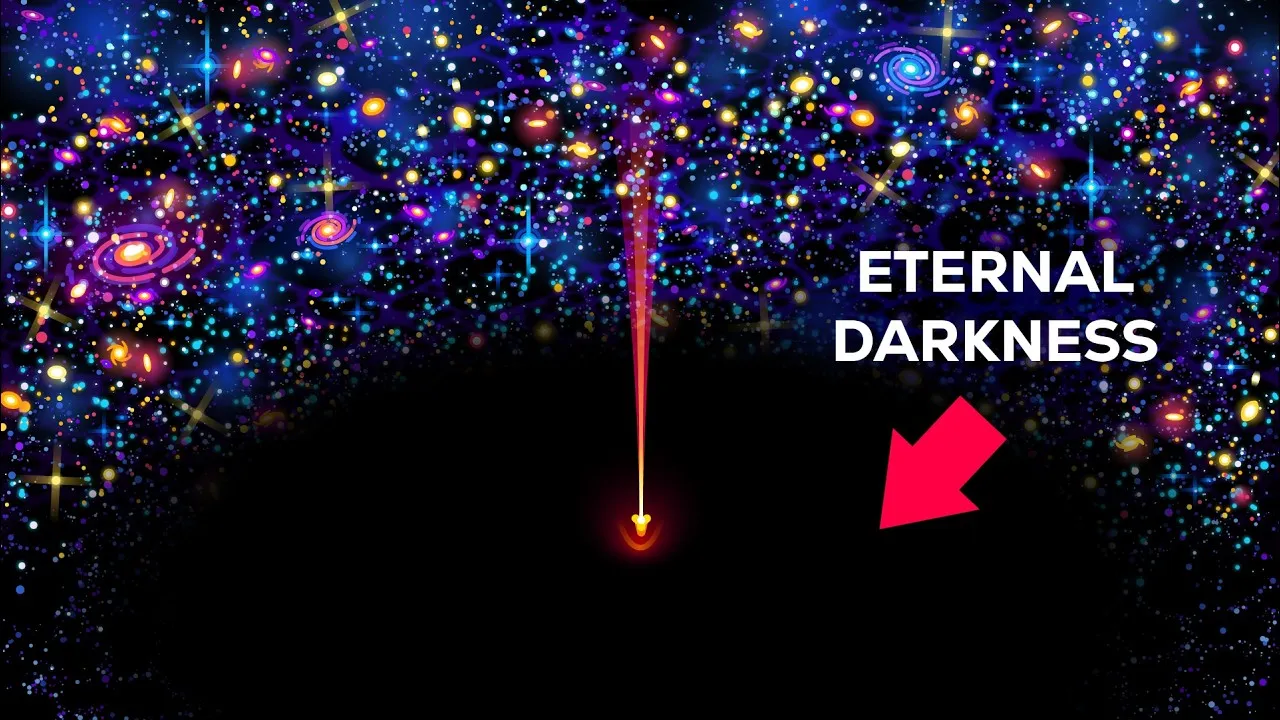
The universe is a vast and mysterious place, and much of it is comprised of immense, empty regions known as cosmic voids. These areas, characterized by a profound lack of galaxies, stars, and light, are the loneliest and perhaps scariest locations imaginable. This guide will take you on a journey into the heart of these cosmic deserts, exploring their nature, formation, and potential future impact on the universe.
What You Will Learn:
- The nature and characteristics of cosmic voids.
- How voids are formed and why they are so empty.
- The role voids play in the structure and fate of the universe.
- The unique conditions found within voids, including void galaxies and the influence of dark energy.
Prerequisites:
No specific technical knowledge is required. A sense of wonder and curiosity about the cosmos is all you need.
Journey into the Cosmic Void
1. Understanding Cosmic Voids
The vast majority of the cosmos is made up of voids – gigantic, unfathomably large spaces almost entirely devoid of galaxies, stars, or light. These are not merely the absence of matter but are active regions where space itself is stretched violently. They are often described as bubbles of eternal night, stretching hundreds of millions of light-years across.
2. The Scale of the Void
To grasp the immensity of voids, consider this: if the Local Void, a relatively small void, were a bright object, it would fill 40% of the night sky as seen from Earth. The Boötes Supervoid, one of the largest known, is around 300 million light-years wide. It is a cosmic desert so vast that it should contain thousands of galaxies, yet it is characterized by perfect, absolute darkness.
3. The Cosmic Web and Void Formation
Astronomers once believed the universe was uniformly filled with galaxies. However, observations revealed a structure known as the cosmic web – a vast network of sheets and filaments of galaxies, gas, and dark matter, surrounding enormous empty gaps. Voids are these gaps. They form because gravity pulls matter towards denser regions, leaving the areas in between relatively empty.
4. Why Voids Are So Empty
Gravity plays a crucial role in maintaining the emptiness of voids. Since there is very little mass inside a void, the gravitational pull from the dense galaxy clusters and superclusters on the edges of the void is significantly stronger. This acts like a tug-of-war, with the edges of the void pulling matter out, making the void even emptier over time and the surrounding structures denser.
5. The Difficulty of Entering Voids
For galaxies, entering a void naturally is extremely difficult. The way gravity works at the edges and within voids seems to actively push galaxies away. It’s almost as if the void itself repels anything trying to enter. While a spaceship could technically fly into a void, the primary challenge would be escaping the gravitational pull of your home galaxy, and the lack of anything to see or do within the void makes such a journey practically meaningless for exploration.
6. Void Galaxies: Lonely Fireflies
Despite the extreme emptiness, voids are not entirely devoid of galaxies. Faint tendrils of dark matter often penetrate into the void, and at their tips, we find rare and lonely galaxies. These ‘void galaxies’ are isolated, often smaller, bluer, and contain more gas than galaxies in denser regions. They are aging in slow motion, birthing new stars more slowly and calmly.
7. Voids as Future Havens?
Because void galaxies are aging more slowly and are less affected by the chaotic merging and collisions common in dense galaxy clusters, they could potentially be some of the last habitable places in a dying universe. It’s theorized that in the far future, perhaps 100 trillion years from now, advanced civilizations might seek refuge in these slow-aging environments to extend their existence.
8. The Role of Dark Energy
Dark energy, the mysterious force believed to be accelerating the expansion of the universe, has a visible effect within voids. In these empty regions, where gravitational forces are weak, dark energy’s expansionary push becomes apparent. It causes the voids to grow larger, stretching space and contributing to the eventual fate of the universe.
9. The Future Fate of the Universe
As voids grow larger, they begin to break apart the cosmic web. The filaments of galaxies are slowly ripped apart, and the walls of galaxies are thinned out and pulled towards denser regions. The expansion driven by dark energy causes voids to merge, and in the far future, supervoids are predicted to take over the observable universe. This process will lead to a universe dominated by emptiness, a gigantic void of nothingness, making it the loneliest place in existence.
Conclusion: A Glimpse of the Ultimate Emptiness
Cosmic voids represent the most extreme environments in the universe – vast expanses of darkness and emptiness that shape the cosmos and may ultimately determine its final state. While terrifying in their scale and isolation, they also hold clues to the universe’s past, present, and future, including the profound influence of dark energy and the potential for life to persist in the most unlikely of places.
Source: Let’s Travel to the Scariest Place in The Universe (YouTube)