AI Agents Mastered: New Tools Tame the Chaos
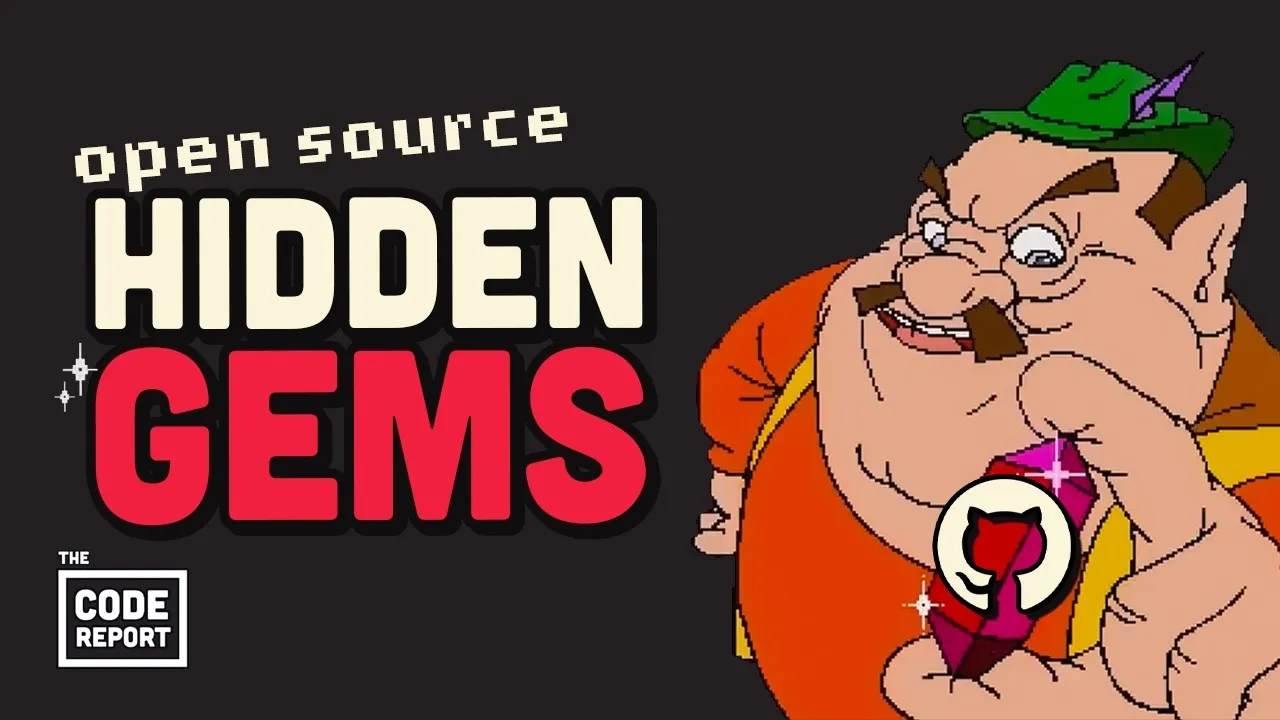
The landscape of software development is undergoing a seismic shift, driven by the rapid proliferation of AI agents. Once a domain requiring deep expertise across multiple disciplines, building products is now increasingly about orchestrating intelligent AI systems. However, this new era of AI-driven development brings its own set of challenges, from managing agent interactions to ensuring the quality and security of AI-generated code. Fortunately, a wave of new open-source tools is emerging to help developers navigate this complex terrain, offering solutions for agent management, prompt engineering, predictive analysis, UI design, context management, model customization, and even custom LLM development.
Orchestrating AI Teams with ‘Agency’
Traditionally, becoming an indie full-stack developer meant mastering front-end, back-end, DevOps, security, UI/UX design, and more. Today, the paradigm has shifted: instead of acquiring all these skills, developers can now effectively ‘hire’ specialized AI agents. The ‘Agency’ project, a free and open-source initiative, provides a comprehensive library of agent templates tailored for virtually every role within a startup—from front-end and back-end developers to security engineers and growth hackers. These agents can be seamlessly integrated using tools like Claude Code, streamlining the process of transforming an idea into a functional product without the need for manual implementation of each skill set.
‘Prompt Fu’: Unit Testing for Your Prompts
As AI agents become integral to application development, ensuring the quality and effectiveness of the prompts that guide them is paramount. ‘Prompt Fu’, recently acquired by OpenAI, functions as a sophisticated unit testing framework specifically designed for AI prompts. This tool allows developers to rigorously test various prompts against different AI models, optimizing performance for their applications. Beyond performance tuning, ‘Prompt Fu’ offers automated red teaming capabilities to identify vulnerabilities such as prompt injection attacks. This is crucial for preventing malicious actors from exploiting AI systems, for instance, by tricking a chatbot into revealing sensitive API keys.
‘Microsh’: Predicting the Future with AI
Navigating the volatile landscape of market trends and emerging opportunities requires foresight. ‘Microsh’ is a multi-agent AI prediction engine that aims to provide just that. By extracting data from the internet—including breaking news and financial indicators—it constructs a simulated digital world. Within this environment, multiple AI agents with distinct personalities interact and react to the data, creating a dynamic, evolving artificial social network. This sophisticated simulation can be leveraged to analyze trends at both macro and micro levels, predicting strategies that could lead to significant business success. While the current interface may be in Chinese, its underlying predictive capabilities offer a powerful tool for strategic planning.
‘Impeccable’: Elevating AI-Generated UI Design
A common pitfall in AI-generated applications is the creation of generic or overly complex user interfaces. ‘Impeccable’ is an open-source project dedicated to refining front-end design for AI-powered applications. It offers 17 distinct commands designed to enhance UI aesthetics and usability. Features like the ‘distill’ command simplify complex interfaces, while ‘colorize’ allows for brand-specific color integration. Further customization is possible with commands such as ‘animate’ and ‘delight’ to create more unique and engaging user experiences, moving beyond the often-criticized purple gradients seen in many AI-generated apps.
‘Open Viking’: Smarter Context Management for Agents
Effective context management is a cornerstone of building intelligent AI agents. When an agent’s context is poor, its output suffers. ‘Open Viking’ addresses this by providing a database specifically designed for AI agents. Unlike traditional vector databases, it organizes an agent’s memory, resources, and skills within a file system structure. This approach not only unifies context but also employs a tiered loading system to significantly reduce token consumption, leading to cost savings. Additionally, ‘Open Viking’ automatically compresses content and refines long-term memory, enabling agents to become more intelligent and efficient over time.
‘Heretic’: Removing Guardrails for Uncensored AI
Many pre-trained large language models (LLMs) come with built-in guardrails that restrict them from generating certain types of content, often referred to as censorship. ‘Heretic’ offers a solution for developers seeking to bypass these restrictions. Using a technique called ‘obliteration,’ this tool automatically removes these guardrails without requiring expensive post-training fine-tuning. By applying ‘Heretic’ to a model like Google’s Gemma, developers can obtain a model free from its original limitations, capable of obeying a wider range of commands. This allows for greater flexibility in exploring sensitive or unconventional AI applications.
‘Nano Chat’: Building Your Own LLM from Scratch
For those who require complete control over their AI models, ‘Nano Chat’ provides the means to build a custom LLM from the ground up. This project implements the entire LLM pipeline, including tokenization, pre-training, fine-tuning for chat, evaluation, and a web UI for interaction. Remarkably, it enables users to train their own small language model for approximately $100 in GPU time. While these custom models may not rival the scale and capabilities of giants like Claude, GPT-5, or Gemini, they offer unparalleled control and customization for specific use cases.
Why This Matters
The proliferation of these open-source tools signifies a democratization of advanced AI development. Developers are no longer solely reliant on proprietary, closed-source solutions. ‘Agency’ and ‘Prompt Fu’ empower individuals and small teams to build sophisticated AI-driven products more efficiently and reliably. ‘Microsh’ offers a glimpse into AI-powered predictive analytics, potentially revolutionizing strategic decision-making. ‘Impeccable’ tackles the often-overlooked aspect of user experience in AI applications, while ‘Open Viking’ addresses critical cost and performance factors through intelligent context management. Furthermore, ‘Heretic’ and ‘Nano Chat’ provide unprecedented control over AI models, enabling experimentation and customization previously only accessible to large research labs. Together, these tools are lowering the barrier to entry for creating complex AI systems, fostering innovation and pushing the boundaries of what’s possible in software development.
Source: 7 new open source AI tools you need right now… (YouTube)