Find Your Drive: Why We Struggle to Pursue Meaning
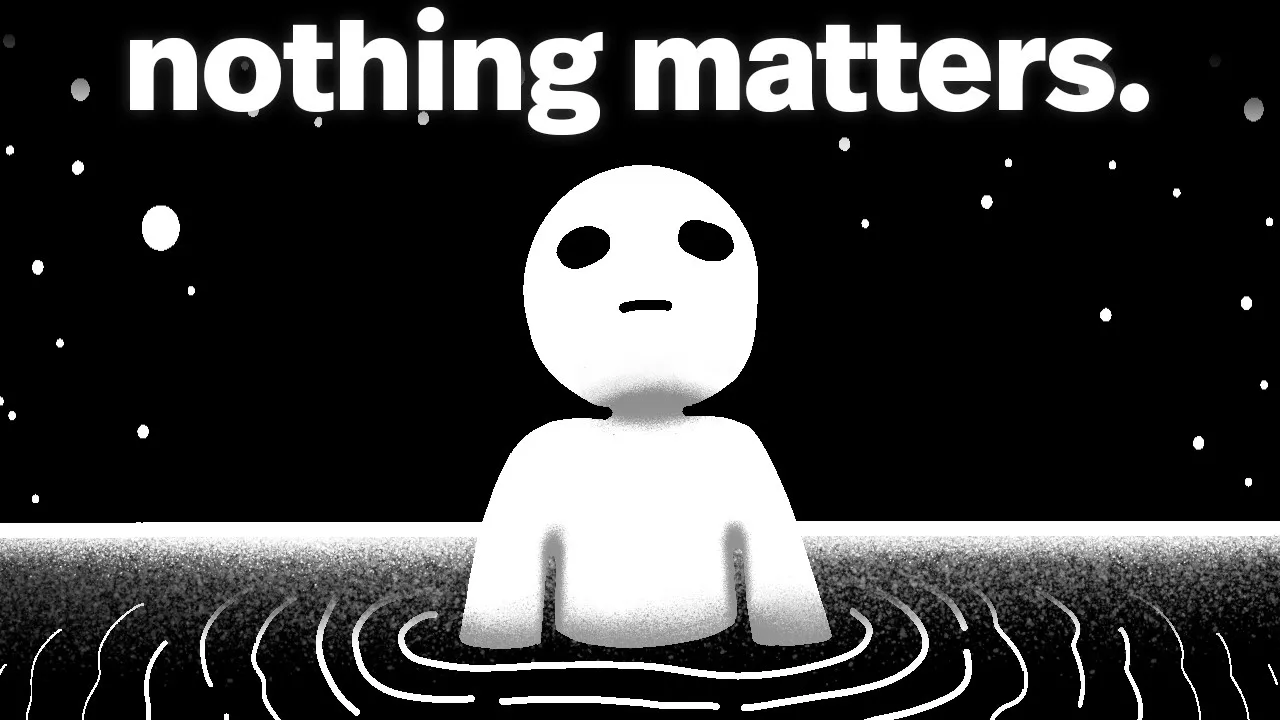
In a world grappling with existential threats and personal disarray, many find themselves adrift, struggling to connect with a sense of purpose. A striking example, the tale of a penguin venturing alone towards the mountains instead of its colony or the sea, captures this human yearning for something more. While some see nobility in such a seemingly impossible quest, others, including psychologists and neuroscientists, suggest it might be a biological imperative – a complex coping mechanism for the inherent fear of mortality.
The Modern Dilemma: Loss of Control and Purpose
The feeling of being adrift is amplified by a perceived loss of self-determination. On a global scale, issues like inflation, geopolitical conflicts, and the rise of artificial intelligence displacing human workers contribute to a sense of powerlessness. Even on a personal level, many report an inability to act on known beneficial behaviors. Simple tasks, like emailing a professor for an extension, can feel insurmountable due to pervasive issues like dopamine addiction fueled by social media, video games, and other digital stimuli. This disconnect between knowing what to do and being able to do it leaves individuals feeling unfulfilled and lacking in life’s effort.
The “Nihilistic Penguin”: A Metaphor for Human Striving
The story of the penguin, often interpreted as a symbol of the triumph of spirit against all odds, resonates deeply. Viewers comment, “This penguin may not survive, but he’ll certainly live,” marveling at its apparent courage. However, a more scientific perspective posits that this drive, even in the face of certain failure, might be a biological anomaly or a malfunction. This interpretation challenges the romantic notion of human endeavor, suggesting that our relentless pursuit of meaning might be rooted in something less grand.
Terror Management Theory: Coping with Mortality
Psychological research, particularly Terror Management Theory, offers a compelling explanation for our deep-seated need for meaning and purpose. The theory posits that as conscious beings, humans are unique in their awareness of inevitable death. While all organisms are wired for survival, only humans grapple with the knowledge of their own mortality. This fundamental conflict—the drive to survive versus the certainty of death—creates a deep-seated anxiety. To manage this terror, humans develop psychological defenses, including the creation of meaning, purpose, self-esteem, and cultural worldviews. These constructs, according to the theory, serve as buffers against the existential dread of death, providing a sense of symbolic immortality.
Meaning as a Biological Defense
From this viewpoint, the human pursuit of meaning, purpose, and self-worth can be understood as a sophisticated, evolved delusion. These are not necessarily inherent truths but rather adaptive mechanisms that help us cope with the terror of our finite existence. This perspective can be unsettling, as it questions the very foundations of what we believe gives life value.
The Search for Answers: Personal Journeys and Scientific Inquiry
Many individuals, confronted with this existential dilemma, are left with the daunting task of discovering their own meaning. However, the guidance offered is often vague, such as “life is a journey, figure it out yourself.” This can feel unhelpful, leaving people struggling without a clear path forward.
The speaker shares a personal journey of grappling with these questions. Raised in a culturally religious household, a skepticism towards dogma led to atheism. A shift occurred during the study of meditation, initially approached for its observable physiological and neurological benefits. Through consistent practice, the speaker experienced what is described as a “knowing”—a profound, intuitive sense of future events, such as the outcome of a medical school application. These experiences, while initially baffling and leading to questions about delusion or psychological coping, became a recurring phenomenon.
Navigating Belief and Doubt
Over two decades, these experiences, coupled with life events like marriage and parenthood, fostered a belief in concepts like karma and dharma. However, a recent turn towards a deeper understanding of biology, neuroscience, and psychology has reintroduced doubt. Concepts like “adaptive misbelief”—false beliefs that are nonetheless beneficial to an organism—raise the question of whether these profound spiritual or meaningful experiences are merely sophisticated biological illusions designed to help us endure life.
The Unanswered Question: Biological Copium or Deeper Reality?
The article concludes by acknowledging the profound mystery at the heart of human existence. Is the drive for meaning a noble pursuit, a sign of a deeper consciousness, or simply a biological coping mechanism—the highest form of “copium”—to shield us from the terror of death? The speaker admits to not having definitive answers, highlighting the ongoing debate between scientific understanding and personal experience. This uncertainty underscores the complex, often contradictory nature of our search for purpose in a vast and often indifferent universe.
Key Health Takeaways
- Many people struggle to find meaning and purpose due to a perceived loss of control in their lives and pervasive digital distractions.
- Terror Management Theory suggests that our pursuit of meaning, purpose, and self-esteem may be an evolved psychological defense against the fear of death.
- Personal experiences, such as meditation, can lead to profound insights but also raise questions about whether these are genuine spiritual encounters or adaptive biological mechanisms.
- The search for meaning is a deeply personal journey, often involving a tension between scientific understanding and subjective experience.
- It is important to consult with healthcare professionals for personalized advice on mental well-being and navigating existential concerns.
Disclaimer: This article is for informational purposes only and does not constitute medical advice. Always consult with a qualified healthcare provider for any health concerns or before making any decisions related to your health or treatment.
Source: Why You Can't Find Meaning (YouTube)