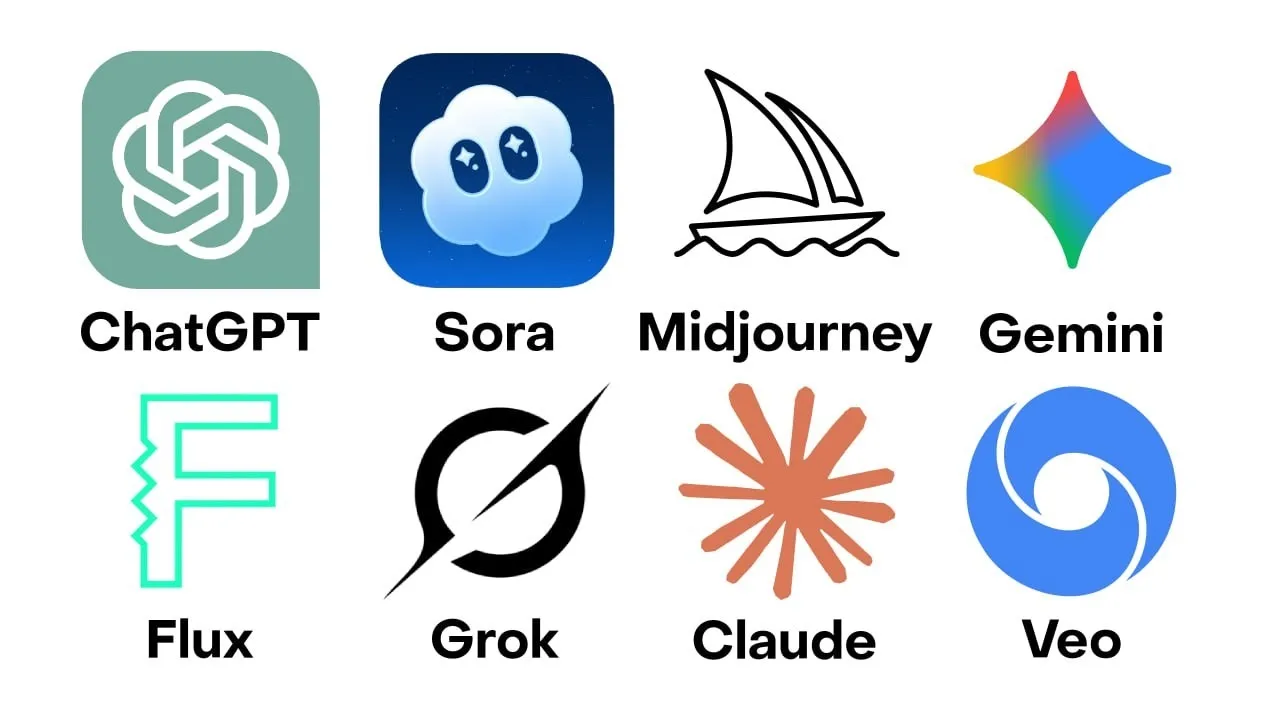
AI’s Rapid Evolution: From Text to Video and Beyond
The artificial intelligence landscape is expanding at an unprecedented pace, with new models and capabilities emerging constantly. From sophisticated large language models (LLMs) like ChatGPT and Claude to groundbreaking advancements in video generation and specialized coding assistants, AI is transforming how we interact with technology and perform complex tasks. This article delves into the latest developments, comparing key players and exploring the implications of these powerful tools.
ChatGPT: The Versatile All-Rounder
OpenAI’s ChatGPT remains a dominant force, offering a robust suite of capabilities. As a large language model, it excels at processing text input and generating text output, making it invaluable for writing, coding assistance, and general question-answering. Its versatility extends to image generation, where users can prompt the AI to create visuals, and it demonstrates impressive proficiency in ingesting and analyzing PDF documents. ChatGPT’s general-purpose nature allows it to handle diverse file types and use cases, with added voice capabilities enhancing its interactive potential.
OpenAI offers several tiers for ChatGPT:
- Free Tier: Access to basic functionalities.
- Go Plan ($8/month): Provides access to their flagship model, increased message limits, and more uploads.
- Plus Plan: Features advanced reasoning models, including GPT-4.5, offering deeper thinking and research-grade intelligence.
- Pro Plan ($200/month): Includes enhanced reasoning with GPT-4.5, unlimited usage for uploads and model access, and faster image generation, consolidating all of ChatGPT’s premium features.
With accessible web, desktop, and mobile applications, ChatGPT is designed for ease of use, making it an ideal choice for those seeking powerful AI without complex configuration.
Claude: The Workhorse with Advanced Reasoning
Anthropic’s Claude is another leading AI model, often lauded for its superior performance in specific areas. While it may not offer image generation like ChatGPT, many users consider Claude the best overall model for its advanced coding capabilities and writing quality. It demonstrates exceptional prowess in handling work-related tasks, such as modifying documents and analyzing large datasets, often surpassing ChatGPT in these domains. Claude’s integration capabilities are also a significant advantage, allowing seamless connections with tools like Gmail, Notion, Figma, Slack, and HubSpot. Users can also build custom ‘skills’ to tailor Claude’s behavior, such as a ‘humanizer’ skill to make AI-generated text sound more natural.
Claude’s pricing structure includes:
- Free Plan: Generous access across web, iOS, Android, and desktop, with code generation and editing capabilities, though it doesn’t include the most advanced models.
- Pro Plan ($17/month annually or $20/month): Offers increased usage, access to Claude Code and Claude Co-work, unlimited projects, research capabilities, enhanced model access, and specialized tools like Claude for Excel and Claude for PowerPoint, which integrate directly into productivity software.
- Max Plan ($100/month): Includes all Pro features with significantly higher usage limits. Higher tiers are available for even more extensive use.
Gemini: Google’s Integrated Powerhouse
Google’s Gemini is a formidable competitor, distinguished by its speed, attributed to Google’s custom chip development. While Gemini has caught up to competitors with a context window of up to a million tokens, its unique capability remains video ingestion. Users can upload videos and ask specific questions about any frame, with Gemini analyzing the content frame-by-frame. Gemini also boasts a leading image generation model, codenamed ‘Nanobana,’ and offers superior integration with Google’s ecosystem, including Gmail and Drive, and excels at web search.
Gemini’s tiered offerings include:
- Free Tier ($0/month): Provides access to the fast model ‘Gemini Flash,’ limited access to the Pro model, image generation and editing, and features like Deep Research and Gems.
- Google AI Plus: Offers increased usage, access to video models, and enhanced capabilities. Further upgrades to Google AI Pro and Google AI Ultra are available.
Google positions Gemini as the best for deep research and search, Claude for work and coding, and ChatGPT for ease of use.
Grok: The Real-Time Twitter Analyst
Elon Musk’s Grok is designed for real-time information retrieval, particularly from Twitter (X). While not as broadly capable as other frontier models, Grok excels at monitoring live trends and performing research based on current events on the platform. It also features image generation and voice capabilities, though it lags behind competitors in feature parity.
Grok’s pricing includes a free tier, a paid tier at $30/month, and a premium tier at $300/month for extensive usage.
Open-Source AI: Power to the Tinkerers
For technically inclined users, open-source models offer significant advantages, including local execution for enhanced privacy and control. Meta’s Llama was an early pioneer, and since then, models from various labs like DeepSeek, MiniMax, and Quanta have emerged. OpenAI’s GPTOSS, Nvidia’s NeMo, and Google’s Gemma also contribute to the open-source ecosystem. While generally less powerful than their hosted counterparts, open-source models are sufficient for most use cases and provide a cost-effective way to experiment with AI, requiring only hardware and electricity.
Specialized AI: Image, Video, and Coding
Image Generation: Models like Midjourney, OpenAI’s DALL-E (now integrated into ChatGPT), and Stable Diffusion (open-source) allow users to create images from text prompts. Open-source image models often provide higher quality results locally compared to text-based models.
Video Generation: Advanced models like OpenAI’s Sora, Google’s Lumiere, and Runway’s Gen-4 can create video content from prompts. These models require significant computational power, though local options are emerging.
World Models: Emerging ‘world models’ like Google’s Genie 2 and Marble simulate environments, akin to interactive video games. Tesla’s Full Self-Driving and Nvidia’s Cosmos can also be considered world models due to their environmental simulation capabilities.
Coding Models: Specialized AI agents like Cursor, Claude Code, Codeex, Devon, and Factory are transforming programming. These tools wrap LLM intelligence with code-writing, execution, and testing environments, significantly impacting software development.
Audio Models: Platforms like ElevenLabs offer advanced voice cloning and text-to-speech capabilities, while OpenAI’s Voice Mode provides a responsive, voice-first AI assistant. Music generation models also allow for full song creation from prompts.
Why This Matters: AI Integration in Healthcare and Beyond
The rapid development of AI models has profound real-world implications. A prime example is MedOS, a clinical co-pilot developed by the Stanford-Princeton AI co-scientist team. MedOS integrates AI reasoning, XR glasses, and robotics to support healthcare professionals in real-time workflows. Already deployed at Stanford Blood Center and the Department of Pathology, MedOS showcases AI’s potential to enhance medical procedures, reduce latency, and assist with precise tasks, moving AI from theoretical applications to tangible clinical benefits. This advancement highlights how specialized AI tools can augment human expertise, leading to improved outcomes in critical fields.
Source: Every AI Model Explained in 20 Minutes (YouTube)