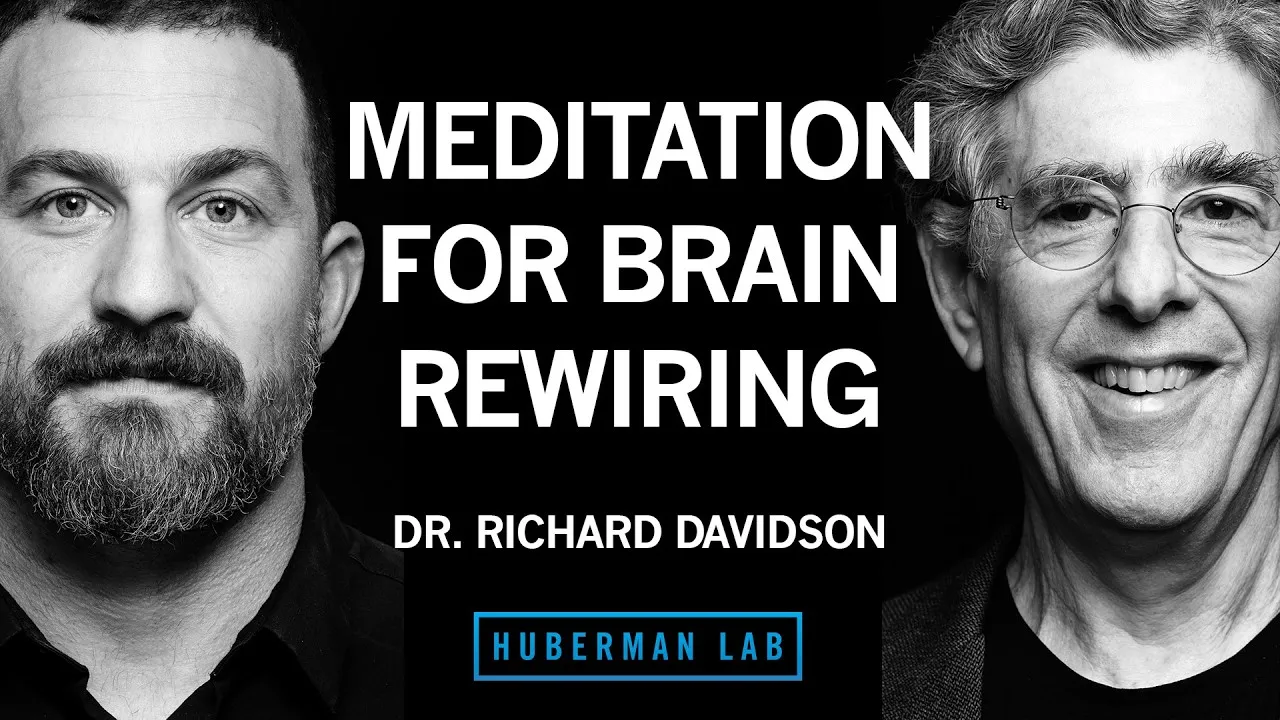
Unlock Profound Brain and Health Benefits with Daily Meditation
Even a brief, 5-minute daily meditation practice can significantly reduce symptoms of depression, anxiety, and stress, while simultaneously enhancing well-being and reducing inflammation. These findings, supported by robust scientific research, suggest that incorporating meditation into your routine is a powerful, accessible tool for improving both mental and physical health.
Understanding States of Mind and Traits
Dr. Richard Davidson, a pioneer in the field of contemplative neuroscience and professor at the University of Wisconsin-Madison, explains that our mental experiences can be understood as ‘states’ and ‘traits.’ States are temporary patterns of brain activity and subjective experience, such as feeling stressed or calm. Traits, on the other hand, are more enduring patterns that emerge from the regular occurrence of certain states. For instance, frequent bouts of anger (a state) can lead to the trait of irritability, characterized by a chronically low threshold for anger.
The principle that ‘the after is the before for the next during’ highlights how the experience of a particular state can influence subsequent states and, over time, shape our underlying traits. This concept is crucial for understanding how consistent practices like meditation can lead to lasting positive changes in our emotional regulation, focus, and overall resilience.
Meditation: Not About Clearing Your Mind
Contrary to popular belief, the goal of meditation is not to empty the mind or achieve a state of perfect peace during the practice. Instead, effective meditation involves observing your thoughts and any discomfort that arises without judgment. Dr. Davidson likens this process to the beneficial stress experienced during physical exercise, such as the ‘burn’ from lactate buildup. The mental ‘stress’ encountered during meditation, and the ability to observe it, acts as a form of mental training that builds resilience, enhances focus, and contributes to a greater sense of peace outside of meditation.
The Science Behind Brainwaves and Meditation
Brain activity can be measured in different frequency bands, often referred to as brainwaves, which are associated with various states of consciousness. While it’s an oversimplification to attribute specific states to single brainwave types, general patterns have been observed:
- Delta waves (1-4 Hz): Predominant during deep sleep, crucial for restorative sleep. Emerging research is exploring ways to boost delta activity during sleep to enhance learning and memory consolidation.
- Theta waves (5-7 Hz): Often seen during transitions between wakefulness and sleep, associated with liminal states and certain types of meditation.
- Alpha waves (8-13 Hz): Characterized as ‘relaxed wakefulness.’
- Beta waves (13-20 Hz): Associated with active cognitive engagement and focused attention.
- Gamma waves (around 40 Hz): Particularly interesting in long-term meditators. High-amplitude gamma activity, observed for sustained periods in experienced practitioners, has been linked to moments of insight and cognitive flexibility. Studies, including research published in PNAS in 2004 on individuals with extensive meditation experience, have highlighted the prevalence of this gamma activity.
While meditation can profoundly impact brain function, it is not a replacement for sleep. Even dedicated practitioners like the Dalai Lama emphasize the importance of getting adequate sleep, highlighting that meditation complements, rather than substitutes, essential rest.
Types of Meditation Practices
Meditation is a broad category with diverse practices, each yielding different effects. Dr. Davidson categorizes meditation into two main types:
- Focused Attention (FA) Meditation: This involves narrowing your awareness to a specific object, such as your breath, a sound, or a visual point. The practice cultivates the ability to sustain attention and to gently redirect focus when the mind wanders.
- Open Monitoring (OM) Meditation: In this practice, awareness is broadened, and there is no single point of focus. The intention is to be aware of whatever arises in your experience—thoughts, feelings, sensations—without judgment or an attempt to change them. This cultivates a state of ‘being’ rather than ‘doing,’ fostering acceptance and non-reactivity.
The transition from ‘thinking and doing’ to ‘being and feeling’ in meditation involves shifting from active planning or rumination to a state of present-moment awareness. It’s not about suppressing thoughts but observing them non-judgmentally. This practice can be particularly beneficial for individuals prone to overthinking or self-monitoring, allowing for greater mental freedom and creativity.
Key Health Takeaways
- Start Small: Even 5 minutes of daily meditation can yield significant reductions in stress, anxiety, and depression symptoms.
- Observe, Don’t Erase: The goal is to observe your thoughts and feelings without judgment, not to clear your mind.
- Build Resilience: The practice of observing mental discomfort can increase stress resilience and focus.
- Understand Brainwaves: Different meditation types may influence brainwave patterns, with long-term practitioners showing unique gamma activity linked to insight.
- Complement, Don’t Replace: Meditation enhances well-being but does not replace the essential need for adequate sleep.
- Choose Your Practice: Explore focused attention (e.g., on breath) and open monitoring (awareness of whatever arises) to find what suits you best.
Consult Your Doctor
This article is for informational purposes only and does not constitute medical advice. Always consult with a qualified healthcare provider before making any decisions about your health or treatment, especially if you have pre-existing medical conditions.
Source: Science-Based Meditation Tools to Improve Your Brain & Health | Dr. Richard Davidson (YouTube)