The ‘Dero Effect’: How One Purchase Can Trigger a Cascade of Spending
A seemingly innocuous purchase, like upgrading to the latest iPhone, can unexpectedly balloon into a significant financial commitment due to a potent psychological phenomenon known as the ‘Dero Effect.’ This behavioral trap, named after the 18th-century French philosopher Denis Diderot, describes how acquiring one new, high-status item can create a ripple effect, compelling consumers to upgrade surrounding possessions to match, often leading to substantial, unplanned expenditures.
The iPhone Example: A Modern Illustration
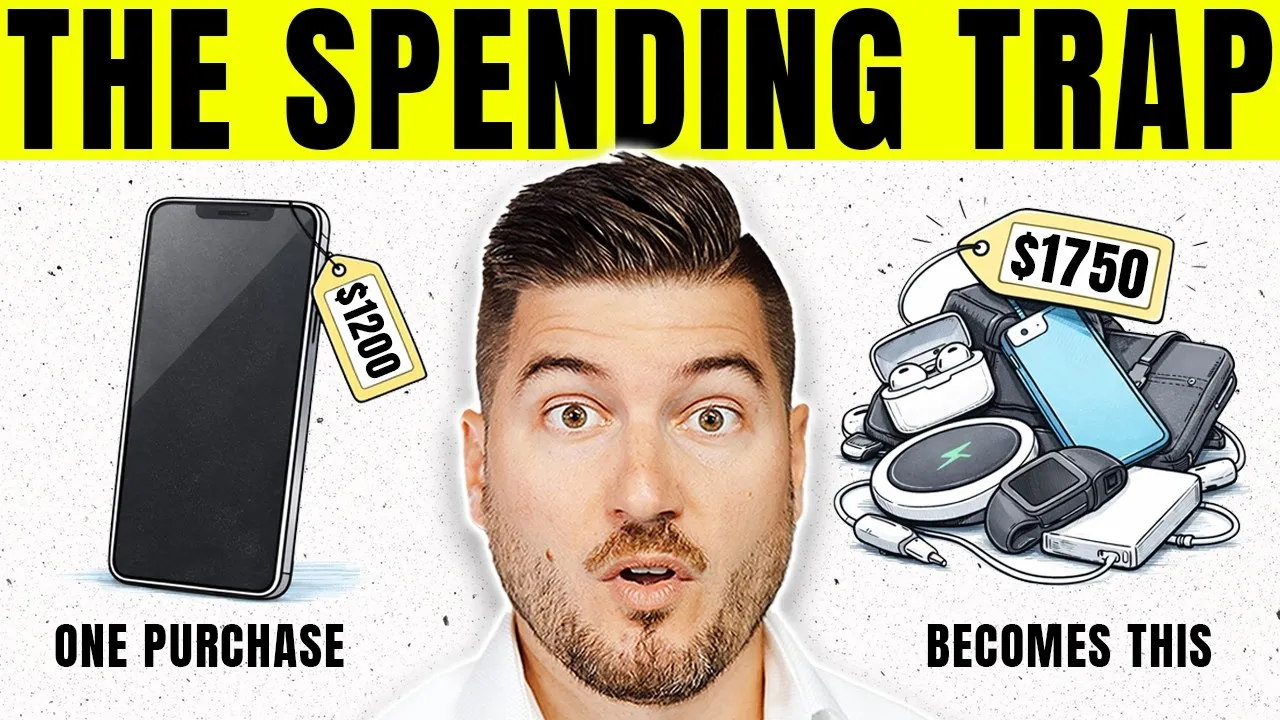
Consider the scenario of purchasing a new iPhone Pro Max for $1,200. While the old phone may still function adequately, the allure of the latest technology can be persuasive. However, the initial purchase often serves as the ‘anchor item.’ Soon after, the user might feel compelled to buy a $40 MagSafe charger to complement the new device, a $60 leather case to protect the premium build, and $250 AirPods Pro to fully experience the ecosystem. Within 48 hours, the initial $1,200 expenditure can quietly escalate to $1,550, driven by the need for associated accessories and a desire for aesthetic and functional coherence.
Historical Roots: Denis Diderot’s Revelation
The concept originates from an anecdote involving Denis Diderot. Despite his intellectual renown, Diderot lived modestly until Catherine the Great, Empress of Russia, purchased his extensive library for a substantial sum, allowing him to keep his books. With newfound wealth, Diderot bought a luxurious scarlet dressing gown. This single, exquisite item starkly contrasted with his existing furnishings, creating a sense of dissonance. He subsequently replaced his desk, then the rug, curtains, chair, and eventually every object in his study to match the quality of the robe. Diderot’s essay, ‘Regrets on My Parting with My Old Dressing Gown,’ poignantly captures this experience, noting, ‘I was the absolute master of my old dressing gown, but I’ve become a slave to my new one.’ This illustrates how a single acquisition can dictate a cascade of further spending.
The Modern Marketplace: Amplifying the Dero Effect
In contemporary times, the Dero Effect is amplified by sophisticated marketing strategies and technological advancements. One-click purchasing, targeted online advertising, social media influencers promoting products as identity statements, ‘buy now, pay later’ services that reduce the immediate pain of spending, and same-day delivery all contribute to a frictionless consumer environment. These factors shorten the decision-making process and eliminate the ‘cooling-off’ period, making consumers more susceptible to impulse purchases and the subsequent chain reactions.
The Psychology of Consistency: Identity and Anchor Items
At its core, the Dero Effect taps into a fundamental human desire for consistency between one’s self-image and external environment. When a high-status item is purchased, it acts as an ‘anchor item,’ setting a new baseline for perceived identity. For instance, purchasing a luxury car like a Porsche can create psychological tension if other possessions—such as clothing, furniture, or dining habits—do not align with the identity associated with that car. Consumers then feel compelled to upgrade these other items to relieve this tension and maintain a coherent narrative about who they are. This is why the advice to ‘fake it till you make it’ can be financially perilous; acquiring an aspirational item without a corresponding income increase can lead to unsustainable spending to bridge the ‘identity gap.’
System Cost vs. Item Cost: A Critical Distinction
The critical error most consumers make is focusing solely on the ‘item cost’ rather than the ‘system cost’ of a purchase. A kitchen renovation budgeted at $10,000 for new cabinets, for example, might seem manageable. However, once the new cabinets are installed, the older refrigerator may appear out of place, leading to a $2,000 upgrade. This, in turn, might make the existing flooring look dated, prompting a $5,000 replacement. The renovation can then spill into adjacent rooms, requiring an additional $18,000 for new living room furniture and paint. The true cost of the initial cabinet purchase, therefore, becomes $35,000—the ‘system cost’—driven by the Dero Effect’s chain reaction.
Beyond Cost: The Degradation of Quality of Life
Perhaps the most insidious aspect of the Dero Effect is not just the financial drain but the potential degradation of one’s quality of life. The very objects purchased to enhance living can paradoxically diminish it. Once Diderot acquired his new robe, he became overly cautious, fearing damage and losing the freedom to use his possessions casually. Similarly, owning an expensive new couch might lead to restrictions on entertaining guests or allowing children to eat in the living room. Consumers may find themselves ‘servicing’ their possessions rather than enjoying them, becoming ‘curators of a museum’ instead of ‘residents of a home.’ This leads to paying more money for the privilege of enjoying one’s space less.
Strategies to Combat the Dero Effect
To counteract this pervasive psychological trap, three key strategies can be implemented:
- Calculate System Cost: Before any significant purchase, evaluate not just the item’s price but the entire ecosystem of related purchases it will likely demand. If the total system cost is unaffordable, the anchor item itself is likely unaffordable.
- Implement ‘Buy One, Give One’: To curb accumulation, adopt a policy where acquiring a new item necessitates the removal of an old one. This encourages mindful consumption, forces an evaluation of true value, and prevents the transition from user to collector or curator.
- Practice Strategic Downgrading: Counterintuitively, deliberately maintaining a more modest ‘anchor item’ can relieve pressure. Driving an older car or wearing a simple watch, for instance, sets a lower baseline expectation, reducing the urge to upgrade everything else and freeing up financial resources. This creates a ‘low-maintenance identity,’ which can be a highly profitable asset.
Conclusion: Mastering Your Possessions
The Dero Effect is a powerful force in modern consumerism, designed to make individuals feel perpetually incomplete. By understanding the psychological underpinnings and the cascading nature of spending, consumers can shift from being controlled by their possessions to mastering them. Intentionality in consumption, focusing on value rather than status, and maintaining control over one’s spending habits are crucial for building lasting wealth and a fulfilling life, rather than accumulating possessions that diminish both.
Source: Why Buying One Nice Thing Is Making You Broke… (YouTube)