Nvidia’s GTC Conference Highlights Accessible AI and Gaming Advancements
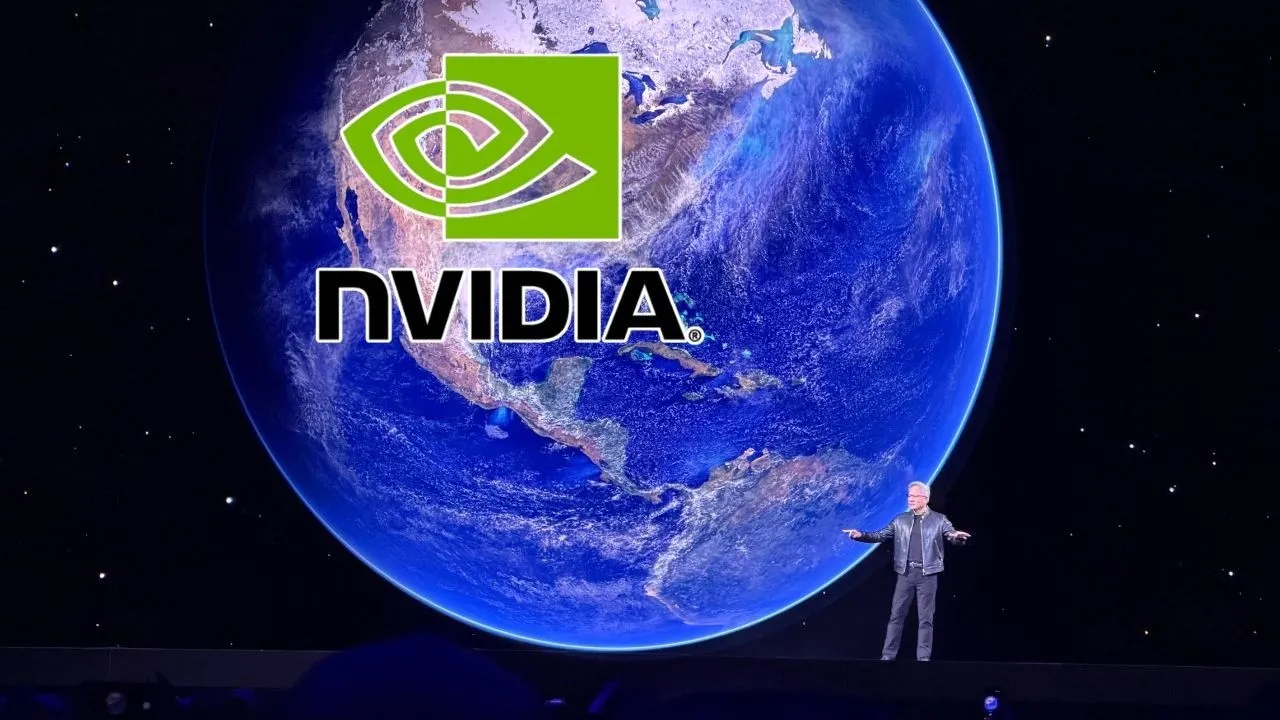
Nvidia’s annual GPU Technology Conference (GTC) in San Jose, California, has once again served as a major hub for AI innovation. While much of the conference focuses on enterprise-level data center solutions, this year saw significant announcements aimed at making powerful AI tools more accessible to a broader audience, alongside advancements in gaming technology.
Open-Source AI Agents Get a Boost with Nvidia’s Nemo Claw
A major talking point at GTC was the open-source project Open-Claw, which empowers AI models to act as autonomous agents with memory and the ability to use tools. Nvidia CEO Jensen Huang dedicated a significant portion of his keynote to Open-Claw, emphasizing its pivotal role in the future of AI. The company introduced Nemo-Claw, a simplified installation process for Open-Claw. Users can now install the agent framework with a single line of code, drastically lowering the barrier to entry.
A key concern surrounding Open-Claw has been security, given its potential access to sensitive data like API keys and passwords. Nemo-Claw addresses this by incorporating an additional security layer designed to protect user data. This development aims to alleviate fears for those hesitant to adopt Open-Claw due to security risks, potentially encouraging wider experimentation with the technology.
Further demonstrating the ease of adoption, Nvidia hosted a ‘Build-A-Claw’ event where professionals assisted attendees in setting up Open-Claw. One attendee reported having Open-Claw and the new Neotron 3 Super 120 billion parameter model installed on their DGX Spark Box in just two minutes. The Neotron 3 Super model is notable for its ability to run entirely on-device, meaning prompts do not need to be sent to external cloud providers like OpenAI or Anthropic. This local processing capability offers enhanced privacy and potentially faster response times.
Neotron 3 Super: A Powerful On-Device AI Model
The Neotron 3 Super model, an open-weight model, was showcased as being competitive with state-of-the-art AI models. While specific benchmarks were not detailed, it was presented as being on par with leading models from Anthropic and OpenAI, with the significant advantage of running locally. This positions it as a powerful option for applications requiring high-performance AI without constant cloud connectivity.
DLSS 5 Promises Enhanced Gaming Graphics
For the gaming community, Nvidia unveiled DLSS 5. This iteration appears to focus on real-time AI upscaling for existing games. The technology aims to enhance graphics by taking lower-resolution or less detailed game footage and intelligently upscaling it to produce more polished and realistic visuals. This could potentially breathe new life into older titles by improving their graphical fidelity beyond their original capabilities.
While the potential for improved visuals is exciting, past iterations of DLSS, such as DLSS 3.5, introduced frame generation that sometimes resulted in visual artifacts or ‘hallucinations.’ Some gamers expressed concerns that DLSS 5’s upscaling feature might also introduce inaccuracies or alter details that were not present in the original game design. Nvidia’s demonstrations at GTC were reportedly well-received, but the broader gamer reaction and real-world performance in various titles will be crucial for its adoption.
Nvidia’s Vision for Space-Based Data Centers
Looking further into the future, Nvidia presented its concept for a data center in space with the Nvidia Space 1 Vera Rubin module. While the idea of extraterrestrial data processing is futuristic, Nvidia acknowledged a key challenge: dissipating heat from GPUs in the vacuum of space. The intense heat generated by GPUs, combined with solar radiation, poses a significant engineering hurdle. Despite this, Nvidia confirmed its top engineers are working on solutions, though widespread deployment, if at all, is not expected before 2030.
Dominance and Acceleration: Key Themes from GTC
Two overarching themes emerged from Nvidia’s GTC presentations. Firstly, Nvidia’s pervasive integration across the tech landscape was highlighted. The company partners with virtually every major cloud provider, including Google Cloud, AWS, Oracle, and Microsoft, and its GPUs are integral to a vast array of Software-as-a-Service (SaaS) companies and AI-driven businesses. Nvidia’s influence spans numerous industries, from automotive and healthcare to finance and entertainment.
Secondly, the conference underscored the rapid acceleration of AI development. Nvidia showcased advancements in processing speed (tokens per second), increased context window sizes for AI models, and reductions in both cost and energy consumption. This rapid scaling demonstrates the industry’s fast-paced evolution.
While the GTC expo floor was reportedly overwhelmingly crowded, making exploration difficult on the first day, the announcements made during Jensen Huang’s keynote provided a clear glimpse into Nvidia’s strategic direction. The focus on simplifying access to powerful AI tools like Open-Claw, enhancing gaming experiences with DLSS 5, and exploring far-reaching concepts like space-based data centers signals Nvidia’s continued commitment to pushing the boundaries of AI and computing.
Source: NVIDIA Is Everywhere Right Now (YouTube)