Nvidia Unveils Nemo Claw, Revolutionizing Enterprise AI Agents
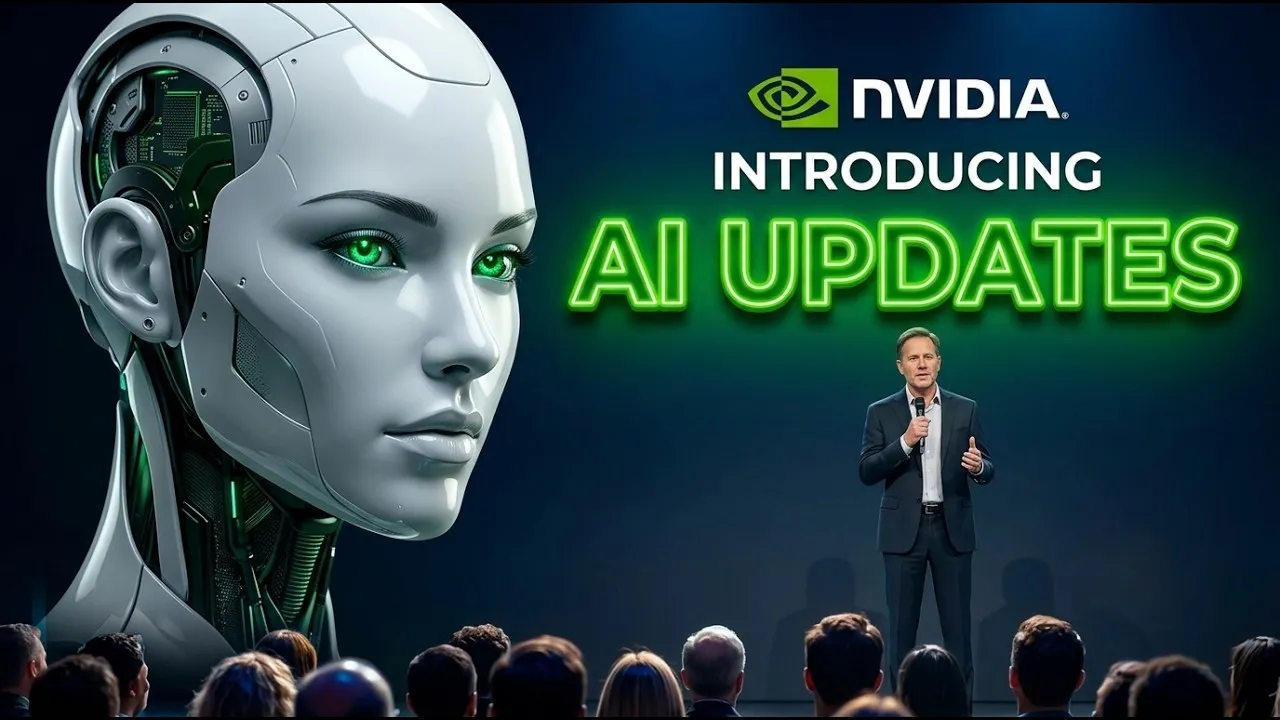
Nvidia CEO Jensen Huang has ignited the AI landscape with the introduction of Nemo Claw, a powerful new platform designed to empower enterprise companies by enabling AI agents to perform tasks on behalf of employees. This move signals a significant shift in how businesses can leverage artificial intelligence, building upon the momentum of the open-source phenomenon that has captivated the tech world.
The Rise of Open Claw and Nvidia’s Strategic Response
The buzz surrounding Nvidia’s announcement is intrinsically linked to the rapid ascent of ‘Open Claw,’ an open-source AI tool that gained unprecedented popularity for its ability to run AI directly on a user’s machine, facilitating a wide range of capabilities. While Open Claw was subsequently acquired by OpenAI, its success left a void and sparked concerns within the enterprise sector about the future of AI development and deployment. Nvidia, recognizing this opportunity, has responded swiftly with Nemo Claw.
Nemo Claw aims to fill this gap by providing a secure, private, and hardware-agnostic platform for businesses. This means companies can deploy AI agents to handle tasks without being tied to specific hardware, offering flexibility and broad compatibility. The platform is designed with built-in security and privacy tools, addressing critical concerns for enterprise adoption.
Understanding Open Claw: The Operating System for Agents
The significance of Open Claw cannot be overstated. Described as potentially the most popular open-source project in human history, it achieved remarkable adoption rates in a fraction of the time it took for foundational projects like Linux. Andrej Karpathy, a prominent AI researcher, has also launched related initiatives, highlighting the intense activity in this space. Open Claw is essentially framed as the ‘operating system of agent computers.’
At its core, Open Claw is a system that connects to large language models (LLMs). It manages resources, accesses tools, interacts with file systems, and can decompose complex prompts into step-by-step actions. Furthermore, it can spawn and manage sub-agents, handle input/output across various modalities (including voice and gestures), and communicate through messages, texts, and emails. This comprehensive functionality leads to its characterization as an operating system for AI agents, analogous to how Windows enabled the personal computer revolution.
The Enterprise Imperative: A “Open Claw Strategy”
The rapid adoption and inherent capabilities of Open Claw have prompted a fundamental question for every company: “What is your Open Claw strategy?” This mirrors the critical need for Linux, HTTP, HTML, and Kubernetes strategies in the past. Experts suggest that every company now needs an Open Claw strategy and an agentic system strategy, as these represent the future of computing.
Nvidia’s Nemo Claw is presented as an enterprise-ready solution built upon the Open Claw framework. It integrates ‘Open Shell,’ an enterprise-ready toolkit, and offers a reference design that includes agentic AI toolkits. Key features for enterprise use include a policy engine that connects to existing SaaS platforms, policy guardrails, and a privacy router to ensure data protection and compliance. This allows organizations to execute policies safely within their own environments.
Nvidia’s Open Model Initiative and Sovereign AI
Beyond the Nemo Claw platform, Nvidia is doubling down on its commitment to advancing AI models through its “Open Model Initiative.” The company showcased its latest models, including Neotrons 3, Cosmos 1, and Groot, emphasizing their top-tier performance on leaderboards across various domains like reasoning, robotics, and self-driving cars. Nvidia pledges continuous development, with future iterations like Neotrons 4 planned.
A significant aspect of this initiative is the focus on enabling fine-tuning and post-training of foundational models to meet specific enterprise needs. This capability is crucial for countries aiming to build their own “sovereign AI.” Nvidia is actively partnering with various regions and companies to develop domain-specific models, catering to diverse fields such as biology, physics, and robotics.
To foster collaboration and accelerate model development, Nvidia announced the “Neotrons Coalition,” inviting partners to contribute to the advancement of Neotrons 4. The company has invested billions in AI infrastructure, including libraries for inference and core AI engines, to support this ecosystem.
DLSS 5: Enhancing Gaming Graphics with Generative AI
Nvidia also introduced DLSS 5, a new iteration of its Deep Learning Super Sampling technology. While some have labeled it an “AI slop filter,” Huang presented it as a groundbreaking fusion of controllable 3D graphics and generative AI. DLSS 5 applies generative AI filters to specific game elements, enhancing graphics in ways that were previously unrenderable. This technology promises to upscale older games to modern visual standards, offering a glimpse into the future of game graphics enhancement.
The core concept behind DLSS 5 is the fusion of structured data from virtual worlds with the probabilistic nature of generative AI. This combination results in stunningly realistic yet controllable visuals. Nvidia believes this fusion of structured information and generative AI will have a profound impact across numerous industries.
Physical AI and Robotics: The Age of Autonomous Systems
The event also highlighted Nvidia’s advancements in physical AI, particularly in autonomous vehicles and robotics. The Nvidia Drive platform, exemplified by “Alpamo,” now equips vehicles with enhanced reasoning capabilities for safer and more intelligent operation. The system can narrate its actions, explain its decision-making process, and follow instructions, showcasing a new level of AI-driven autonomy.
For the robotics sector, Nvidia is addressing the challenge of real-world unpredictability and the limitations of real-world data. The company emphasizes the need for AI-generated data through simulation. To this end, Nvidia has developed open-source tools like Isaac Lab for robot training and evaluation, Newton for physics simulation, Cosmos world models for neural simulation, and Groot for robot reasoning and action generation.
These tools are enabling developers to close the “physical AI data gap.” Companies like Paratas AI, Skilled AI, Humanoid, Hexagon Robotics, Foxconn, Noble Machines, and Disney Research are leveraging Nvidia’s platforms to train robots for various applications, from surgical assistants to character animation. The integration of physics simulation, particularly through the Newton solver and Nvidia Warp, is proving crucial for robots to adapt to the complexities of the physical world.
Why This Matters
Nvidia’s announcements signify a pivotal moment in AI development. Nemo Claw democratizes the creation and deployment of AI agents for enterprises, promising increased efficiency and new operational paradigms. The continued advancement of Nvidia’s AI models, coupled with the open model initiative, fosters a collaborative ecosystem essential for innovation and the development of sovereign AI capabilities globally. Furthermore, DLSS 5 points towards a future where AI can dramatically enhance digital experiences, while the progress in physical AI and robotics signals the imminent arrival of truly autonomous systems capable of interacting with and transforming the physical world.
Source: Nvidia Just Dropped NemoClaw And Other Huge AI Updates (YouTube)