How to Generate Interactive Visuals with Claude’s New Feature
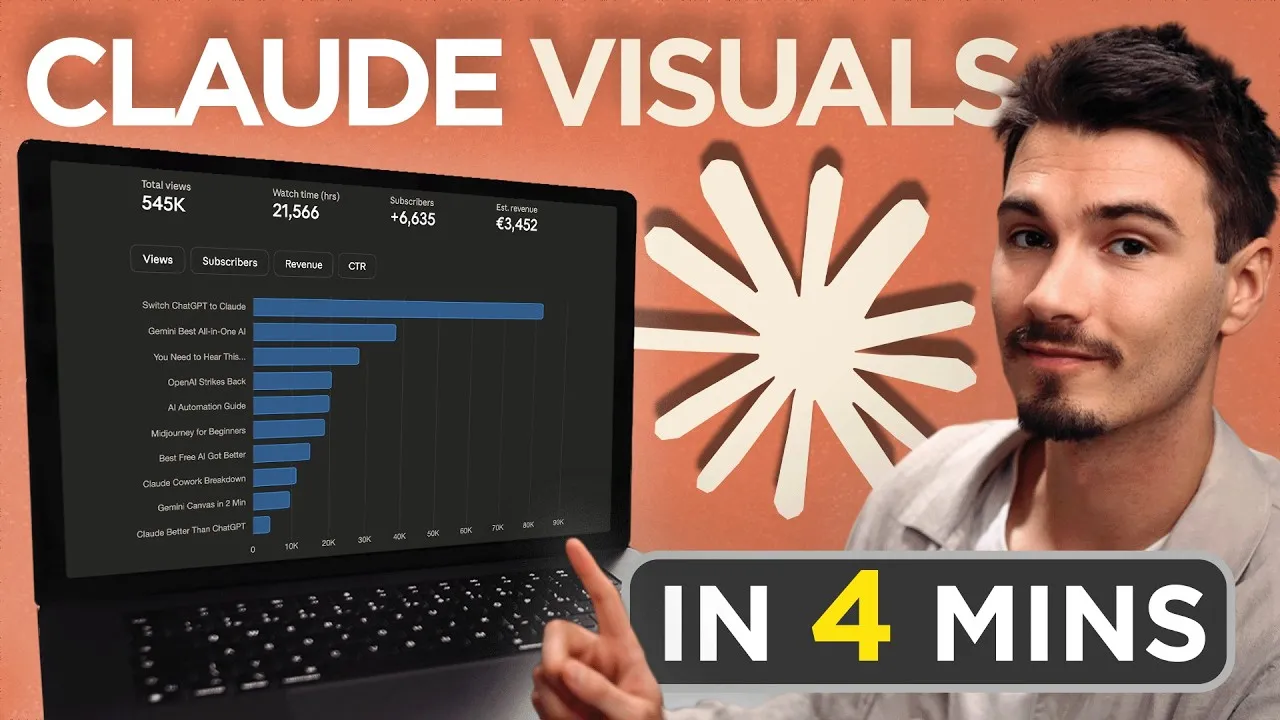
AI chatbots usually give you long blocks of text. But now, Claude offers a new way to see information. It can create beautiful comparisons and visuals in just seconds. Think of it like having a professional whiteboard designer inside your chat. This feature is new and different from anything we’ve seen before. We’ll show you how to use it to make your AI interactions more visual and helpful.
What You’ll Learn
In this guide, you’ll learn how to use Claude’s new visual generation feature. We will cover how to prompt Claude to create these visuals, understand the technology behind it, and explore different ways to use and customize these interactive displays. You’ll see how to go beyond simple text answers and create engaging visual explanations.
Prerequisites
- A free Claude account.
- Basic understanding of how to interact with AI chatbots.
Step 1: Understanding the New Feature
Claude’s new feature is designed to move beyond plain text. Instead of just words, it can generate interactive HTML pages that look like they were made in professional design software. This makes complex information easier to understand at a glance. It’s a step towards more visual and interactive AI, a direction many AI tools are moving towards.
Step 2: Prompting Claude for Visuals
The key to unlocking this feature is using specific phrases in your prompts. The most effective phrase is “Show me”. For example, if you want to understand compound interest, you would ask Claude, “Show me how compound interest works.” Other phrases like “draw a graph” or “create a visualization” can also work, but “Show me” is the most reliable way to trigger this visual output.
Expert Tip: The “Show me” command is a universal trigger for this visual generation. It tells Claude to build an interactive HTML page, which is a simple and fast way to display information visually.
Step 3: Understanding the Technology
Claude uses HTML, the basic code of most websites, to create these visuals. This is much faster than generating a full application. The output is not a separate program you can run independently. Instead, it’s embedded directly within Claude’s response, like a special part of the answer. While it looks like an application, it’s designed for quick understanding, not as a standalone tool.
Analogy: Think of it like a chef showing you a beautifully plated dish (the visual) versus giving you the entire recipe and kitchen equipment (a full application). The visual is for immediate understanding and appreciation.
Step 4: Exploring Examples
Compound Interest Calculator
When you ask Claude to “Show me how compound interest works,” it generates an interactive calculator. You can change different values to see how they affect the outcome. This is much more engaging than a text explanation. The calculator works instantly and is a clear example of the feature’s power.
Mortgage Flowchart
You can also ask for visual explanations of processes. For instance, asking “Show me a flowchart on how a mortgage works” will produce a clear, step-by-step diagram. This visual aid helps break down complicated procedures into manageable parts.
Warning: The performance of this feature can depend on the Claude model you are using. The Opus model generally provides better results than other models like Sonnet. If you are on a free plan, you might not have access to Opus, which could affect the quality of the visuals generated.
Step 5: Customizing Your Visuals
Once a visual is generated, you can ask Claude to customize it further. For example, you can request changes to the style. If you asked for a flowchart, you could follow up with a prompt like, “Style the flowchart in a crazy way, unleashing visual chaos.” While this might not be practical for a mortgage explainer, it shows the flexibility. You could also ask Claude to use specific brand colors for a more personalized look.
Example: If you’re researching wireless headphones, you might ask Claude to “Show me by visualizing the comparison.” Claude can then create a visual chart comparing different models based on your research, making it easier to pick the best option.
Step 6: Saving and Sharing Your Work
Currently, you cannot directly share the interactive visual itself by sending a link. If you try to copy it, Claude usually copies an image or a screenshot of the visual, not the interactive element. This is because the feature is intended as a quick visual aid within the chat.
However, if you want to save your creation as a shareable web page, you can use the “Save as artifact” option. This option, usually found under a menu (often represented by three dots), converts the interactive visual into a proper web application. This artifact can then be shared with others as a link.
Conclusion
Claude’s new visual generation feature acts as a bridge between simple text and full web applications. It’s like adding a digital whiteboard to your AI conversations. This innovation points towards a future where AI responses are more customized, interactive, and visually engaging. By using simple prompts like “Show me,” you can easily create helpful and dynamic visuals to better understand information.
Source: New Claude Visuals Explained in 4 Minutes (YouTube)