Unlock the Secrets of Your Zipper
You probably use zippers every single day without thinking about them. They open and close your jacket, pants, bags, and more. But have you ever stopped to wonder how this common item actually works? It might seem simple, but there’s a lot of clever engineering packed into that little slider and its teeth. This guide will explore the surprising history and the fascinating mechanics behind the zipper, showing you why this invention is much more genius than it first appears.
The Zipper’s Humble Beginnings
Before the zipper, people used buttons, laces, hooks, and eyes to fasten clothes. These all worked, but they had a big drawback: you had to fasten each one individually. This took time and effort. In the late 1800s, an American inventor named Whitcomb Judson wanted to create something faster. He imagined a device that could automatically fasten clothing with just one motion, especially for shoes that were often laced up.
Judson’s First Attempt
Judson developed a fastening device that used hooks and eyes. He believed it was the future and even showed it off at the Chicago World’s Fair in 1893. With some financial backing, the Universal Fastener Company was formed. However, Judson’s design had many problems. It jammed often, was made of steel that could rust, and had to be removed from clothing before washing. If even one hook or eye was out of place, the whole thing could pop open easily. Because of these issues, the company struggled, and customers were few.
Gideon Sundback: The True Inventor
A turning point came in 1906 when a young engineer named Gideon Sundback joined the company. Sundback, who was originally from Sweden, was a talented engineer. He first made small improvements to Judson’s design, but they weren’t enough. After a personal tragedy, Sundback became even more dedicated to his work. He realized the old hook-and-eye system would never be truly reliable.
The Modern Zipper Takes Shape
Sundback’s hard work led to a major breakthrough. In 1914, he patented a new design that looks very much like the zippers we use today. Instead of hooks and eyes, his design featured two rows of interlocking teeth. These teeth were shaped to fit together smoothly when guided by a special slider. This new design was much stronger and more dependable than anything before it.
How the Zipper Works: The Slider’s Magic
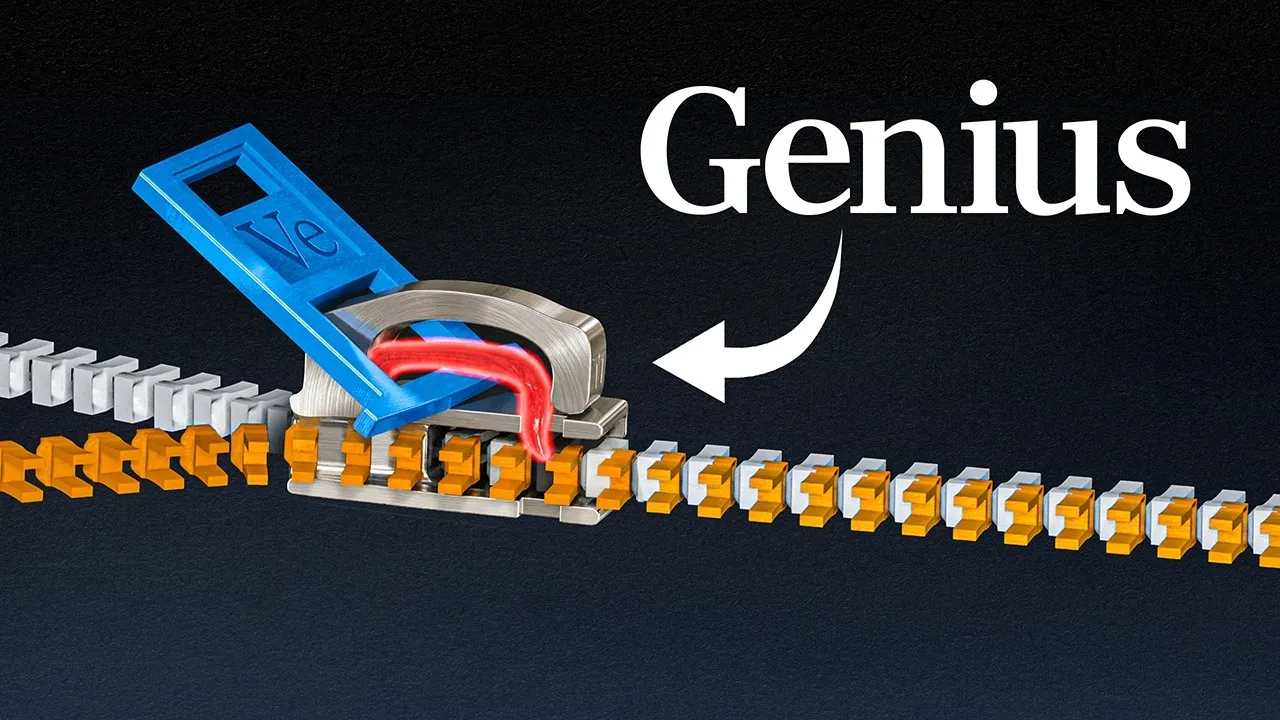
The key to Sundback’s design is the slider. When you move the slider up, it has a Y-shaped opening inside. This Y-shape guides the teeth from both sides, tilting them at just the right angle so they can slide into place and lock together. It’s like a tiny, precise funnel for the teeth. When you pull the slider down, a wedge-shaped part inside the slider separates the teeth, allowing them to unlock and slide apart.
A Small Quirk
Because of this internal wedge, a zipper can never be fully closed at the very top. The wedge must always stay between the teeth to keep them separated when unzipping. This is why the top part of a zipper often leaves a small gap.
Overcoming Manufacturing Challenges
Creating Sundback’s new zipper wasn’t easy. The tiny teeth needed to be made very precisely. In the early 1900s, the tools simply didn’t exist to make them accurately and quickly. Sundback had to invent special machines himself. These machines could take a special wire, cut it into pieces for teeth, shape each tooth with a ‘nib’ on top and a ‘scoop’ on the bottom, and then attach them securely to fabric strips, called tape.
The Tape and the Teeth
The fabric tape is crucial. It holds the teeth in the correct position and is what gets sewn onto clothing. Sundback’s machines were incredibly efficient, producing long lengths of zippers daily. The precision of these machines ensured that the teeth were spaced perfectly. This tight spacing made the zipper very strong, preventing teeth from easily coming apart.
A Potential Weakness
Despite its strength, the zipper had one main weakness. If a single tooth broke off or became damaged, it could create enough space for its neighbors to come loose. This could then cause a chain reaction, making the entire zipper fall apart. This was a bigger problem than a single button failing, but the overall benefits of the zipper still outweighed this risk.
From ‘Hookless Hooker’ to ‘Zipper’
The Universal Fastener Company rebranded its product as the ‘Hookless Fastener’. It started appearing on items like money belts and tobacco pouches. A big step came when the B.F. Goodrich Company used these fasteners on their rubber boots in the early 1920s. The boots were a huge success. People loved how easy the fasteners were to use, making a zipping sound as they worked. The company’s president decided to call the fastener a ‘zipper’ because of this sound. The name stuck, and soon people wanted zippers on everything.
Talon and Modern Materials
By the 1930s, the company, now renamed Talon, was very successful. Their zippers were stronger and more resistant to rust than earlier versions. They were also made from nickel alloys, meaning they could stay on clothes during washing. A useful tip: always zip up your clothes before putting them in the washing machine. This helps prevent the zipper from snagging on other items or getting damaged itself.
The Rise of the Coil Zipper and Locking Mechanisms
While metal zippers were popular, a new type emerged around the 1940s: the coil zipper. These are made from plastic coils stitched onto fabric. They are cheaper, more flexible, and great for items like backpacks and suitcases that need to bend around corners. A key advantage is that a single tooth can’t fall off, preventing the cascading failure seen in metal zippers. Today, coil zippers are the most common type worldwide.
Keeping Zippers Secure
Another important feature is the locking mechanism, which Sundback himself helped develop. A small pin inside the slider can lock it in place. When the pull tab is in its normal position, the pin sticks out, preventing the slider from moving. When you pull the tab forward, the pin retracts, allowing the slider to move freely. This prevents zippers from accidentally opening, especially on pants.
YKK: The Global Zipper Giant
You might notice the letters ‘YKK’ on many zippers today. This stands for Yoshida Kogyo Kabushikikaisha, a Japanese company founded in 1934. While Talon held the original patents, YKK focused on quality and efficient, in-house manufacturing. They improved the machines and made every part themselves. By the 1980s, YKK had surpassed Talon to become the world’s largest zipper manufacturer, producing billions of zippers each year.
Specialized Zippers
YKK also produces highly specialized zippers, like airtight and watertight ones used in deep-sea diving suits and even spacesuits. These zippers use metal teeth pressed tightly against a rubber tape to create a strong seal, capable of withstanding extreme pressure.
Troubleshooting Common Zipper Problems
Even the best zippers can sometimes get stuck or break. Here are a few common issues and how to fix them:
When a Zipper Gets Stuck
Often, a zipper gets stuck because fabric is caught in the slider. Carefully try to remove any trapped threads or cloth. Gently wiggle the slider back and forth. If you can’t see any obstruction, try rubbing the teeth with the side of a pencil. The graphite acts as a dry lubricant and can help the slider move again.
When a Zipper Unzips Itself
This usually happens when the slider becomes worn or bent. It can no longer press the teeth together properly, so they separate behind it. You might be able to fix this by gently squeezing the slider with pliers. Crimp the sides of the slider together slightly to make its internal channel narrower. Be careful not to crimp too hard. This should help it grip the teeth better.
The Enduring Genius of Sundback’s Design
More than a century after Gideon Sundback’s patent, his basic zipper design remains largely unchanged. While materials and manufacturing have improved, the core concept of interlocking teeth guided by a slider is still the most effective and widely used. It’s a testament to Sundback’s brilliant engineering that his invention continues to function so perfectly in our modern world.
Source: The Surprising Genius Of Zippers (YouTube)