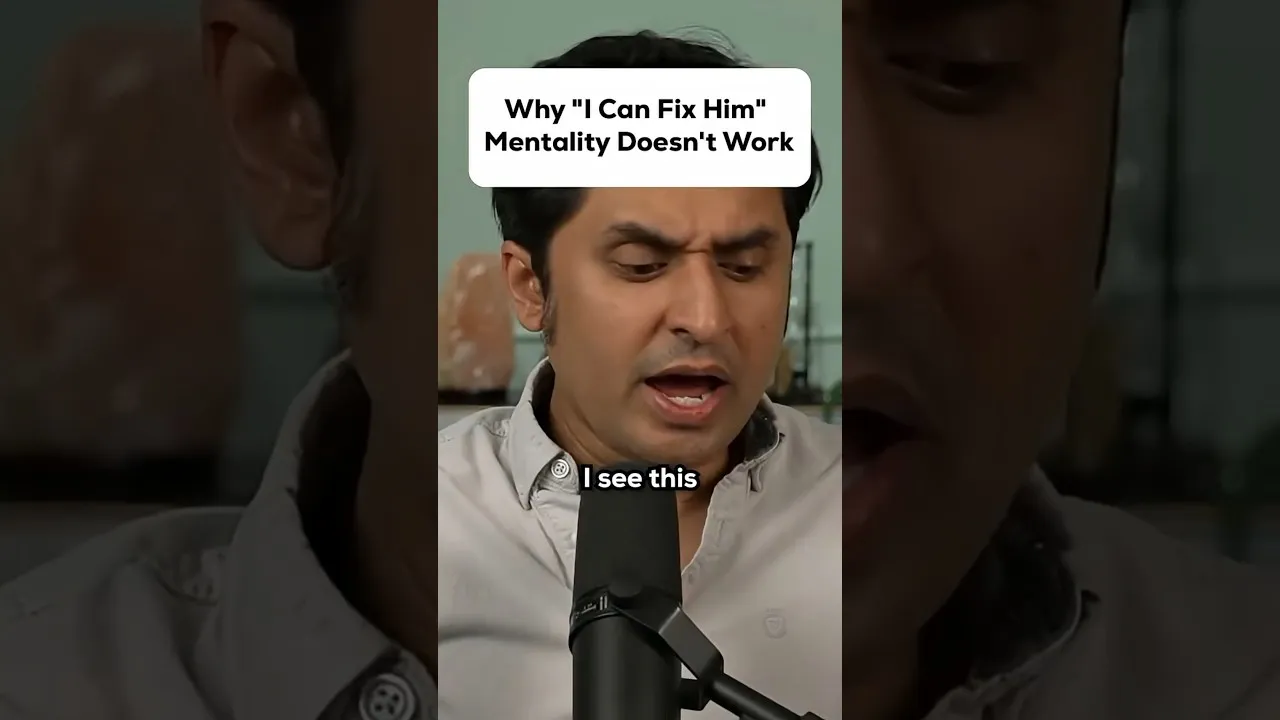
Stop Trying to ‘Fix’ People: It’s Hurting You
Many people find themselves drawn to helping others, often with a deep desire to “fix” them. This drive, while seemingly noble, can stem from unhealthy ego needs and a psychological defense mechanism called projection. Understanding these roots is key to breaking the cycle and fostering healthier relationships.
The ‘Fixer’ Trap and Your Ego
Are you someone who feels compelled to help others, believing you can change their lives for the better? This helper mentality, sometimes called the “savior” complex, can be a powerful draw. However, it’s crucial to examine how much of your identity is wrapped up in being the one who fixes things.
When your sense of self-worth is tied to solving other people’s problems, it can become an ego boost. Taking on difficult challenges and succeeding in helping someone can feel incredibly rewarding. But this raises an important question: Is your desire to help truly about the other person, or is it about how it makes you feel about yourself?
This self-reflection is vital if you find yourself consistently stuck in situations where you’re trying to fix someone else. Ask yourself how much of this pattern is about your need for validation and how much is driven by a dependence on fixing others to feel good.
Understanding Projection: Fixing Others, Ignoring Yourself
A significant reason why people become “fixers” is a concept known as projection. This happens when we have parts of ourselves that we dislike or can’t handle, and instead of dealing with them, we unconsciously push them onto others.
Imagine you feel your own life is a mess, and you struggle to manage your problems. You might feel powerless to fix your own situation. In such cases, instead of confronting these difficult feelings, you might “amputate” those parts of yourself and project them onto someone else.
The dynamic then becomes: “I can’t seem to put my own life together, so I’ll take all my struggles and project them onto this other person. Then, by helping them, I can feel good about myself.” It’s a way to indirectly address your own perceived shortcomings by focusing on someone else’s.
The Importance of Self-Awareness
Recognizing these patterns is the first and most important step. Awareness of why you’re drawn to fixing others—whether it’s for ego validation or as a way to avoid your own issues—is crucial for developing healthier relationships and a stronger sense of self.
This isn’t to say that helping others isn’t valuable. Compassion and support are essential parts of human connection. However, when the drive to fix becomes a primary mode of relating, it can hinder both your growth and the growth of the person you’re trying to help.
Focusing on your own well-being and addressing your own challenges allows you to offer support from a place of strength, not from a place of personal need or projection. True help comes from a balanced perspective, where you can support others without sacrificing your own emotional health or identity.
Key Health Takeaways
- Examine your motivation: Ask yourself if your desire to help stems from a genuine wish to support or a need to boost your own ego.
- Recognize projection: Be aware if you’re projecting your own unresolved issues onto others as a way to avoid dealing with them yourself.
- Prioritize self-care: Focus on addressing your own problems and building your self-worth independently, rather than relying on fixing others.
- Foster healthy boundaries: Support others, but avoid taking on the responsibility of “fixing” their lives, which can be detrimental to both of you.
- Seek professional guidance: If you struggle with these patterns, consider talking to a therapist or counselor who can help you understand and change them.
Disclaimer: This article is for informational purposes only and does not constitute medical advice. Always consult with a qualified healthcare professional for any health concerns or before making any decisions related to your health or treatment.
Source: Why "I Can Fix Him" Mentality Doesnt Work (YouTube)