Your 30s: The Decade to Build Wealth or Fall Behind
The 30s often arrive with a jolt, bringing a mix of career advancements, family responsibilities, and significant financial commitments like mortgages and childcare. This decade is a critical turning point where financial decisions made today can dramatically shape future security. While the 20s might have been for exploration, the 30s are when the consequences of financial choices become more pronounced, determining whether one builds a foundation for comfort or faces a long struggle to catch up.
1. Erase Consumer Debt
The most crucial first step for anyone in their 30s is to eliminate all consumer debt. This means credit cards, car loans, personal loans, and any other non-mortgage debt must be paid off completely. While student loans can be a significant burden, they also fall into this category. The primary reason for this urgency is that the 30s and 40s are typically the peak earning years. Carrying consumer debt acts like an anchor, preventing earned income from building wealth. For example, paying $1,000 a month towards credit card and car payments means $12,000 annually that isn’t invested or saved. Over a decade, this amounts to $120,000 lost potential growth.
Beyond the numbers, consumer debt creates significant mental stress. This burden can cloud judgment and lead to poor financial decisions, especially when combined with other life pressures like work demands, home maintenance, and family needs. Paying off debt is akin to a guaranteed, tax-free return on investment equal to the interest rate you were paying. Clearing a 20% credit card debt provides a risk-free 20% return.
2. Achieve an ‘Excellent’ Credit Score
Aiming for an excellent credit score, typically 800 or higher, is paramount. This isn’t just about being able to borrow money; it significantly impacts the cost of borrowing, particularly for major purchases like a home. For instance, on a $400,000 mortgage, a half-percent difference in interest rate due to a slightly lower credit score can cost tens of thousands of dollars over 30 years. A single late payment can drop a score by 80 to 180 points and remain on a report for up to seven years, potentially costing a borrower nearly $50,000 in extra interest on a mortgage.
Maintaining an excellent score involves consistent on-time payments, keeping credit utilization below 30% (ideally under 10%), and avoiding unnecessary new credit applications. Keeping older credit accounts open also helps, as the length of credit history is a key factor.
3. Develop a Comprehensive Financial Plan
Many people in their 30s neglect to create a formal financial plan. This decade requires juggling multiple financial goals simultaneously. A structured plan, often remembered by the acronym BRET, provides a roadmap:
- Budgeting and Saving: Knowing exact income and expenses to set clear savings targets.
- Retirement Planning: Actively monitoring and adjusting retirement contributions, not just passively contributing.
- Estate Planning: Basic legal documents to protect assets and family.
- Tax Planning: Utilizing legal strategies to minimize tax burdens.
- Tracking Progress: Regularly monitoring financial performance to stay on course.
Working with a fee-only financial planner can be beneficial for those with complex finances, multiple income streams, or significant assets. The existence and adherence to a plan are more important than its initial complexity.
4. Build a Robust Emergency Fund
While 3-6 months of expenses is standard advice for younger individuals, those in their 30s should aim for an emergency fund covering 6-12 months of expenses, or even more if income is variable. This larger cushion is necessary due to increased financial exposure, such as unexpected home repairs, medical bills, or car breakdowns. A substantial emergency fund provides both security and flexibility, allowing individuals to handle financial shocks without derailing long-term goals and enabling them to take advantage of opportunities from a position of strength. This fund should be kept in a high-yield savings account for accessibility and modest interest earnings.
5. Prioritize Retirement Savings
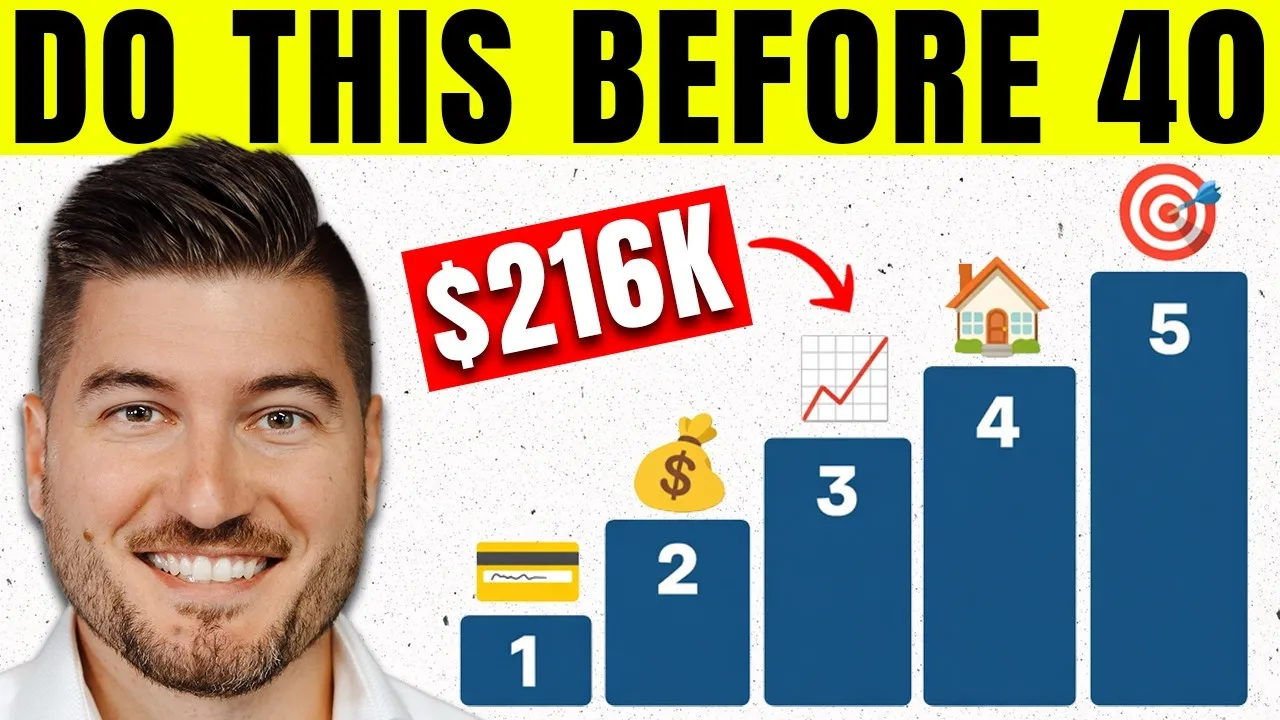
With the median income for those aged 35-44 around $72,000 annually, aiming for three times this salary ($216,000) by age 40 is a significant milestone. Consistent saving, ideally 15% of income, can lead to substantial retirement balances. For example, reaching $216,000 by 40 and continuing contributions could result in nearly $2 million by age 67, thanks to compound interest. Every year delayed means losing out on compounding growth. A smart strategy is to allocate a portion of every raise directly to retirement savings before lifestyle expenses can increase.
6. Resist Lifestyle Inflation
As income rises, expenses often increase proportionally, a phenomenon known as lifestyle inflation. This trap leaves individuals earning more money with the same amount of disposable income, hindering wealth building. For example, friends earning six figures in major cities might live paycheck to paycheck due to high housing costs, expensive cars, and frequent dining out. The key to immunity is automation: redirect at least half of any income increase directly to savings and investments before it can be spent. This prevents the brain from creating new spending desires for the additional income.
7. Establish Estate Planning Basics
Estate planning is essential in the 30s, especially for those with children, mortgages, or significant assets. It’s not just about end-of-life planning but about preparing for unexpected incapacitation. Key documents include a will, power of attorney, and updated beneficiary designations on all accounts. Without these, courts and bureaucrats will make decisions regarding one’s affairs and children, not the individual. Basic estate planning is generally affordable and straightforward, starting with these fundamental documents.
8. Invest in Your Health
Healthcare costs in retirement can be substantial, with estimates suggesting a single person retiring at 65 might spend over $172,000 on healthcare alone. Investing in preventative care, proper nutrition, and regular exercise during one’s 30s can significantly reduce future medical expenses and protect earning potential. The habits formed in this decade are far easier to maintain than starting later in life. The body often begins sending signals in the 30s that it’s no longer invincible, making proactive health investments crucial.
9. Plan for Children’s Education
College costs have historically risen at about twice the rate of general inflation. For an in-state public university, the total annual cost (tuition, room, board, fees) is around $30,000, while private institutions can cost closer to $63,000 per year. Starting early with contributions to a 529 education savings plan is highly recommended. These plans offer tax-free growth and tax-free withdrawals for qualified education expenses. Even small, consistent contributions of $50-$100 per month can grow significantly over 15-18 years due to compound interest. Rollover options to a Roth IRA are also available if funds are not fully used for education.
Market Impact and Investor Outlook
The 30s represent a pivotal decade for financial growth. By aggressively tackling consumer debt and building an emergency fund, individuals create a stable base. Prioritizing retirement savings and resisting lifestyle inflation ensures that increased earnings translate into long-term wealth. Investing in health and education planning adds further layers of financial security and future planning. The decisions made during these years, particularly regarding debt reduction and consistent saving, have a compounding effect that can lead to significant financial freedom by age 50 and beyond. Conversely, neglecting these steps can result in a decade of lost opportunity, requiring extensive catch-up efforts later in life.
Source: 9 MAJOR Money Moves To Make In Your 30s (Wealthy By 40) (YouTube)