Cartoon Chaos: A Doctor Explains Medical Myths
Animated shows often bend reality for laughs, but what happens when they venture into the realm of medicine? A recent video features a doctor reacting to medical scenes in the animated sitcom Family Guy, highlighting the vast gap between cartoon antics and actual medical science. The doctor breaks down these fictional scenarios, offering real-world explanations and pointing out the impossibilities.
From Fertilization Devices to Tumors: Fiction vs. Fact
The Family Guy clips presented a range of outlandish medical plots. One involved a character creating a “fertilization device” to impregnate another character, leading to a biologically impossible pregnancy. The doctor noted the absurdity, particularly the idea of injecting something into an umbilicus without a uterus, questioning if a baby would then be “pooped out.”
Another scene depicted a character developing a tumor, prompting the doctor to share a real-world connection. He explained that sometimes, men who fail drug tests might actually have a testicular tumor, as these can produce certain substances that show up on medical screenings. This highlights how even fictional medical plot points can sometimes touch upon genuine, albeit rare, medical occurrences.
Pregnancy and Birth: A Cartoon Take
The show’s portrayal of pregnancy and childbirth was a major focus of the doctor’s commentary. In one instance, a character claims to have used their own DNA and a “temporary uterus” to become pregnant. The doctor found this scientifically implausible, especially the idea of a male character becoming pregnant and the associated confusion.
The concept of a “temporary uterus” is not a recognized medical term or procedure. Real pregnancy involves a complex biological process within a female’s reproductive system. The doctor also addressed the cartoon’s depiction of pregnancy symptoms like morning sickness and cravings, noting that while these are real, the context in the show was entirely fictional.
Gestating a baby within a male body, as depicted, is impossible with current or foreseeable medical science. The female reproductive system is uniquely designed to carry a fetus, involving hormones, organs, and physiological changes that males do not possess. The doctor pointed out the lack of scientific basis for such a scenario.
Childbirth in a Prius?
Perhaps one of the most bizarre scenes involved a character giving birth in the passenger seat of a Toyota Prius. The doctor highlighted the unlikelihood and impracticality of such an event. He noted the speed at which the birth was happening and the suggestion of delivering the baby while still in the car.
The doctor also touched upon the comedic element of the characters prioritizing the car’s upholstery over the medical emergency. He mentioned that in reality, childbirth is a serious medical event requiring a sterile environment and trained professionals. The scene’s focus on protecting the car’s seats, especially vinyl ones which are less common in newer models, added to the absurdity.
The doctor also commented on the visual of the birth, comparing it to a scene from the sitcom Murphy Brown, another show that had a notable birth scene. However, the Family Guy version pushed the boundaries of realism even further with its chaotic and unconventional setting.
Diseases and Injuries: Exaggeration for Effect
The video also covered scenes involving various diseases and injuries, often played for shock value or dark humor. One segment involved characters attempting to prank each other with illnesses, including Hepatitis C and Meningitis. The doctor stressed the danger of such pranks, as these are serious conditions.
He emphasized the importance of accurate information regarding infectious diseases. For instance, he noted that if someone travels to a region with specific diseases and doesn’t inform their doctor, diagnosis can be extremely difficult and may lead to misdiagnosis. This underscores the need for open communication between patients and healthcare providers about travel history and potential exposures.
Stuck to the Couch and Beyond
A particularly memorable and medically questionable scenario involved a character getting stuck to a couch. The doctor explained the cartoon’s exaggerated depiction of skin fusing with fabric. While not scientifically accurate in the way shown, he did draw a parallel to a real medical condition called a fistula.
A fistula is an abnormal connection between two body parts, such as an organ and another organ, or an organ and the skin. He explained that prolonged friction or inflammation between two organs can sometimes create such a passageway, leading to very unusual and unpleasant symptoms. This is a complex medical issue that requires proper diagnosis and treatment.
The Reality of Strokes and Medical Treatments
The doctor analyzed a scene where a character exhibits symptoms of a stroke, including facial drooping and speech difficulty. He stressed that stroke is a medical emergency where “time is of the essence.” Prompt treatment, often with medications like tPA, can significantly improve outcomes by restoring blood flow to the brain.
He also clarified the two main types of stroke: ischemic (caused by a blockage) and hemorrhagic (caused by bleeding). Both types deprive the brain of oxygen, leading to cell death. The doctor’s explanation highlighted the critical need for immediate medical attention for stroke symptoms.
The video also touched upon chiropractic adjustments. While acknowledging that some people find relief, the doctor expressed skepticism about the universal claims often made in social media videos. He noted that treatments should be tailored to specific conditions, and a one-size-fits-all approach is often not medically sound.
Tumors, Harps, and Prostate Exams
The show’s portrayal of handling medical specimens was also critiqued. A scene where a tumor is placed in Tupperware, and later mistaken for food, was deemed highly unprofessional and unhygienic. Doctors send specimens for rigorous testing like cytology and histopathology to determine the exact nature of a growth.
Another clip involved a harmonica found inside a patient’s abdomen. The doctor explained that foreign objects can indeed end up inside the body, but their origin (ingested or inserted) and the necessary removal process are crucial medical considerations. He noted that such procedures often require complex surgery.
The examination of a prostate was also presented in a comical, yet alarming, manner. The doctor emphasized the importance of patient communication and consent during medical procedures. He stated that a digital rectal exam, while standard, should always be explained to the patient beforehand, and that lubrication is used to ensure comfort and ease.
Fictional Fights and Medical Consequences
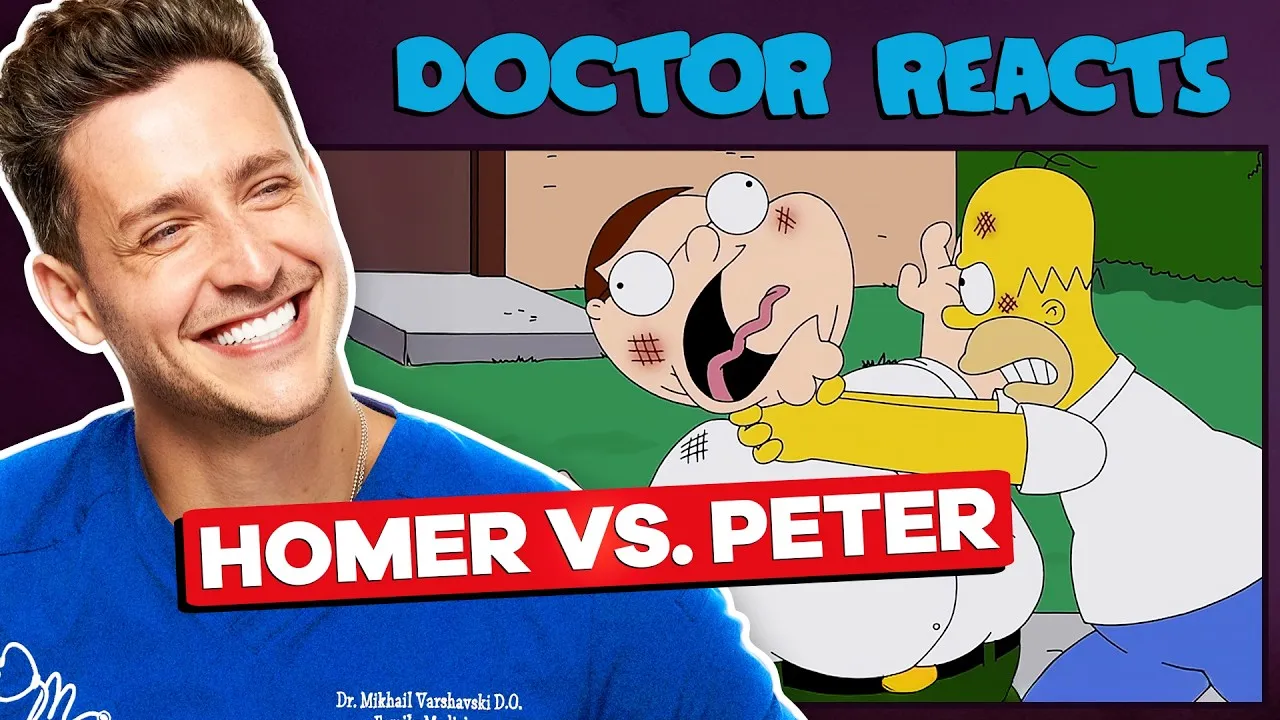
The final segment involved a chaotic fight scene between Family Guy and The Simpsons characters, with the doctor analyzing the potential medical consequences. He pointed out realistic injuries like neck spasms from being held by car doors and femur damage from impacts.
He also discussed the concept of pneumothorax (collapsed lung) and the dangers of radiation exposure, all while maintaining a factual yet accessible tone. The doctor’s commentary throughout the video serves to educate viewers about real medical science, contrasting it with the exaggerated and often impossible scenarios presented in animation.
Key Health Takeaways
- Cartoon medical scenes are highly fictional: Do not expect medical procedures or outcomes seen in shows like Family Guy to reflect reality.
- Pregnancy is biologically specific: Male pregnancy and artificial wombs as depicted are not scientifically possible.
- Seek immediate help for stroke symptoms: Recognizing symptoms like facial drooping or speech difficulty and calling emergency services quickly is crucial.
- Communicate with your doctor: Always inform your doctor about your travel history and any potential exposures to serious illnesses.
- Diseases are not jokes: Serious infectious diseases should never be treated lightly or used in pranks.
- Medical procedures require professionalism: Proper sterile techniques, patient consent, and accurate handling of specimens are vital in healthcare.
Disclaimer: This article is for informational purposes only and does not constitute medical advice. Always consult with a qualified healthcare professional for any health concerns or before making any decisions related to your health or treatment.
Source: Doctor Reacts to Family Guy Medical Scenes (YouTube)