Polyamory Under Scrutiny: Beyond Empowerment Narratives
Recent discussions, fueled by media attention around author Lindy West’s new memoir, are prompting a closer look at polyamory and ethical non-monogamy. While proponents often frame these relationship structures as empowering, critics argue that such narratives can obscure underlying issues, particularly for women in heterosexual relationships.
Lindy West’s Memoir Sparks Conversation
Lindy West, known for her work on feminism and body positivity, has been actively promoting her latest memoir, which details her journey into polyamory. Her story, which includes her husband revealing he was not meant to be monogamous and the subsequent integration of his girlfriend into their lives, has drawn significant attention. While West’s earlier work celebrated finding love without conforming to societal pressures, her current narrative has been met with both support and criticism.
A central point of contention is the framing of West’s entry into polyamory. Critics suggest that her situation, as described, involved significant personal and societal coercion. Her husband presented his non-monogamous desires as a condition for their relationship, occurring after a significant emotional investment had already been made. West herself has described being in a deeply depressed and codependent state at the time, with her self-worth tied to her husband’s perception of her.
Further complicating the narrative, West’s husband later admitted to cheating with another woman before the girlfriend was fully integrated. The couple now lives with this girlfriend in a home inherited by West, with West reportedly sleeping in the guest room while her husband and his girlfriend share the primary bedroom. These details have led some to question the health and authenticity of this particular polyamorous arrangement.
The ‘Choice Feminism’ Critique
The discourse surrounding West’s memoir has highlighted a broader critique of what some call “choice feminism” or “empowerment feminism.” This perspective often emphasizes individual choice and personal feelings of empowerment, sometimes overlooking external pressures, societal expectations, or power imbalances within relationships. Critics argue that this framework can lead to reframing potentially unhealthy or coerced situations as empowering personal victories.
For instance, an interviewer on the Modern Love podcast, while discussing West’s emotional struggles with her husband’s new relationship, prompted her by asking, “but it was also sexy, right?” This line of questioning, critics say, exemplifies how external validation and a focus on individual feeling can overshadow the difficult realities of a situation. The argument is that when difficult choices are framed solely through the lens of personal empowerment, it can obscure the systemic issues that might be at play.
This critique extends beyond romantic relationships. The discussion draws parallels to the public conversation around extremely thin female celebrities. When celebrities appear in visibly unhealthy underweight bodies, the defense often becomes, “It’s their body, it’s their choice.” This response, critics argue, ignores potential duress, coercion, and the broader societal impact of such portrayals on young women’s body image.
Polyamory as an ‘Escape Hatch’ Questioned
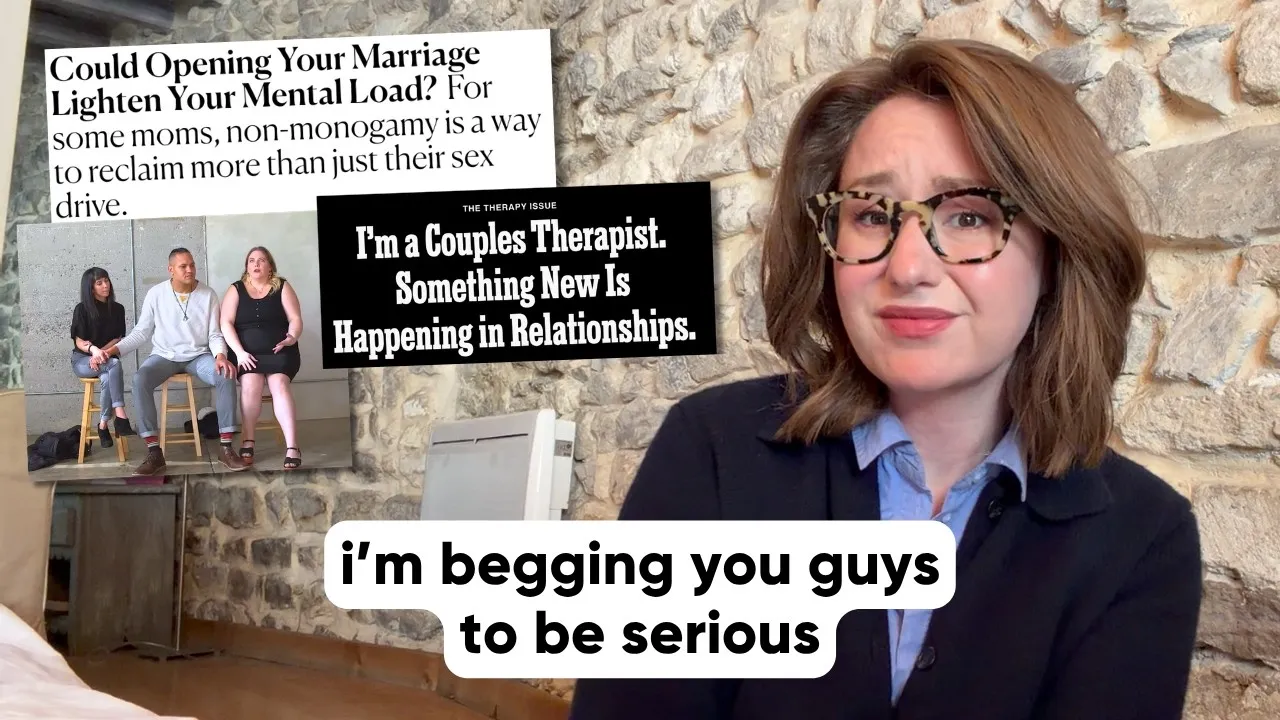
A recent article in The Cut explored polyamory as a potential “escape hatch” for women in heterosexual marriages, particularly new mothers, who feel unfulfilled or that their domestic labor is imbalanced. The article suggests that seeking other relationships could help these women reclaim themselves and re-establish personal balance.
While acknowledging that this framing at least centers the woman’s experience, the analysis suggests this view is also naive. The core problems in many heterosexual marriages, such as imbalanced division of labor or sexual dissatisfaction, are not necessarily solved by introducing non-monogamy. In some cases, opening up the relationship can even exacerbate existing issues, such as requiring women to manage dating calendars for multiple partners.
The article points out that many men are not equipped to be healthy, equal partners to one woman, let alone multiple. This raises questions about the practicality and sustainability of non-monogamous solutions for heterosexual couples facing fundamental relationship challenges.
‘Couples Therapy’ Highlights Non-Monogamy Pitfalls
The popular television show “Couples Therapy” also provides a recurring example of how non-monogamy is sometimes presented as a solution to marital problems. The show frequently features couples, some of whom are queer, who propose opening up their relationships as a way to address issues ranging from parenting stress to fundamental incompatibility.
However, the show often illustrates the difficulties and heartache that can arise from these attempts. Many couples who try to patch over problems by becoming non-monogamous experience significant pain, with one partner’s desire for openness leading to the emotional devastation of the other. The consensus from such portrayals is that opening a relationship should ideally be an additive step for an already healthy partnership, not a fix for a troubled one.
The Broader Cultural Narrative
Across these examples, a recurring narrative emerges: non-monogamy, polyamory, or any deviation from traditional monogamy is often framed as the more progressive, open-minded, humane, or ethical choice. This framing can be influenced by political leanings, with some suggesting that embracing non-monogamy is inherently more aligned with progressive values.
However, the critical perspective suggests that this narrative can be insidious. It risks promoting the idea that non-monogamy is a universal solution or a superior relationship model, without adequately accounting for the complex social, economic, and personal contexts in which these decisions are made. The core argument is that no relationship exists in a vacuum; all choices and perceptions are shaped by both the immediate relational dynamics and the broader societal environment.
What Investors Should Know
While this discussion centers on relationship dynamics, the underlying themes of societal narratives, individual choices, and the potential for these to be influenced by external pressures have broader implications. For investors, understanding how cultural trends and prevailing narratives can shape consumer behavior and market sentiment is crucial. For example, shifts in relationship structures or societal values could indirectly influence spending patterns, demand for certain services (like therapy or dating apps), or even the types of products that resonate with consumers.
The critique of “choice feminism” and the questioning of empowerment narratives highlight the importance of looking beyond surface-level trends. In financial markets, this translates to digging deeper into the fundamentals behind investment opportunities, rather than being swayed solely by popular narratives or the “empowerment” angle of a company or product. Understanding the real-world context and potential underlying pressures behind trends is key to making sound financial decisions.
Source: Polyamory Won't Fix Your Problems (YouTube)