DeepLearning.AI Launches New NLP Specialization
DeepLearning.AI, a leading online education platform for artificial intelligence, has announced a new specialization focused on Natural Language Processing (NLP). The program aims to equip learners with the skills to build advanced NLP technologies, including those used in major commercial applications.
Expert Instructors Lead the Way
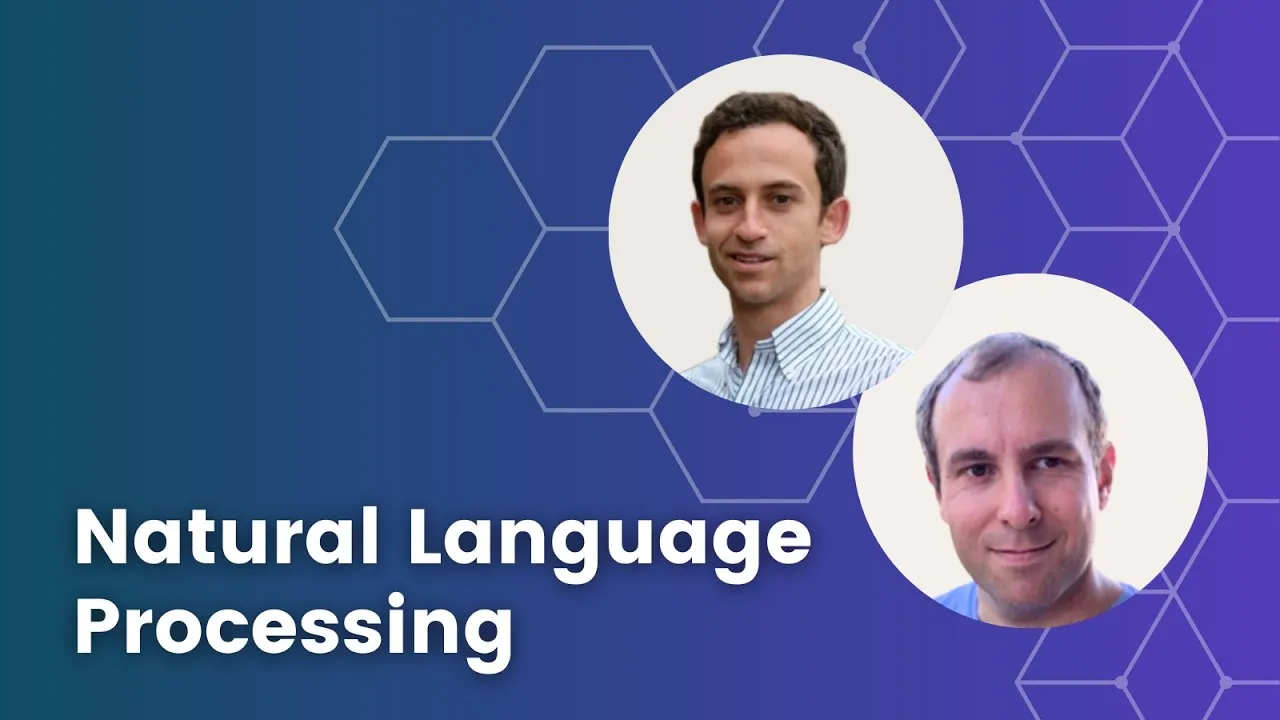
The specialization is taught by two prominent figures in the AI field:}.
The specialization is taught by two prominent figures in the AI field: Ununice, an instructor at Stanford University and collaborator on the popular Deep Learning Specialization, and Lucas, a researcher at Google Brain known for his work on deep learning and NLP. Lucas is also a co-author of Google’s TensorFlow system and the influential transformer network.
Understanding Natural Language Processing
NLP is a branch of AI that helps computers understand and process human language. Think of it like teaching a computer to read, understand, and respond to text or speech the way a person would. Over the years, NLP has evolved significantly.
It started with simple rule-based systems. For example, a programmer might write a rule that says if a customer review contains the word “good,” then it’s likely a positive review. These systems worked but were limited.
Next came probabilistic systems. These used math to figure out the chances of certain words or phrases appearing together, leading to better results. However, they still required a lot of manual effort to set up and fine-tune.
Today, NLP heavily relies on machine learning and deep learning. These methods allow computers to learn patterns from vast amounts of text data without explicit programming for every rule. With the help of powerful computers, AI can now train complex, end-to-end systems that were impossible just a few years ago. These advanced systems can handle tasks like answering questions, powering chatbots, and summarizing long documents.
Key Concepts Covered in the Specialization
The DeepLearning.AI NLP Specialization is structured into four courses, building from foundational concepts to advanced techniques.
Course 1: Classification and Vector Spaces
The first course focuses on the basics of text classification and how to represent text as numbers. Learners will discover how to distinguish between positive and negative text sentiments using methods like logistic regression and Naive Bayes classifiers. A key takeaway is learning to convert words, queries, and documents into numerical vectors. This course also introduces building a basic machine translation system and efficient search techniques like locality-sensitive hashing.
Course 2: Probabilistic Models
Building on the first course, the second delves into probabilistic models. These models help predict the likelihood of certain events, such as what the next word in a sentence might be. Understanding these probabilities is crucial for many everyday applications we use, and this course teaches how to build these algorithms from scratch.
Course 3: Sequence Models
The third course introduces sequence models. These are particularly useful for understanding data where the order matters, like in sentences where word order changes the meaning. This course lays the groundwork for understanding more complex language structures.
Course 4: Attention Models and State-of-the-Art NLP
The final course dives into attention models, a critical component of modern NLP. Attention allows AI models to focus on the most relevant parts of the input text when processing information. This technology has dramatically improved the performance of AI systems. Once a difficult and time-consuming process, training these advanced models can now be done in mere hours thanks to attention mechanisms and parallel computing. By the end of this course, students will be able to implement state-of-the-art systems for neural machine translation, text summarization, question answering, and chatbots.
Why This Matters
The skills taught in this specialization have significant real-world applications. Companies can use these NLP technologies to automate customer service through chatbots, analyze large volumes of customer feedback, improve search engine accuracy, and create more intelligent virtual assistants. The ability to process and understand human language at scale is becoming increasingly vital for businesses looking to gain insights from data and enhance user experiences.
Availability
The Natural Language Processing Specialization is available now on the DeepLearning.AI platform. Specific pricing details can be found on their official website.
Source: Natural Language Processing Specialization by DeepLearning.AI (YouTube)