Understand How Your Data is Being Used
You might be surprised to learn how government agencies, like Immigration and Customs Enforcement (ICE), can access your personal information. This article explains how systems designed for local police can become gateways for federal surveillance. We’ll break down the technology and the agreements that allow this to happen, even in areas that oppose federal immigration enforcement.
How Surveillance Cameras Collect Data
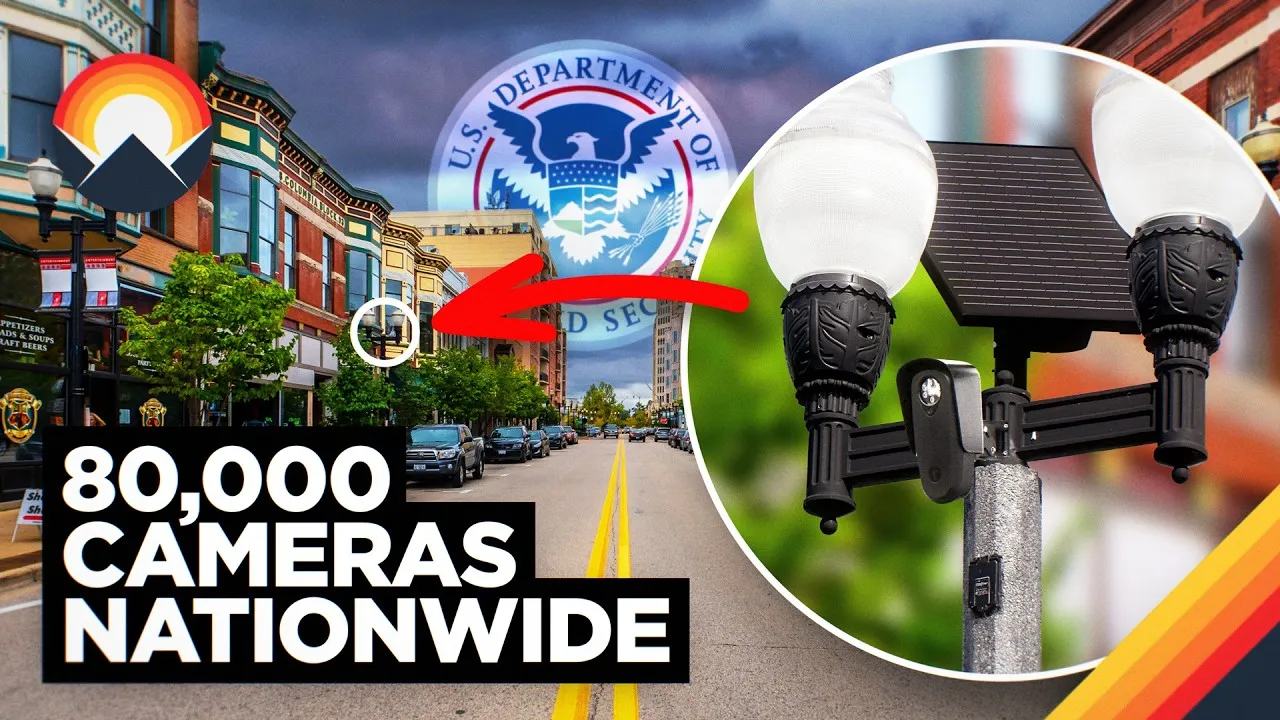
Many towns use advanced license plate reading cameras. These cameras are often owned by private companies, like Flock Safety. Local police departments pay a yearly fee to use these cameras. The system allows police to track when and where specific vehicles were seen. They can also set up alerts for certain license plates, leading to potential arrests.
Police use these cameras daily to investigate various crimes, from assaults to sex offenses. For example, in Glenwood Springs, Colorado, these cameras helped catch a gang member in a stolen car, a wanted felon, and a pedophile. The town’s location on Interstate 70 means many cars pass through, making the camera data valuable for tracking suspects who might flee the area.
Sharing Data with Other Agencies
Police departments often agree to share data with other agencies across the country. This means one police department can search another’s camera data by simply clicking a few buttons. This is how agencies like ICE gain access to information collected by local cameras.
Internal records show that police departments outside of Glenwood accessed its data hundreds of thousands of times in just one month. Some of these departments openly work with ICE. This explains how ICE’s investigative arm, HSI, has been caught using data from these local cameras. There are even signs that this data has been used to track people involved in protests.
Concerns About Data Usage
The reasons logged for searching the data are sometimes unclear, like simply writing “investigation” or “TBD.” This lack of clear logging means local police departments don’t always know how other agencies are using their data. There have been cases where officers used this data for personal reasons, like stalking ex-partners.
These incidents are not rare. Many officers caught misusing the data only face internal discipline, not legal action. And since the tracking of camera usage can be inconsistent, it’s easy for misuse to go unnoticed.
Local Reactions and Continued Access
When residents of Glenwood Springs learned about ICE accessing their local data, they put pressure on the city council. The police department then stopped sharing data with agencies outside of Colorado. This was supposed to comply with state laws that prevent local police from cooperating with federal immigration authorities.
However, reports showed that two police departments within Colorado illegally shared data with ICE. In response, Glenwood shut off all outside access to the system. But even then, the city’s lawyer noted that their contract with Flock Safety might not allow them to completely control how Flock uses the data.
In another case, Denver ended its contract with Flock after discovering its data was shared with federal immigration authorities without their knowledge. This happened as part of a pilot program. This shows that even if local police cameras are secured, ICE might still find ways to access Flock Safety data through other means.
Private Companies as Data Sources
Flock Safety cameras are also used by private businesses, like Lowe’s home improvement stores. These companies collect data on every car that enters their parking lots. Unlike police departments, they don’t share their usage logs, so the public has no idea what they do with this information.
These private cameras can act as a backdoor for ICE to watch people’s movements, even in areas that don’t cooperate with federal immigration enforcement. Since most Americans distrust ICE, this access to local surveillance data is a growing concern.
ICE’s Direct Surveillance Tools
Besides accessing local data, ICE uses its own tools. One such tool is called Mobile Fortify. This is a special app developed for federal immigration agents to identify individuals.
When an agent uses Mobile Fortify, they can scan a person’s face. If the scan is successful, the app can show the person’s name, birth date, nationality, immigration status, and if they are ordered to be deported. This information can give agents a reason to make an arrest.
Facial Recognition and Data Collection
The accuracy of Mobile Fortify depends on the quality of its photo database. ICE gets most of its images from Customs and Border Protection (CBP). CBP uses biometric scanners at airports to collect facial images when people board international flights.
While photos of U.S. citizens taken at these gates are deleted within 12 hours, photos of non-citizens are kept for up to 75 years. These images can be accessed by ICE’s Mobile Fortify app. The app also connects to ICE’s case management system and the FBI’s crime database.
Concerns About Mobile Fortify’s Accuracy and Use
ICE agents can use Mobile Fortify on anyone, at any time, for any reason. However, the app is not always accurate. In one case in Oregon, an officer scanned a woman’s face, and the app showed a similar person.
The officer then called out a name, and when there was no response, scanned her face again. The app then matched with a completely different person. The officer stated that his reason for arresting the woman was because she spoke Spanish and the facial recognition system had a possible match.
Courts have ruled that speaking a certain language cannot be the sole reason for probable cause. This means the officer might have been relying on faulty information from the Mobile Fortify app. Facial recognition technology often struggles in real-world conditions like poor lighting or when people are moving.
Using Mobile Fortify on Protesters
Agents have also been seen using Mobile Fortify on protesters. This is concerning because protesters are often U.S. citizens who are not facing deportation. The images captured by Mobile Fortify can be kept for up to 15 years, even for U.S. citizens.
This creates an electronic record of who was at a protest. There are reports of individuals being threatened with arrest and later having their travel privileges revoked after being identified by facial recognition technology at protests.
This suggests that facial recognition data might be used to track dissent. If agents can see that someone was previously at an anti-ICE protest, it could create a database of people to watch. This information could then be used to target individuals for detention.
Stingray Devices and Cell Phone Tracking
ICE also uses devices called Stingrays. These are part of a vehicle-based cell phone surveillance system. Stingrays work by pretending to be a cell signal. Cell phones automatically connect to the strongest signal nearby, so any phone close to a Stingray will connect.
The device can then capture a unique number from the cell phone, called an IMSI number. With a court order, ICE can get the phone company’s records to link this IMSI number to a specific person.
Policies and Misuse of Stingrays
ICE policies state that Stingrays should only be used with a warrant for specific targets. However, there is a history of ICE using these devices without warrants. An Inspector General report highlighted this problem.
There is also evidence that ICE might be using Stingrays for mass surveillance, collecting IMSI numbers from everyone in an area. This could be happening at events like protests, creating a log of everyone present.
The Growing Surveillance Network
License plate readers, Mobile Fortify, and Stingrays are just some of the tools ICE uses. The agency has access to many digital surveillance tools that help automate their investigations. This allows them to focus more on apprehending individuals.
ICE does not often share information about its surveillance systems. Much of what is known comes from leaks, court documents, and observations. With a significant increase in funding, ICE’s surveillance capabilities are expected to grow rapidly.
Impact on Privacy and Rights
Many of these surveillance tools are not very accurate and have high error rates. However, ICE may continue to use them because they can serve as a way to arrest people without proper probable cause. It can be easier for the agency to detain individuals and then investigate their status rather than gathering solid evidence beforehand.
For some, this might seem acceptable if it helps achieve deportation goals. However, it contributes to a broader increase in mass surveillance. Historically, Americans have been wary of government surveillance and value their privacy.
The Fourth Amendment protects against unreasonable searches and seizures. ICE’s methods, which often involve searching everyone without warrants, challenge these protections. The agency has a history of ignoring or changing policies, hiding its methods, and not using surveillance responsibly.
A Slippery Slope
While these methods might make ICE more efficient at removing immigrants, they also normalize a society where the government can track people’s locations, connections, and activities. This power is already being abused, and the same tactics used against immigrants and protesters could eventually be used against anyone.
America is increasingly becoming a surveillance state. Many people may not be concerned because the current targets are often groups they see as enemies. However, the expansion of surveillance affects everyone’s privacy and constitutional rights.
Protecting Your Privacy Online
While many forms of digital surveillance are hard to avoid, some steps can be taken to protect your online privacy. For example, your internet service provider (ISP) may keep records of your browsing history, which can be shared with the government if they have a warrant.
Using a Virtual Private Network (VPN) can help. A VPN, like NordVPN, creates an encrypted connection between your device and a VPN server. This means your ISP cannot see your online activity, and NordVPN does not keep usage data that could be handed over to the government. Independent reviews have confirmed this policy.
A VPN can also help you bypass internet restrictions or access geo-blocked content. It provides an extra layer of security by blocking dangerous ads and websites, reducing the risk of malware. In today’s digital world, a VPN is a crucial tool for internet users concerned about privacy and security.
Source: How ICE's Surveillance System Works (YouTube)