OpenAI Shuts Down Sora AI Video Project, Focuses on Business Tools
OpenAI, the company behind ChatGPT, has decided to stop developing its Sora AI video generation tool. This move signals a major shift in strategy, as OpenAI aims to concentrate its resources on core products that serve businesses and boost productivity.
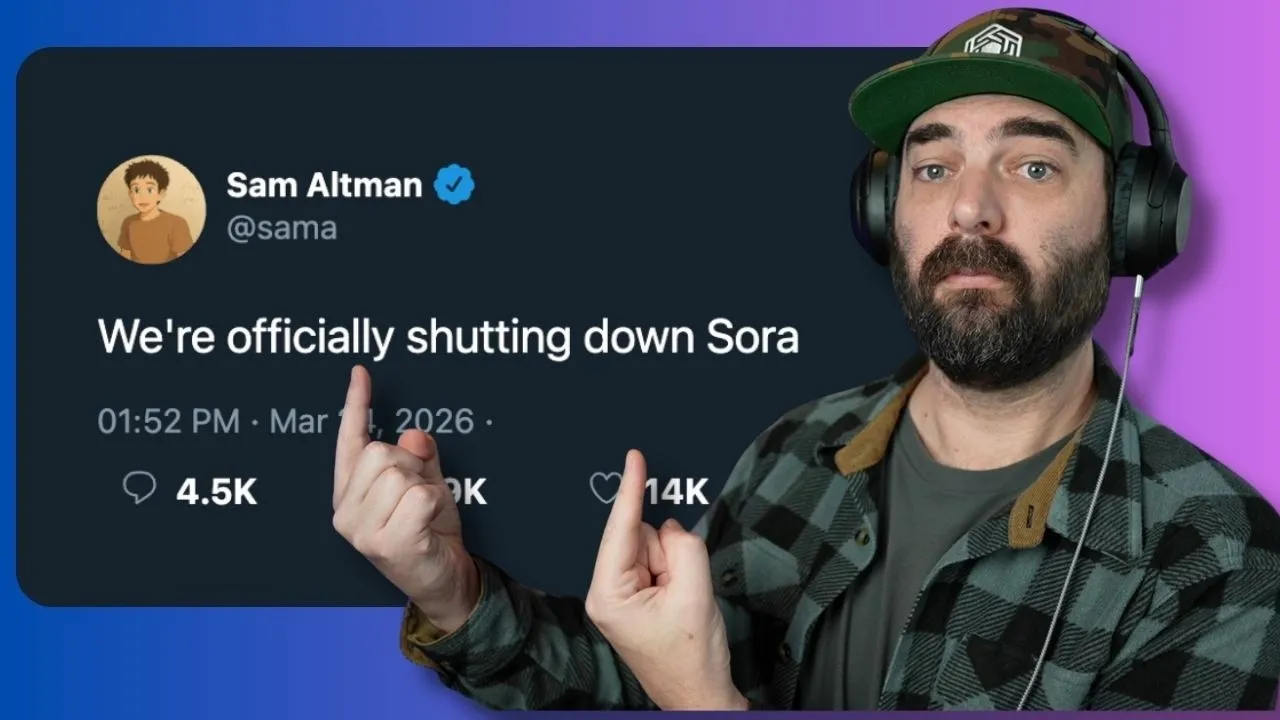
The official Sora app on X (formerly Twitter) announced the change, stating, “We’re saying goodbye to the Sora app. To everyone who created with Sora, shared it, and built community around it. Thank you.” The company acknowledged that this news might be disappointing and promised to share more details soon about timelines for the app and its API, as well as how users can preserve their work.
Why the Change?
Reports from The Wall Street Journal and The Information suggest that OpenAI’s leadership is making a strategic pivot. The company wants to focus on what it calls its “core business” and avoid getting sidetracked by numerous smaller projects. This means putting more effort into tools for coding and services aimed at business customers.
OpenAI’s CEO of applications mentioned that the company cannot afford to be distracted by “side quests” and must prioritize productivity, especially for businesses. This focus comes at a time when many AI companies, including OpenAI, are facing limitations in computing power, often referred to as being “compute constrained.”
The Sora video tool was seen as particularly demanding on these resources. While it produced impressive, sometimes meme-worthy videos, its practical use case for businesses was not as clear as other AI applications like text generation or coding assistance.
A Pattern of Pivots
This isn’t the first time OpenAI has scaled back on a project. Over the past year and a half, the company has launched and then seemingly abandoned several initiatives. These include an AI competitor that faded from view, a browser called Atlas that was popular for a short time but then lost traction, and Search GPT.
Other projects like Whisper for speech-to-text and Jukebox for music creation also exist, though they may not be as widely discussed as the company’s main offerings. DALL-E, OpenAI’s image generation platform, seems to have been largely integrated into or overshadowed by the image features within ChatGPT.
Consolidating Efforts
The decision to move away from Sora is part of a broader effort to streamline OpenAI’s product offerings. Last week, the company announced it was combining its ChatGPT desktop app, coding tool Codex, and browser into a single “super app.” This move mirrors what competitor Anthropic has done with its Claude app, which also includes collaborative features within a single interface.
By consolidating these tools, OpenAI hopes to give its employees a clearer, unified vision to work towards. This also means that video creation features previously planned for ChatGPT will likely not be developed.
The Sora Dilemma
When Sora was first introduced, it generated significant excitement for its ability to create realistic and imaginative video scenes. However, some critics, including those within OpenAI, questioned the amount of computing power dedicated to the project, especially given the high demand for AI resources for other applications. The Wall Street Journal reported that employees had expressed surprise at the resources poured into Sora, citing a lack of clear demand.
The company’s deal with Disney, announced in December, involved licensing over 200 characters for AI-generated videos. The future of this partnership now seems uncertain with the discontinuation of Sora.
Furthermore, OpenAI faces strong competition in the AI video generation space. Competitors like Google, along with Chinese companies offering tools such as VooV.ai, Kling, and Seed Dance, are reportedly developing video models that may already surpass Sora’s capabilities. Unlike OpenAI, Google can afford to subsidize AI development through its lucrative advertising business from search and YouTube, giving it more freedom to experiment.
Looking Ahead: The “Spud” Model
With Sora out of the picture, OpenAI is reportedly focusing on its next major AI model, codenamed “Spud.” Sam Altman, OpenAI’s CEO, has informed staff that the initial development of Spud is complete. The company expects to have a powerful new model ready in the coming weeks.
The development of Spud signifies a fresh start, involving a complete, expensive, and time-consuming training process from scratch. This is different from minor updates or fine-tuning of existing models, which often result in smaller versions like “mini” or “nano” models. The company believes this new model could significantly accelerate economic growth, suggesting they feel close to achieving Artificial General Intelligence (AGI).
Why This Matters
OpenAI’s decision to discontinue Sora and refocus on core business and coding tools highlights a critical trend in the AI industry: the need for practical, scalable applications. While creative tools like Sora are impressive, companies are increasingly prioritizing AI that can directly improve efficiency and generate revenue.
This strategic shift suggests OpenAI is aiming for long-term sustainability and market dominance by concentrating on services that businesses need most. The development of the Spud model also signals a continued push towards more advanced AI capabilities, potentially leading to significant advancements in various industries.
For users and businesses, this means OpenAI’s future efforts will likely be geared towards enhancing productivity, improving coding workflows, and providing more sophisticated AI assistance within a unified platform. While the novelty of AI video generation like Sora may fade, the pursuit of powerful, foundational AI models like Spud promises to reshape how we work and interact with technology.
Source: OpenAI Just Killed Sora (YouTube)