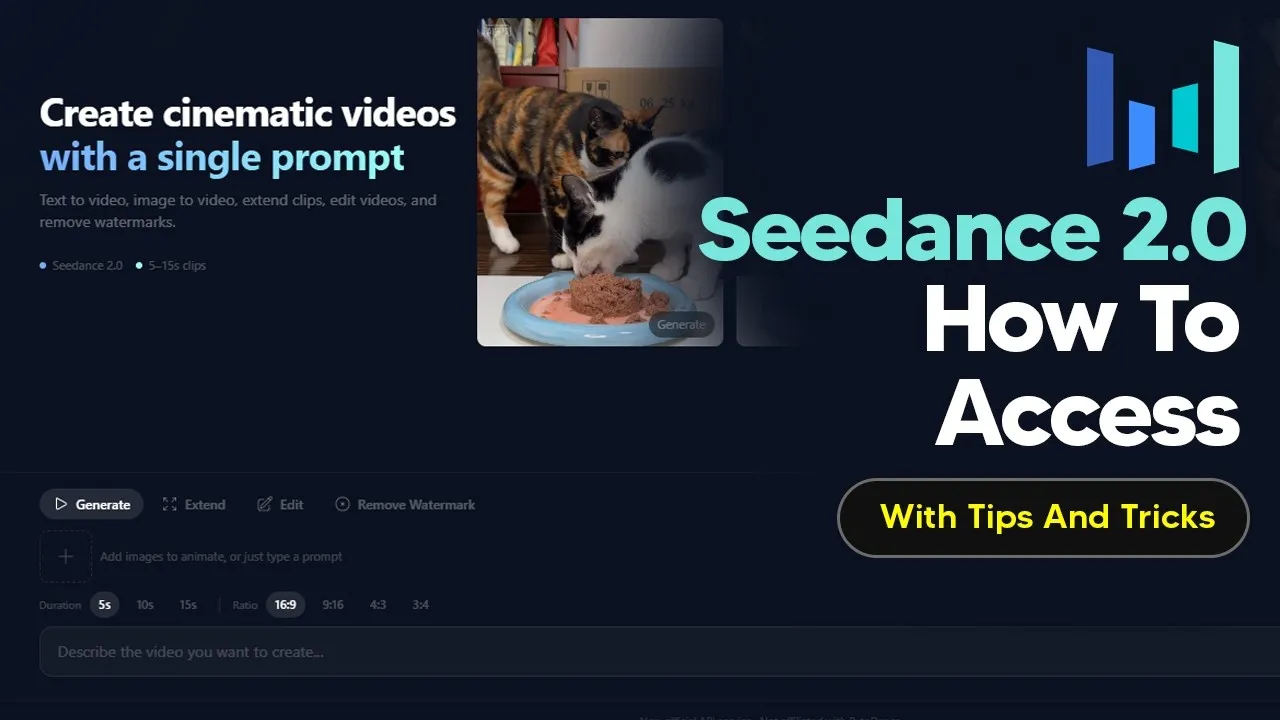
AI Video Generation Tool Now Available Through Third-Party Platform
A powerful new AI video generation tool, known as Stable Video Diffusion 2 (SVD 2.0), is now accessible to users worldwide. While not directly offered by its creators, a platform called PI API is providing access. This allows people to experiment with advanced AI video creation without needing special access or VPNs.
What is PI API?
PI API is a platform that brings together many different AI tools. It offers access to AI for creating images, audio, 3D models, and large language models (LLMs). Now, it also includes SVD 2.0, a significant advancement in AI video generation.
How SVD 2.0 Works
SVD 2.0 is designed to create videos that feel more cinematic. Unlike older tools that might produce a single, static shot, SVD 2.0 can generate clips with multiple camera angles. This gives videos a more dynamic and professional look.
For example, a prompt like “a Ferrari driving racing through London” can result in a 5-second clip that naturally shifts between different viewpoints. This can make the generated videos much more engaging.
Understanding the Costs
Accessing SVD 2.0 through PI API comes with a cost. Pricing varies based on the video’s quality, duration, and style. For instance, a basic 5-second clip at standard quality might cost around $0.40.
Increasing the quality to a higher setting can raise the price. Making the video longer, such as 15 seconds, also increases the cost significantly. Users need to be mindful of these factors when generating videos to manage expenses.
Adding Funds to Your Account
To use the service, users must add funds to their PI API account. This can be done by navigating to the workspace section and selecting the option to top up credits. Payments can be made using methods like Stripe, credit cards, or even cryptocurrency.
Once funds are added, users can see their credit balance and use it for generating videos. The platform notes that they are not officially affiliated with the creators of SVD 2.0, and the service is provided as an unofficial API access point.
Key Features and Limitations
A notable feature of SVD 2.0 is its ability to handle multiple inputs. Users can provide up to four images and audio files to guide the video generation. The official version of SVD 2.0 can handle even more, up to nine images, three short videos, and three audio files.
This allows for more creative control, enabling features like synced sound effects, dialogue, and automatic lip-syncing. Users can input reference images to influence the style and content of the generated video.
However, there are limitations. SVD 2.0 struggles with generating realistic human faces and people. Prompts involving custom characters or real faces are often blocked or produce poor results. Additionally, the tool avoids generating content that could infringe on Hollywood intellectual property, meaning popular movie characters are off-limits.
Other features, like extending or editing existing clips, are still considered shaky and may not work as well as the core generation capability. The platform is still rolling out globally, and some features might be improved over time.
Generating Videos with SVD 2.0
To create a video, users input a text prompt. For more control, they can specify a timeline of events, dictating what happens at different points in the video. This structured prompting, similar to how movies are directed, leads to more effective and predictable results.
For example, a detailed prompt might specify actions for the first two seconds, then the next two, and so on, using specific camera shots and editing rhythms. This approach, when combined with reference images, allows users to guide the AI more precisely.
Generating a 5-second clip typically takes about 2 to 3 minutes. The generated videos, by default, come with a watermark indicating they are AI-generated. This watermark can be removed for a small fee, usually around $0.008 per clip.
Removing the watermark may require users to periodically refresh the page to see the updated video. Checking the history and logs can help track the progress of these operations.
Why This Matters
The global availability of SVD 2.0 through platforms like PI API democratizes access to cutting-edge AI video creation. Previously, such advanced tools might have been limited to researchers or specific regions. Now, creators, marketers, and hobbyists can experiment with generating high-quality video content.
This opens doors for new forms of digital storytelling, faster content creation for social media, and innovative marketing campaigns. While limitations exist, especially concerning realistic human depiction and IP concerns, the core ability to generate dynamic, multi-angle video sequences represents a significant step forward in AI capabilities.
Source: Where To Access SeeDance 2 – Updated Guide With Tips And Tricks (YouTube)