Unlock a stronger core in just 15 minutes with this dynamic and isometric exercise circuit.
Building a strong core is crucial for overall health, supporting everything from good posture to preventing back pain. Fitness expert Tasha from fitnessblender.com offers a time-efficient workout designed to target your core muscles effectively. This routine, lasting about 15 minutes including warm-up and cool-down, combines dynamic movements with isometric holds to build both strength and stability.
Get Started with a Quick Warm-Up
The workout begins with a brief 2-minute warm-up focused on core activation. These exercises prepare your muscles for the work ahead without causing fatigue. You’ll start on your back with a dead bug iso-press, which involves extending opposite limbs while pressing a hand against the opposite thigh. This is an isometric exercise, meaning you hold the position and engage the muscles without movement. Deep breaths are encouraged throughout.
Next, you’ll move to a quadruped position (hands and knees) for alternating bird-dog with a crunch. This exercise involves extending one arm and the opposite leg, then bringing the elbow and knee towards each other for a crunch. Keeping your pelvis stable is key. The warm-up concludes with a modified plank where you walk your hands forward and back, focusing on keeping your core tight and pelvis tucked.
Circuit 1: Dynamic and Isometric Core Blasts
The main workout is divided into two circuits, each lasting about 12.5 minutes. The first circuit features four exercises performed for 20 seconds each, followed by a 10-second rest. This cycle is repeated twice.
The first exercise is the alternating single-leg V-up. Lying on your back with arms extended overhead, you’ll lift your upper body and one leg at a time towards your ankles. If this is too challenging, a modification involves bending the knees and reaching towards them.
Following the V-up is the hollow hold with a single leg extended. This isometric exercise requires you to lift your head, chest, and shoulders off the mat while extending one leg. Maintaining a tight core and a slight tuck of the pelvis is important here.
The circuit then moves to a forearm plank position for alternating knee taps. From a stable plank, you’ll slowly tap one knee at a time towards the ground, focusing on keeping your hips as still as possible. This dynamic movement is followed by a static forearm plank hold to build endurance.
Circuit 2: Bear Crawls and Back Extensions
The second circuit introduces new challenges, again with 20 seconds of work and 10 seconds of rest, repeated twice.
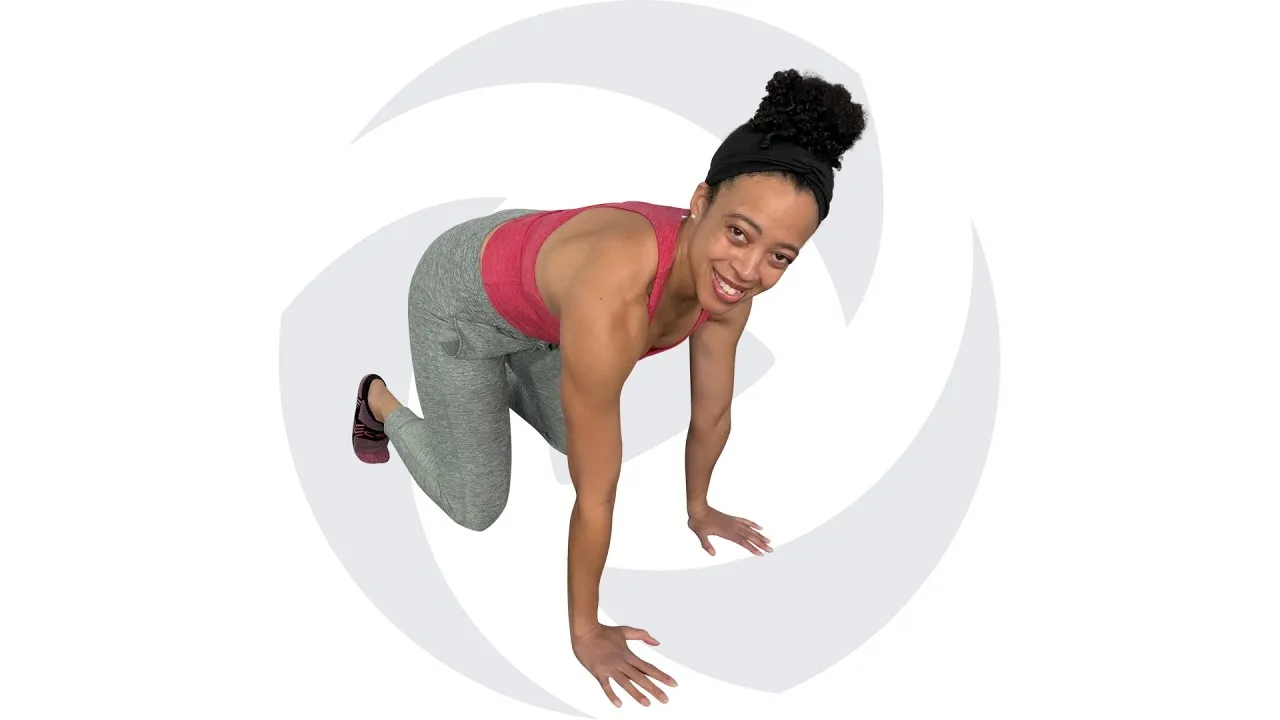
You’ll start in a bear crawl position, with hands under shoulders and knees hovering just off the ground. The first exercise involves tapping opposite palms and then kicking both legs back. This move challenges your coordination and core stability. Modifications include shoulder taps or full back kicks, keeping knees close to the ground if possible.
This is followed by an isometric bear crawl hold, maintaining the elevated position with a tight core. Next, you’ll transition to your belly for back extensions. With fingertips under your chin, lift your upper body off the ground, squeezing your back muscles. You can increase the range of motion by coming up higher.
The isometric hold for this circuit is the superhuman hold, where you lift both your upper body and lower body off the ground simultaneously. This is a challenging move that requires significant core and back strength. The transcript mentions a creative name for this exercise due to a mic placement issue, highlighting the need for careful execution.
The Finisher: Putting It All Together
To conclude the workout, a finisher combines all the dynamic movements from the circuits. You’ll perform each of the four dynamic exercises for 30 seconds with a 10-second rest in between. This includes the alternating single-leg V-ups, alternating knee taps from forearm plank, bear crawl taps and kicks, and back extensions.
This final push ensures that your core muscles are thoroughly worked. The increased time under tension for each movement in the finisher helps to maximize the workout’s effectiveness.
Cool-Down and Stretches
The workout finishes with a short 2-minute cool-down. This phase is essential for helping your body recover. You’ll start with a chest stretch on your belly, pressing your chest up while keeping your hips down. This can help open up the front of your core.
Next, you’ll move into a child’s pose, resting your forehead on the mat with arms extended. This pose helps to relax the lower back and calm the nervous system.
Finally, the cool-down includes spinal twists. Sitting tall, you’ll cross one leg over the other and gently twist your torso, using the opposite arm to deepen the stretch. This helps to improve spinal mobility and release tension.
Who is this workout for?
This workout is suitable for individuals looking to improve their core strength and stability. It can be modified to accommodate different fitness levels. Those experiencing mild back discomfort may find core strengthening beneficial, but it is always recommended to consult with a healthcare professional before starting any new exercise program, especially if you have pre-existing conditions.
Key Health Takeaways
- Consistent Core Work: Regular engagement of core muscles is vital for posture, balance, and reducing the risk of back pain.
- Dynamic vs. Isometric: Combining dynamic (moving) exercises like V-ups with isometric (holding) exercises like planks builds both strength and endurance in the core.
- Time Efficiency: This workout proves that you can achieve significant core strengthening in a short amount of time, making it ideal for busy schedules.
- Listen to Your Body: Modifications are offered, emphasizing the importance of adjusting exercises to your current fitness level and avoiding pain.
- Proper Form is Key: Focus on controlled movements and maintaining core engagement throughout each exercise to maximize benefits and prevent injury.
Disclaimer: This article is for informational purposes only and does not constitute medical advice. Always consult with a qualified healthcare provider before beginning any new fitness program or making any changes to your health regimen.
Source: Quick Core Strength Circuits with Finisher: Dynamic and Isometric Exercises (YouTube)