Iran Rejects US Peace Plan, Markets Show “Cognitive Dissonance”
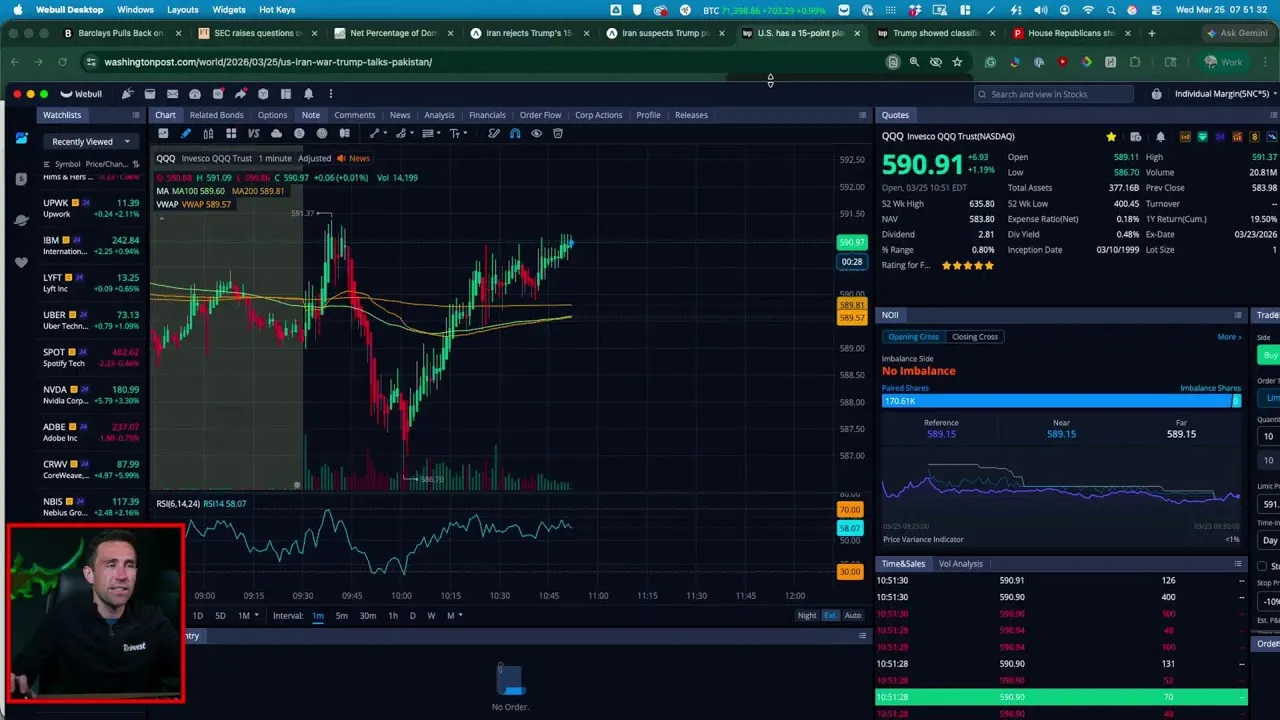
Markets are currently experiencing what one analyst described as “cognitive dissonance,” a puzzling state where conflicting ideas exist simultaneously. Despite escalating geopolitical tensions in the Middle East and Iran’s outright rejection of a 15-point peace proposal from the U.S. administration, major stock indices like the Nasdaq (Q’s) have shown resilience, hovering near their opening levels. This market behavior is occurring even as the conflict raises concerns about a potential global energy shock and recession.
Iran’s Stance on Peace Talks
Iran has responded firmly to the U.S. proposal, delivered via Pakistan. The Iranian government considers the plan “excessive” and has stated that it will not allow the U.S. or President Trump to dictate the timing of the end of the war. Instead, Iran insists on defining the end of the conflict on its own terms, contingent on specific conditions being met. These conditions include the cessation of all attacks and assassinations, which implies a halt to bombing campaigns.
Furthermore, Iran is demanding concrete guarantees to prevent the resurgence of war and is seeking recognition of its sovereignty over the Strait of Hormuz. The nation also wants an end to attacks on resistance groups in Iraq and Lebanon, particularly highlighting the ongoing bombardment of Hezbollah by Israel. Iranian officials have expressed skepticism about the U.S. negotiating in good faith, with one military spokesman suggesting the U.S. was negotiating with itself to escape a strategic defeat. A Trump advisor’s quote, “Trump has a hand open for a deal and the other is a fist waiting to punch you in the effing face,” seems to capture the perceived duality of the U.S. approach.
Geopolitical Developments and Market Reactions
The situation remains tense, with reports of Iran directing attacks in Europe and the U.S. deploying an additional 2,000 soldiers from the 82nd Airborne Division to the region. These military movements appear to contradict the spirit of peace negotiations, fueling Iranian suspicion. Meanwhile, the United Nations has described the conflict as having an “unprecedented power to ensnare countries across borders.” The potential for a prolonged conflict leading to a recession is a significant concern, yet the stock market, particularly the S&P 500, remains surprisingly close to all-time highs.
This divergence between the dire geopolitical warnings and the market’s relative calm is the essence of the “cognitive dissonance” observed. While commodity analysts discuss disastrous global consequences, stock prices have fallen but not to levels that reflect a full-blown crisis. The bond market, however, offers a slightly different perspective. The 10-year Treasury yield has seen a notable decline, falling 6.4 basis points, which is generally viewed as a positive sign, even as the two-year yield also decreased.
Volkswagen’s Potential Shift to Defense Manufacturing
In a surprising development, Volkswagen is reportedly in talks with Israel’s Iron Dome maker, Rafael Advanced Defense Systems, to potentially shift production from cars to missile defense components. This move, which could save approximately 2,300 jobs at a German plant, marks a significant return to weaponry for Volkswagen, which produced military vehicles and the V1 flying bomb for Nazi Germany during World War II. The V1 is described as the world’s first operational cruise missile, highlighting the historical weight of this potential transition.
SpaceX IPO Rumors and Investor Caution
Adding another layer to market activity, there are rumors that SpaceX might file for its Initial Public Offering (IPO) confidentially as early as this week or next. Advisers predict the company could aim to raise over $75 billion, which would surpass all U.S. IPOs from last year. However, SpaceX may report losses after absorbing XAI, and the company reportedly plans to forgo the standard six-month lock-up period for insiders, a move that could allow for immediate selling pressure on the stock.
What Investors Should Know
The current market environment is characterized by uncertainty. Iran’s firm rejection of the U.S. peace proposal and the ongoing military buildup suggest a prolonged conflict is possible, which could indeed trigger the feared energy shock and recession. Investors should pay close attention to developments in the Strait of Hormuz, as any disruption could significantly impact global energy prices. The market’s current resilience, despite these risks, could be seen as either optimism about a de-escalation or a dangerous disconnect from reality.
The Federal Reserve’s stance on interest rates also remains a factor. Comments from European Central Bank President Christine Lagarde suggest a readiness to raise rates if energy shocks significantly push up inflation, a sentiment that could be mirrored by the U.S. Federal Reserve. While the ADP jobs report showed continued job growth, suggesting the economy isn’t collapsing, a cautious approach to investing is still advisable given the complex geopolitical landscape and the potential for significant market volatility.
Source: Stock Market & Iran Response (YouTube)