How to Solve the Subset Sum Puzzle
This article will guide you through understanding and solving the fascinating subset sum puzzle. You’ll learn the basic rules of the game and discover how to approach finding two different groups of numbers within a given set that add up to the same total. It’s a logic challenge that tests your ability to find patterns and combinations.
What is the Subset Sum Puzzle?
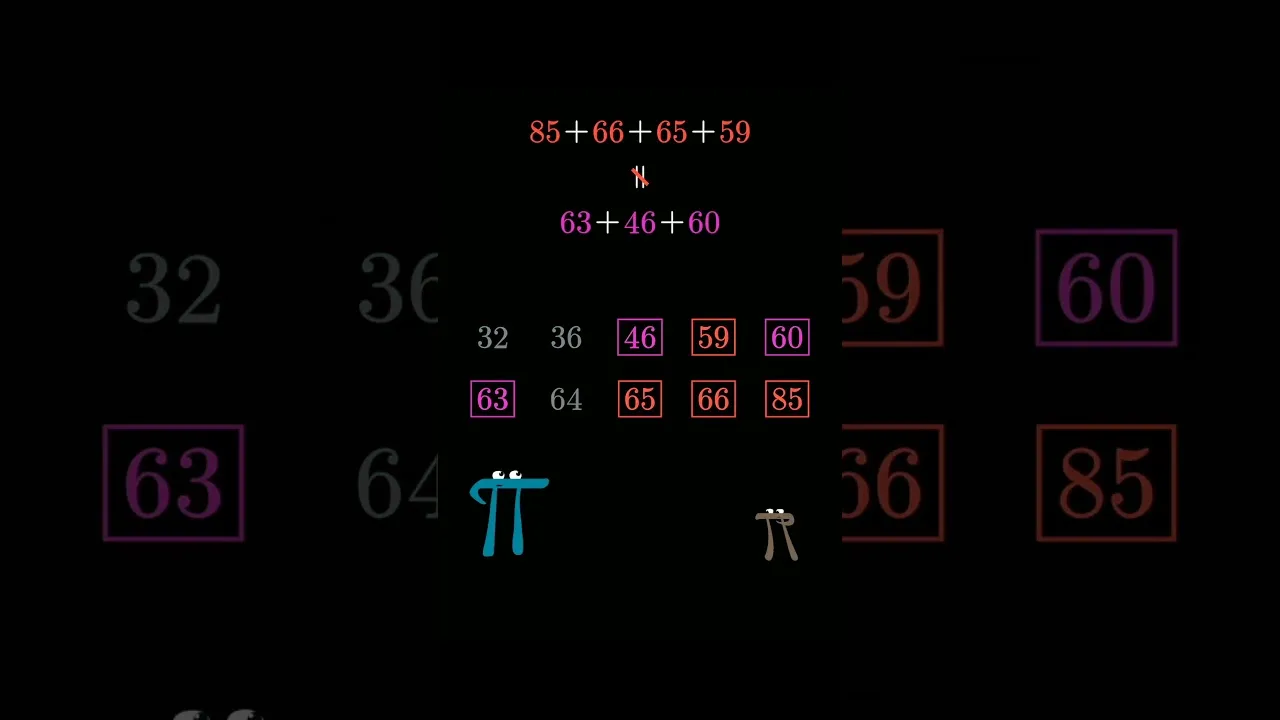
Imagine a game where one person picks 10 numbers between 1 and 100. The goal for the other person is to find two different sets of these 10 numbers that add up to the exact same sum. For instance, two separate groups of numbers could both total 102. If you can find these two matching sums, you win. The puzzle asks who has the advantage: the person picking the numbers or the person finding the sums.
Understanding the Challenge
The core of the puzzle lies in the Pigeonhole Principle. This principle states that if you have more items than containers, at least one container must have more than one item. In our number game, the ‘items’ are the possible sums you can create, and the ‘containers’ are the numbers themselves.
How Many Possible Sums Are There?
Let’s say the 10 numbers chosen are a, b, c, d, e, f, g, h, i, and j. You can form many different sums by picking one number, two numbers, three numbers, and so on, up to all ten numbers. The smallest possible sum is the smallest number chosen, and the largest is the sum of all 10 numbers.
The Pigeonhole Principle in Action
Consider the 10 numbers chosen by the first player. Let’s call these numbers N1, N2, …, N10. The maximum possible sum you can get from these 10 numbers is if you add all of them together. The minimum possible sum is the smallest number itself.
If the 10 chosen numbers are, for example, 1, 2, 3, 4, 5, 6, 7, 8, 9, 10, the smallest sum is 1 and the largest sum is 55 (1+2+…+10). However, the puzzle isn’t about finding a specific target sum. It’s about finding two *different combinations* of these 10 numbers that result in the *same sum*.
The key insight comes from realizing how many possible subsets (groups) you can form from the 10 numbers. With 10 numbers, there are 2^10 possible combinations, which equals 1024. This includes the empty set (which sums to 0) and the set of all 10 numbers.
The Number of Possible Sums vs. Number of Subsets
Let’s think about the range of possible sums. If the 10 numbers are between 1 and 100, the smallest possible sum is the smallest number chosen (at least 1). The largest possible sum is the sum of the 10 largest possible numbers, which could be up to 100 + 99 + … + 91. This is a very large number, but importantly, it’s finite.
The crucial point is that the number of possible sums you can create is much smaller than the total number of possible subsets you can form. Even if the numbers are large, the maximum sum is bounded. For 10 numbers, each up to 100, the maximum possible sum is 1000 (10 * 100). The minimum sum is at least 1. This gives us a range of possible sums.
Winning Strategy
The person who picks the 10 numbers has the winning strategy. Here’s why: they can choose the numbers in such a way that the number of possible sums is less than the number of possible subsets.
Let’s consider the maximum possible sum achievable with 10 numbers, each at most 100. This sum is 10 times 100, which is 1000. The minimum sum is at least 1. So, there are at most 1000 possible sums (from 1 to 1000).
However, as we calculated earlier, there are 2^10 = 1024 possible subsets (combinations) you can form from the 10 chosen numbers. Since there are more possible subsets (1024) than possible sums (at most 1000), the Pigeonhole Principle guarantees that at least two different subsets must have the same sum.
The person picking the numbers can select them carefully. They can choose 10 numbers such that the range of possible sums is limited. For example, if they choose 10 numbers that are all relatively small, the maximum sum will also be small.
Example Scenario
Imagine the first player chooses the numbers: 1, 2, 3, 4, 5, 6, 7, 8, 9, 10. The total number of subsets is 1024. The maximum sum is 55. The minimum sum is 1. So, there are only 55 possible sums. Since 1024 (subsets) is much larger than 55 (possible sums), there must be at least two different subsets that add up to the same value.
For instance, the subset {1, 2, 7} sums to 10. The subset {3, 7} also sums to 10. These are two different subsets with the same sum. The person picking the numbers aims to create a situation where this overlap is guaranteed.
Conclusion
The puzzle highlights a clever application of a mathematical principle. By understanding the number of possible combinations versus the number of potential outcomes, we can see why the number selector has the advantage. The challenge is designed so that the math itself ensures a solution exists for the number finder, but the number picker can control the constraints to make it work.
Source: The subset sum puzzle (YouTube)