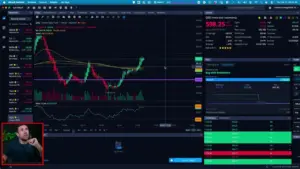
Bitcoin’s Choppy Range Tests Investor Patience
The cryptocurrency market is currently navigating a period of significant uncertainty, with Bitcoin struggling to establish a clear trend. While some analysts predict a bottom in late 2026, others point to recent positive developments as signs of a potential recovery. This divergence in opinion highlights the complex factors influencing digital asset prices.
Bitcoin has been trading within a volatile range, failing to achieve a sustained breakout. This choppy price action has left many investors on the sidelines, waiting for clearer signals. The prevailing sentiment among a significant portion of the market is that Bitcoin might see a further decline, potentially bottoming out between $45,000 and $50,000 by the fourth quarter of 2026. This outlook is often tied to historical Bitcoin halving cycles, which tend to influence market bottoms later in the year.
However, a growing counter-narrative suggests that the market may have already found its floor. This optimistic view is bolstered by the renewed buying activity of prominent figures like Michael Saylor, a well-known Bitcoin advocate and CEO of MicroStrategy. His company’s increased accumulation of Bitcoin is seen by some as a strong indicator of underlying market strength and a potential catalyst for the next bull run.
Geopolitical Tensions Add Another Layer of Complexity
Adding to the market’s volatility are escalating geopolitical tensions. Historically, global conflicts and shocks have triggered sharp, albeit often short-lived, reactions in Bitcoin’s price. Following events like the invasion of Ukraine and the recent conflict involving Iran, Bitcoin has experienced swift downturns followed by relatively quick recoveries. The current situation, however, carries the potential for prolonged instability, making its impact on the market more unpredictable.
The ongoing geopolitical situation introduces a significant layer of risk. The duration and intensity of these conflicts can directly influence oil prices, inflation, and the broader economic outlook. These factors, in turn, affect central bank policies, particularly interest rate decisions, which have a profound impact on risk assets like cryptocurrencies.
Stablecoins: The Emerging Liquidity Engine
Amidst the market’s indecision, a significant opportunity is emerging within the stablecoin sector. Stablecoins, digital currencies pegged to stable assets like the U.S. dollar, are poised to become a major driver of liquidity and adoption in the crypto space. Despite a general downturn in retail interest, institutional players are increasingly focusing on this area.
Data suggests a massive potential for stablecoin growth. A report indicates that 77% of individuals would open a stablecoin wallet if offered by their bank or fintech app. This points to a substantial untapped market that could rival the largest global payment networks. Major financial players are recognizing this trend:
- Mastercard is expanding its crypto initiatives, including a partner program with over 85 companies and the acquisition of BNK Finance for up to $1.8 billion, signaling a strong commitment to stablecoin infrastructure.
- Stripe, a fintech giant valued at $159 billion, has also heavily invested in stablecoins, acquiring Bridge, a stablecoin orchestration platform, and developing its own payment blockchain, Tempo. Stripe’s stablecoin volume doubled last year, even as Bitcoin’s price fell.
- Visa is deepening its partnership with Stripe and Bridge, further integrating stablecoin services into its network.
The U.S. Treasury has warned that up to $6.6 trillion in U.S. bank deposits could migrate to stablecoins, particularly if yield-bearing options become widely available. This shift offers individuals the potential to earn significantly higher yields on their cash compared to traditional bank accounts, while potentially bypassing traditional financial intermediaries.
AI and Stablecoins: A Synergistic Future
The convergence of artificial intelligence (AI) and stablecoins presents a compelling narrative for the future of finance. As AI becomes more sophisticated and integrated into commerce, stablecoin rails are expected to form a core payment infrastructure.
AI agents are increasingly capable of performing complex tasks, from managing subscriptions to facilitating online purchases. This automation requires robust and efficient payment systems. Stablecoins are well-positioned to serve this need, offering a scalable and cost-effective solution for transactions executed by AI.
Reports project that AI agents could facilitate $3 to $5 trillion in global consumer commerce by 2030. Companies like Coinbase are already developing infrastructure for AI agents to interact with the crypto market, including the ability to hold, spend, and trade digital assets. This integration suggests that the next crypto bull run will be significantly shaped by AI advancements.
Strategic Investment Opportunities
While the market remains uncertain, several strategic investment avenues offer asymmetric upside potential:
- Circle (CRCL): As a leading stablecoin issuer, Circle offers direct exposure to the growing stablecoin market. The company has seen significant stock performance, driven by increasing adoption and its role in the digital asset ecosystem.
- MicroStrategy (MSTR): This company continues to aggressively accumulate Bitcoin, acting as a leveraged play on the cryptocurrency’s price appreciation. Historically, MicroStrategy has sometimes outperformed Bitcoin during bull cycles.
- STRC: This entity is noted for its potential to offer consistent monthly yield, presenting an alternative to traditional market investments like the S&P 500, particularly in volatile periods. Its trading behavior is likened to a stablecoin due to its engineered price stability.
- Treasury Vehicles: The rise of treasury vehicles is seen as a public market expression of the crypto trade. These instruments could become increasingly powerful as the crypto market matures.
For long-term investors, the core strategy remains consistent: if you believe in the future growth of cryptocurrency, dollar-cost averaging (DCA) into assets like Bitcoin can be an effective approach. This method involves investing a fixed amount of money at regular intervals, reducing the risk of timing the market and mitigating the stress associated with short-term price fluctuations.
Market Impact and Investor Outlook
The current market environment is characterized by indecision, with probabilities leaning towards continued choppiness rather than a clear bull or bear trend. Geopolitical instability, inflation concerns, and the Federal Reserve’s monetary policy are key factors to monitor.
For investors, patience and flexibility are paramount. While the allure of quick gains exists, a long-term perspective focused on understanding market narratives and strategic asset allocation is crucial. The growth of stablecoins, fueled by institutional adoption and the integration with AI, points to a significant evolution in the crypto landscape. Companies positioned to benefit from these trends, such as Circle, and leveraged plays like MicroStrategy, represent potential opportunities for those willing to navigate the inherent risks.
The potential for significant upside exists, but it requires a calculated approach. Focusing on asymmetric risk-reward opportunities, where the potential gains significantly outweigh the potential losses, is key. As the market matures, understanding the underlying technological and financial shifts, such as the rise of stablecoins and AI integration, will be essential for capitalizing on future growth.
Important Regulatory Update: 1099-DA Forms
A critical, yet often overlooked, development impacting crypto investors is the emergence of Form 1099-DA. This tax form is designed to report digital asset transactions, and failure to properly understand and report its contents could lead to audits by the IRS. Investors who have engaged in any crypto transactions, even simple trades, may receive this form. It is imperative for individuals to familiarize themselves with its requirements and consult with tax professionals to ensure compliance.
Source: how i'd invest in crypto right now to make millions in 2026 (YouTube)