Unlock Claude Co-work’s Power for Effortless Tasks
Learning to use AI tools effectively can save you a lot of time. Claude Co-work is a powerful tool that helps you get tasks done, but it works differently than regular chat interfaces. This guide will show you the key difference so you can start using Claude Co-work to its full potential. You’ll learn how to ask Claude Co-work to complete tasks by focusing on the final result, not by giving step-by-step instructions.
Understand the Key Difference: Outcome vs. Task First
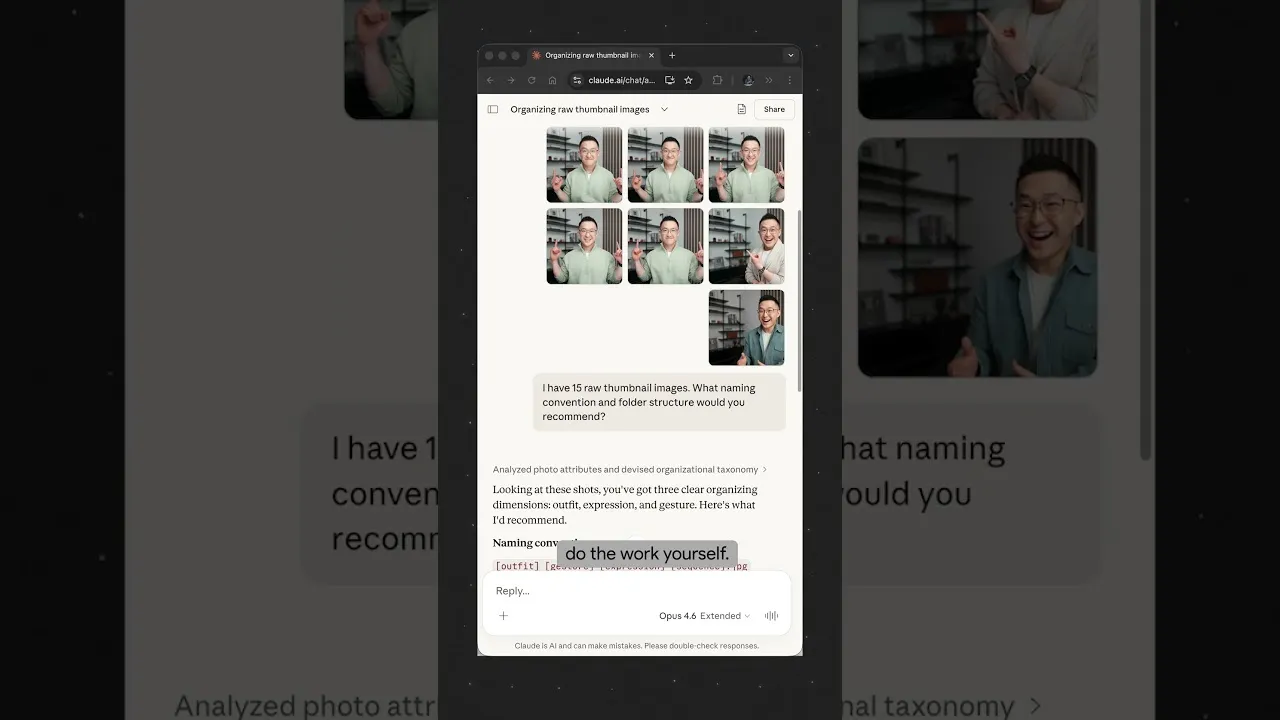
The biggest thing to understand about Claude Co-work is how you should talk to it. It’s not like chatting with a friend or asking a regular AI assistant like Claude Chat. With Claude Chat, you often tell it exactly what to do, step by step. You might say, “Do this first, then format it like that, and now try a different approach.” You guide the AI through each part of the process.
For example, you might give Claude Chat a list of 15 raw thumbnail images and ask, “What naming convention and folder structure would you recommend?” Claude Chat would give you a suggestion, and then you would have to do the actual renaming and organizing yourself. It’s like asking for advice on how to build something, but you still have to do all the building.
How Claude Co-work Works: Outcome First Language
Claude Co-work uses a different method called “outcome first” language. This means you describe the final result you want. You also tell it what rules or limits it needs to follow. Then, Claude Co-work figures out the best way to get there on its own. It handles the steps and the approach for you.
Think of it like hiring someone to do a job. You don’t tell them how to hold the hammer or which nail to use. You tell them what needs to be built and what it should look like when finished. Claude Co-work acts like that helpful worker, taking your clear goal and making it happen.
Step-by-Step: Using Outcome First Language
Define Your Goal Clearly
Before you type anything, know exactly what you want Claude Co-work to achieve. What should the final product look like? What information does it need to use?
State Your Constraints and Requirements
Tell Claude Co-work any rules it must follow. This could include naming conventions, file types, specific formatting, or any limitations. The more detail you give about the boundaries, the better the outcome will be.
Combine Goal and Constraints in Your Prompt
Write a single prompt that clearly states both your desired outcome and the rules. Avoid giving step-by-step instructions. Instead, describe the end result you expect.
Example: Imagine you have 15 raw thumbnail photos in your screenshots folder. You want them renamed and sorted into subfolders based on their content. Your prompt could be: “In my screenshots folder, I have 15 raw thumbnail photos. Please rename each one based on what is depicted in the image and sort them into subfolders by their content type.”
Let Claude Co-work Execute
Once you submit your prompt, Claude Co-work will process your request. It will figure out the best way to rename the files and create the necessary subfolders. This process is designed to be efficient, with the work being completed in a short amount of time, often just a minute or two.
Review the Results
After Claude Co-work finishes, check the results to make sure they match your expectations. Since you provided clear goals and constraints, the output should be very close to what you wanted.
Expert Tips for Success
- Be Specific, Not Prescriptive: Instead of saying “Create a folder structure,” say “Create subfolders named ‘People’, ‘Objects’, and ‘Landscapes’ and place the appropriate images within each.”
- Use Clear Language: Avoid jargon or overly technical terms unless they are essential to defining your outcome or constraints. Simple, direct language works best.
- Iterate if Necessary: If the first result isn’t perfect, don’t just give up. You can refine your prompt by adding more specific constraints or clarifying your goal. For example, if the renaming wasn’t descriptive enough, you could add, “When renaming, include the main subject and a brief description of the action.”
Prerequisites
- Access to Claude Co-work.
- A clear understanding of the task you want Claude Co-work to perform.
- Any necessary files or data that Claude Co-work will need to process.
Conclusion
By shifting from task-oriented prompts to outcome-focused requests, you can significantly improve how you use Claude Co-work. This method allows the AI to take the lead in figuring out the ‘how,’ freeing you up to focus on the ‘what’ and the ‘why.’ Start using outcome-first language today and watch your AI-assisted tasks get done faster and more efficiently.
Source: Claude Cowork: The #1 Thing To Know (YouTube)