AI Speeds Up Reality Simulation Drastically
Imagine a computer program that can show you exactly how light bounces around a room, creating a realistic image. This technology, called ray tracing, can simulate reality. It works by tracing the path of light rays as they bounce off surfaces. While powerful, creating a perfect image takes millions of calculations and a lot of time.
A recent breakthrough in AI is making this process much faster. Researchers are using AI to help speed up these complex light simulations. This means we can get incredibly realistic images much more quickly than before.
The Challenge of Simulating Light
Creating a realistic image with ray tracing is like trying to capture a photograph of a complex scene. You start with basic information, but it’s not enough to get a clear picture. The initial results look noisy and unclear, like a blurry photo with many random dots. This is because the simulation only tracks a few light paths, called samples, for each point in the image.
To get a good image, you need to simulate millions of light paths. Each additional sample improves the image quality, but it also adds to the computing time. The process can take hours or even days to produce a final, clear image. This has been a major hurdle for using ray tracing in real-time applications like video games or virtual reality.
AI’s Role in Accelerating Simulations
AI is now stepping in to solve this problem. Instead of simulating every single light path, AI models can learn to predict the final image based on fewer samples. Think of it like learning to guess the final picture after only seeing a few blurry snapshots. The AI is trained on many examples of both low-quality and high-quality images.
This training allows the AI to understand how to fill in the missing details and remove the noise that comes from limited samples. The result is an image that looks almost as good as one created with millions of light paths, but in a fraction of the time. This makes complex visual effects and simulations much more accessible.
A New Way to Experience Simulation
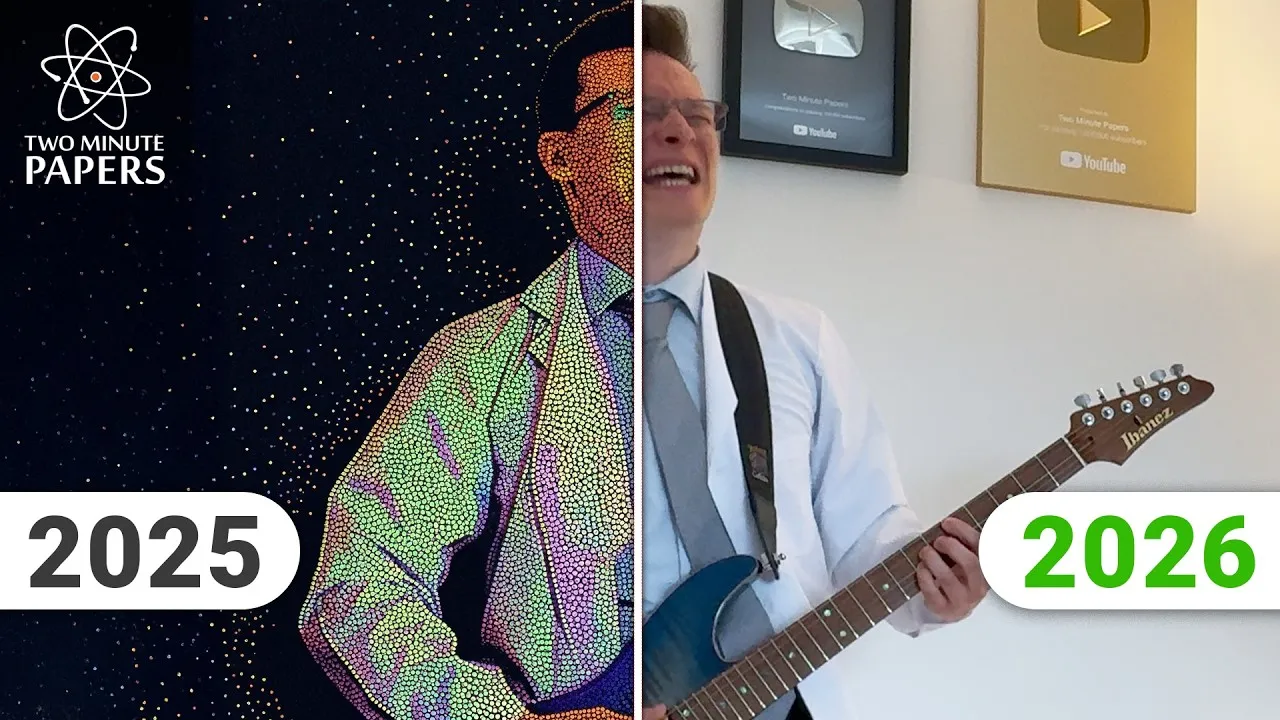
The creator of this research shared a personal story about the development process. They explained that even with the right tools, the initial results can be disappointing. It takes persistence to improve the simulation over time. This journey from a flawed beginning to a stunning final image can be a deeply emotional experience.
To share this feeling, they even created a song about ray tracing. This highlights the passion and dedication involved in advancing such complex technologies. The goal is to make these powerful tools and the knowledge behind them available to more people.
Free Access to Learning Resources
As part of sharing this advancement, free educational resources are being made available. This includes a master-level course that teaches the physics of light and how to build a ray tracing simulation from scratch. The course is designed to be completely free, emphasizing the belief that knowledge should be accessible to everyone.
By providing these resources, the aim is to empower others to explore and contribute to the field of computer graphics and simulation. This open approach to sharing knowledge can accelerate innovation and inspire the next generation of AI and graphics developers.
Why This Matters
The ability to simulate reality faster with AI has significant real-world implications. In filmmaking, it means more realistic special effects can be created quicker and cheaper. For video game developers, it promises more immersive and visually stunning game worlds that run smoothly.
Architects and designers can use this technology to visualize buildings and products with incredible accuracy before they are built. This can help identify potential issues and improve designs early on. In scientific research, faster simulations can lead to quicker discoveries in fields ranging from materials science to astrophysics.
Source: The Algorithm That Made Me Cry (YouTube)