Discover the Hidden Tech Inside Your Credit Card
Your credit card is more than just plastic; it’s a marvel of engineering with a fascinating history. You’ll learn how its technology evolved from spy gadgets to the convenient payment tool we use today. We’ll explore the science behind how it works and uncover the security features that protect your money.
How Credit Card Technology Evolved
Credit cards have a long history, starting with simple imprints and evolving into complex digital tools. Understanding this journey helps us appreciate the technology we use daily.
From Imprints to Magnetic Stripes
Early credit cards required sellers to manually imprint card details onto paper slips. This process was slow and led to security problems, as it could take days to verify transactions. This allowed fraudsters time to disappear before banks caught on.
The invention of the magnetic stripe in the 1960s by IBM engineer Forrest Parry changed everything. Inspired by audio cassettes, Parry found a way to store data on a stripe of magnetic tape attached to the card. This stripe holds information like your name and account number, represented as ones and zeros. A card reader can then quickly read this data, speeding up transactions and making it easier for banks to spot fraud.
However, magnetic stripes had a major flaw: the data was static and could be easily copied, or ‘skimmed,’ using simple card readers. This led to widespread fraud, with criminals making fortunes by cloning cards.
The Rise of the Secure Chip
To combat skimming, the EMV standard introduced the chip card in the early 2000s. This chip is like a tiny computer that creates a unique security code for each transaction. It uses a secret key, known only to the chip and your bank, to encrypt transaction details. This makes it incredibly hard to clone a chip card or reuse old transaction codes. When you insert your card and enter your PIN, the chip and bank work together to verify the payment securely.
While chips significantly improved security, they slowed down transactions. This is why many countries, including the US, eventually adopted chip and PIN technology, pairing the secure chip with a personal identification number.
Contactless Payments: The NFC Revolution
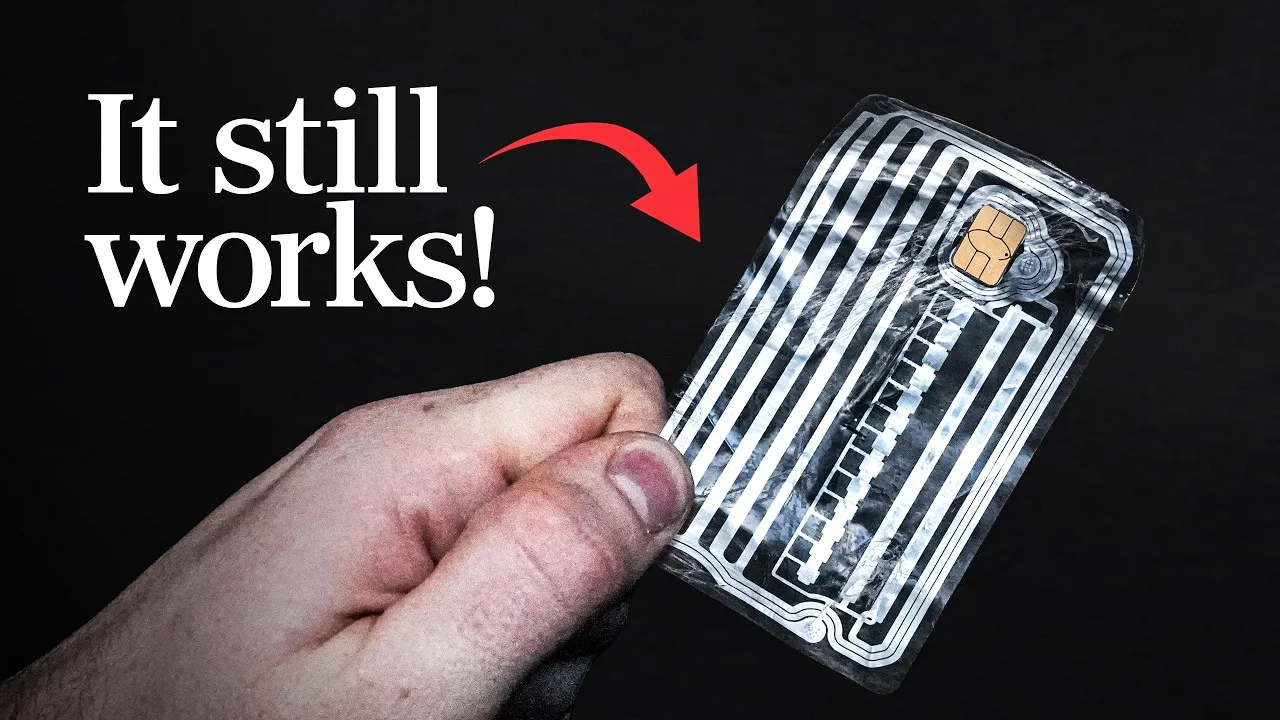
The latest evolution is contactless payment, powered by Near Field Communication (NFC). This technology allows your card to communicate with a payment terminal without physical contact.
Here’s how it works: The payment terminal creates a magnetic field. When you hold your card close, this field powers the chip in your card. The chip then sends back your unique transaction code. This process is similar to chip and PIN but uses magnetic fields instead of physical contact.
Contactless payments became much more popular around 2020, as people sought ways to avoid touching public surfaces. It offers both speed and convenience, making transactions almost instant.
Understanding the Technology Behind Your Card
Credit cards contain several hidden technologies, some with roots in Cold War espionage. Let’s explore how these technologies work and how they’ve been used.
The ‘Thing’: A Spy Device’s Legacy
The technology in modern credit cards has surprising links to a secret Cold War listening device called ‘The Thing.’ Developed by Soviet inventor Leon Theremin, this bug had no power source. It lay dormant until activated by radio waves from a nearby transmitter.
The radio waves would hit an antenna, causing electrons to vibrate and create a signal. At a specific frequency, called the resonant frequency, this signal was amplified, effectively bouncing the radio waves back. Sound waves in the room would change the device’s resonant frequency, modulating the returned signal with the spoken words. This allowed the Soviets to eavesdrop on conversations for years.
RFID and NFC: Remote Communication
The principle behind ‘The Thing’ led to Radio Frequency Identification (RFID) technology. RFID tags use an antenna to receive radio waves, which power a small chip. The chip then alters the antenna’s signal, sending back information like an ID number. This is used in things like toll tags and inventory tracking.
Near Field Communication (NFC), used in contactless credit cards, is a short-range version of RFID. Instead of radio waves, NFC uses magnetic fields. A reader emits a magnetic field, which powers the card’s chip. The chip then modifies this field to send back transaction data. This communication happens over very short distances, typically only a few centimeters, to prevent accidental transactions.
How to Protect Yourself from Credit Card Fraud
While credit card technology has become more secure, new threats emerge. Understanding these risks can help you protect your finances.
The Vulnerability of Contactless Payments
Even with advanced security, contactless cards can be vulnerable. Thieves can use devices like the Flipper Zero or simple smartphone apps to read card information from a short distance. This can include your card number and expiration date.
However, this stolen information is often not enough to clone the card for fraudulent purchases. To make a purchase, a thief would also need the CVV code on the back of your card and potentially other verification details. They might try to get this information through social engineering or by physically accessing your card.
A more concerning threat is ‘digital pickpocketing’ or ‘ghost tapping.’ This involves a thief using a hidden contactless reader to make small, unauthorized transactions from your card as you pass by. Many countries limit the amount for a single contactless transaction, but repeated small charges can add up.
Protecting Your Card Information
Here are some ways to stay safe:
- Use Faraday Wallets: These wallets block radio signals, preventing unauthorized scanning of your cards.
- Enable Transaction Notifications: Most banks offer alerts for every transaction. Turning these on allows you to quickly spot and report any suspicious activity.
- Use Mobile Wallets: Services like Apple Pay or Google Pay store a tokenized version of your card number, not your actual details. This means your real card information is never shared during a transaction. Even if you lose your phone, your card details remain secure, protected by your phone’s biometrics (like fingerprint or facial recognition).
By understanding the technology behind your credit card and taking simple precautions, you can enjoy the convenience of modern payments while keeping your money safe.
Source: I Dissolved My Credit Card To Understand How It Works (YouTube)