AI Agents Evolve, Empowering Individuals with Team-Level Capabilities
The world of artificial intelligence is rapidly advancing, especially in how we interact with it. New open-source projects are emerging that allow a single person to achieve what once required a large team of developers. These tools represent a significant step forward in making AI more accessible and powerful for individual creators and small businesses.
GStack: Y Combinator Expertise in a Package
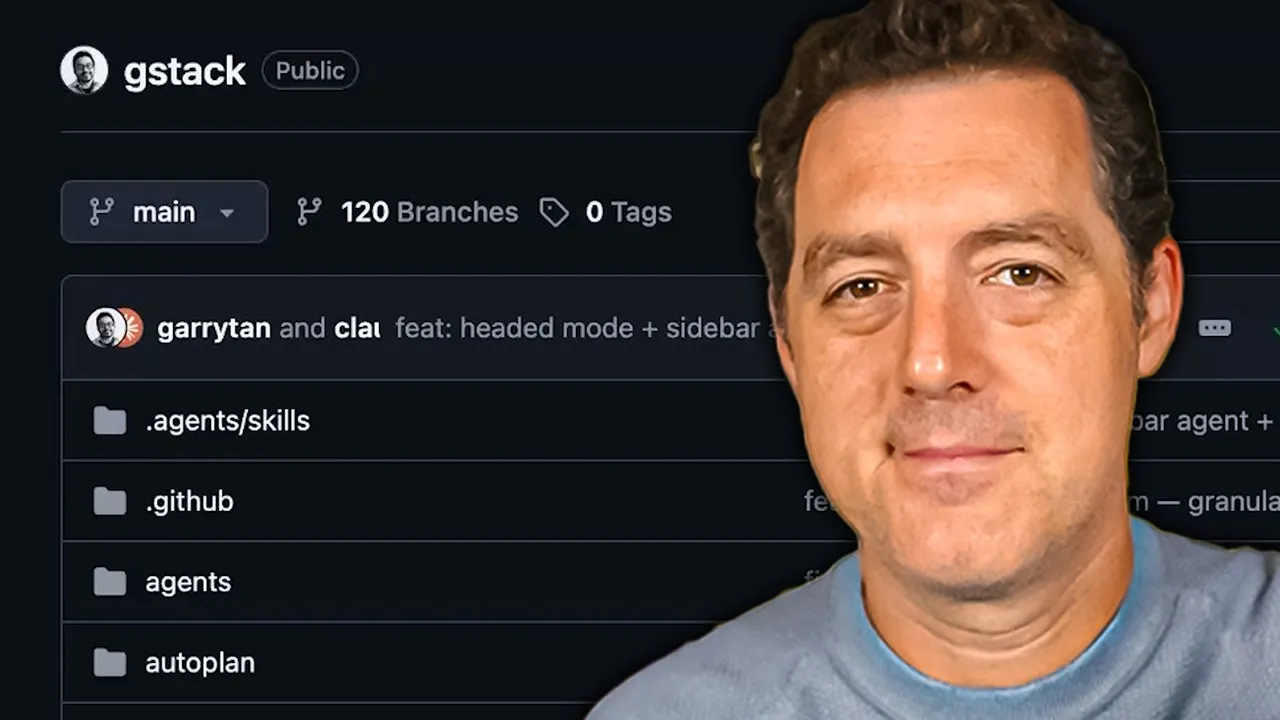
One of the most talked-about new projects is GStack, created by Gary Tan, president of the influential startup accelerator Y Combinator. Despite being only a few weeks old, GStack has already gained massive attention, earning nearly 50,000 stars on GitHub. Tan, who has overseen investments in major companies like Airbnb and DoorDash, has distilled his extensive experience into this project. His goal is to give solo developers the power and efficiency of an entire development team.
GStack works with existing coding assistants like Claude Code. Installation is straightforward: users copy a simple prompt into their coding agent. The tool then asks a few setup questions and is ready to use. Users can then access various sub-tools, like “office hours,” by typing commands like `/gstack off-hours`.
Tan describes GStack as a process, not just a collection of tools. It guides users through refining their ideas and market opportunities before even starting to code. Features like “office hours” are inspired by Y Combinator’s own program, offering structured guidance. For example, the “office hours” feature includes six forcing questions to help rethink a product before writing any code. Other roles simulated include an engineering manager, a senior designer, and a debugger. Each role provides specific prompts that help the AI agent analyze code from a particular perspective, a technique known as advanced prompt engineering.
The open-source nature of GStack allows anyone to examine how Tan approaches startup development. The project is being updated frequently, and Tan is even bringing on contributors, showing its rapid development and community involvement.
Hermes Agent: A Self-Improving AI Framework
Another project making waves is Hermes Agent by Nouse Research. This tool has quickly gained over 12,000 GitHub stars. Similar to OpenClaw, Hermes Agent is presented as an entire framework, or even an operating system, for your personal AI agent. It’s designed to be highly capable and, notably, self-improving.
Hermes Agent offers a text-based interface with features like multi-line editing, command auto-completion, and conversation history. It supports various chat platforms, including Telegram, Discord, Slack, WhatsApp, and Signal, all through a single gateway, much like OpenClaw.
The standout feature of Hermes Agent is its built-in learning loop. The developers claim it’s the only agent with this capability. It creates new skills from its experiences, improves them as it’s used, and even nudges itself to retain knowledge. The agent searches its past conversations to build a deeper understanding of the user over time. It can also delegate tasks to sub-agents and run these tasks in parallel. For users migrating from OpenClaw, Hermes Agent offers a migration tool to transfer workflows and memories, addressing a growing need for easier transitions between AI agent projects.
Superpowers: Enhancing Code Development
Superpowers, by author Ora, is currently the most popular project discussed, boasting an impressive 115,000 GitHub stars. This tool aims to give coding assistants like Claude Code “superpowers,” focusing heavily on the development process. Its self-description humorously notes it creates plans clear enough for an “enthusiastic junior engineer with poor taste, no judgment, no project context, and an aversion to testing to follow.”
Superpowers emphasizes core coding best practices like Test-Driven Development (TDD), “You Ain’t Gonna Need It” (YAGNI), and Don’t Repeat Yourself (DRY). The workflow begins with brainstorming and refining ideas, similar to GStack. It then explores alternatives, presents designs for validation, and saves design documents. By default, it uses work trees for efficient parallel coding. After planning, it executes the code, ensures TDD is followed, performs code reviews, and finishes the development branch.
Installation is simple, often available as a plugin. For example, users can install it via a command like `claude plugin install superpowers` and then activate it with a command like `/s superpowers`. This plugin format makes it very accessible for users already familiar with their coding environments.
Paperclip: The Vision of an AI-Run Company
Perhaps the most ambitious project is Paperclip, aiming to create an entire company run by AI with zero human involvement. Already attracting 33,000 GitHub stars, Paperclip is an open-source orchestration system for these “zero-human” companies. While the concept is fascinating, the creators offer a strong caution: the likelihood of making significant money from such projects is low without substantial effort and realistic expectations.
Paperclip functions as a Node.js server with a React UI. It orchestrates a team of AI agents to run a business. Users can bring their own agents, assign goals, and monitor their work and costs from a central dashboard. The dashboard visualizes an organizational chart where roles like CEO, CMO, and CTO are filled by AI agents, potentially using different models like Claude or Codeex.
Key features include atomic work, token cost tracking (as AI usage can become expensive), and a ticketing system similar to those used by human engineering teams. All agent actions are tied to high-level company goals. Getting started involves a simple command like `paperclip ip ai onboard-y`.
Future plans for Paperclip include a plugin system for adding knowledge bases, custom tracing, and more capable “OpenClaw-style” agents. It also aims for full company encapsulation, allowing organizations to be exported or imported, potentially enabling sharing of AI company structures. However, the project is highly experimental, and users are advised to approach it with caution and not expect immediate financial returns.
Why This Matters
These open-source projects collectively demonstrate a powerful trend: AI is moving beyond simple question-answering to become a proactive partner in complex tasks like software development and business operations. GStack and Superpowers show how individuals can leverage AI to mimic the output of larger teams, boosting productivity and creativity. Hermes Agent highlights the increasing autonomy and learning capability of AI agents. Paperclip, while experimental, offers a glimpse into a future where AI could manage entire businesses.
For developers, entrepreneurs, and small businesses, these tools represent a significant opportunity to compete with larger entities by amplifying their own capabilities. By experimenting with these cutting-edge projects, individuals can gain a substantial advantage over those still using AI for more basic functions.
Source: You NEED to try these open-source AI projects right now… (YouTube)