How to Use Nuclear Bombs for Peaceful Construction
In the 1950s and 1960s, during the height of the Cold War, scientists in the United States explored a radical idea: using the immense power of nuclear bombs for peaceful construction projects. This ambitious initiative, known as Project Plowshare, aimed to dig canals, create harbors, and even tap into natural resources. While the concept promised progress, it also raised serious concerns about radioactive contamination and safety. This article explains the goals, methods, and outcomes of Project Plowshare.
The Vision Behind Project Plowshare
Project Plowshare was born from the mind of physicist Edward Teller, a key figure in the development of the atomic bomb. Teller, fascinated by the destructive power of nuclear weapons, also saw their potential for large-scale engineering. The idea was to harness the energy of thermonuclear bombs – weapons thousands of times more powerful than the atomic bombs used in World War II – to reshape the Earth’s landscape.
The motivation was twofold. Firstly, it offered a seemingly cost-effective way to undertake massive construction projects that would be incredibly expensive and time-consuming using conventional methods. Secondly, it provided a way for the US to continue testing nuclear weapons amidst growing public fear of nuclear war and the arms race. By framing these tests as peaceful applications, the government hoped to gain public acceptance.
How Nuclear Excavation Was Supposed to Work
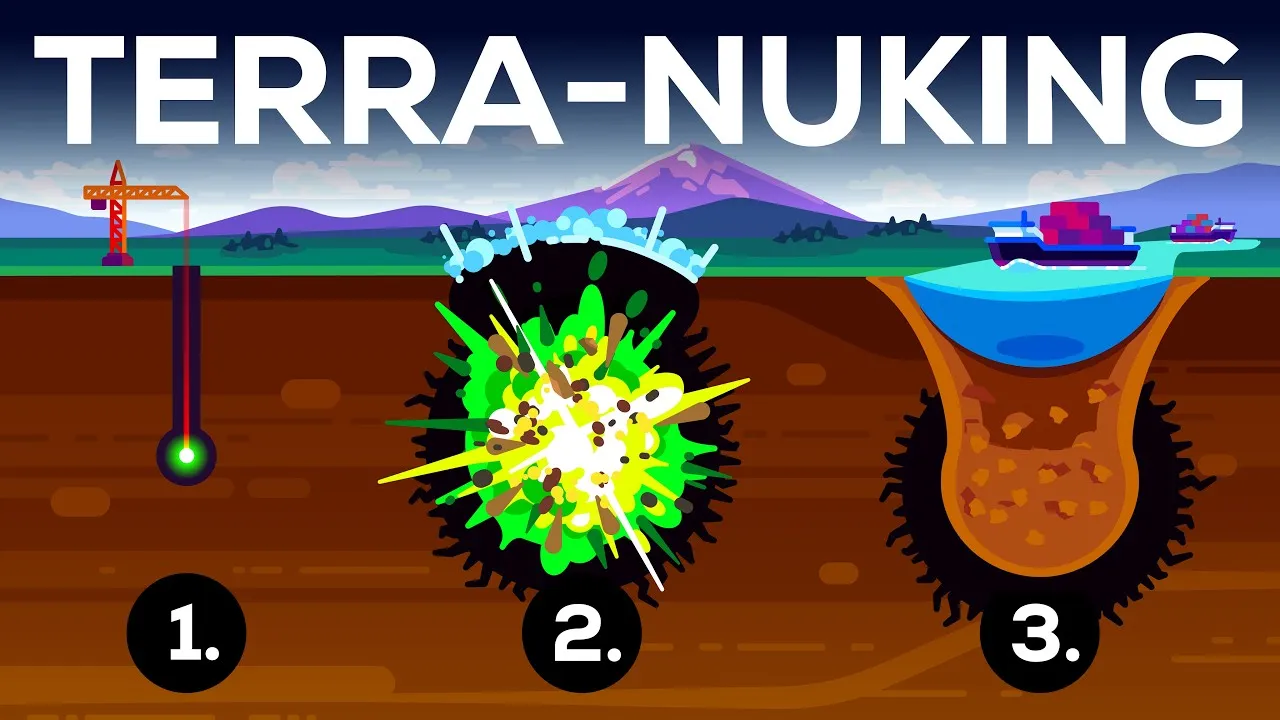
The core concept of nuclear excavation involved burying a nuclear bomb deep underground. When the bomb detonated, it would create a large underground cavern. The intense heat would melt the surrounding rock, forming a pool of magma. As the molten rock cooled and solidified, the roof of the cavern would collapse. This collapse would then push material upwards, creating a crater on the surface.
The key advantage of this method, in theory, was containment. By detonating the bombs deep underground, the radioactive byproducts were expected to be sealed beneath hundreds of thousands of tons of rock. This would prevent widespread radioactive contamination of the surface, making the created holes safe for subsequent use.
Early Projects and Challenges
Project Plowshare officially began in 1957, but the first major test, called ‘Gnome,’ occurred in December 1961 in New Mexico. The goal was to explore generating electricity by melting a salt deposit, but the experiment encountered unexpected problems. The salt contained more water than anticipated, which turned into superheated steam. This amplified the blast, causing the bomb’s shaft to rupture and release a plume of radioactive steam.
Another significant test, ‘Sedan,’ took place in July 1962 in Nevada. This experiment aimed to test nuclear excavation directly, creating a large crater. While it successfully produced the largest artificial crater in US history at that time, it also suffered from a miscalculation in the bomb’s depth. This resulted in a radioactive cloud that spread fallout across several states, causing public alarm.
Ambitious Plans and Their Demise
Despite these early setbacks, proponents of Project Plowshare continued to propose grand projects. One of the most prominent was the idea of creating a new canal through Israel or widening the Panama Canal using nuclear explosives. These plans involved excavating massive amounts of earth, with estimates suggesting that nuclear methods would be significantly cheaper and faster than traditional digging.
The most extreme proposal was for a new canal in Panama, which envisioned using 250 nuclear bombs. This project would have required evacuating tens of thousands of people and could have caused shockwaves felt in neighboring countries. Thankfully, the environmental and safety concerns, along with the potential for negative international relations, ultimately led to the cancellation of such large-scale excavation projects.
The End of Project Plowshare
In the 1970s, Teller shifted his focus to using nuclear explosions for ‘fracking’ – stimulating the flow of natural gas. However, the gas produced was highly radioactive and too expensive to sell. After nearly two decades and dozens of nuclear explosions, Project Plowshare failed to achieve any of its major construction goals. No canals, harbors, or tunnels were ever built using nuclear explosives.
The project was officially canceled in 1977. Looking back, the idea of using nuclear bombs for construction seems incredibly dangerous and misguided. However, in the context of the Cold War, with the constant threat of nuclear annihilation, using these powerful weapons for supposed progress might have seemed like a rational choice to some at the time.
Source: The Most Insane Megaproject You Never Heard About (YouTube)