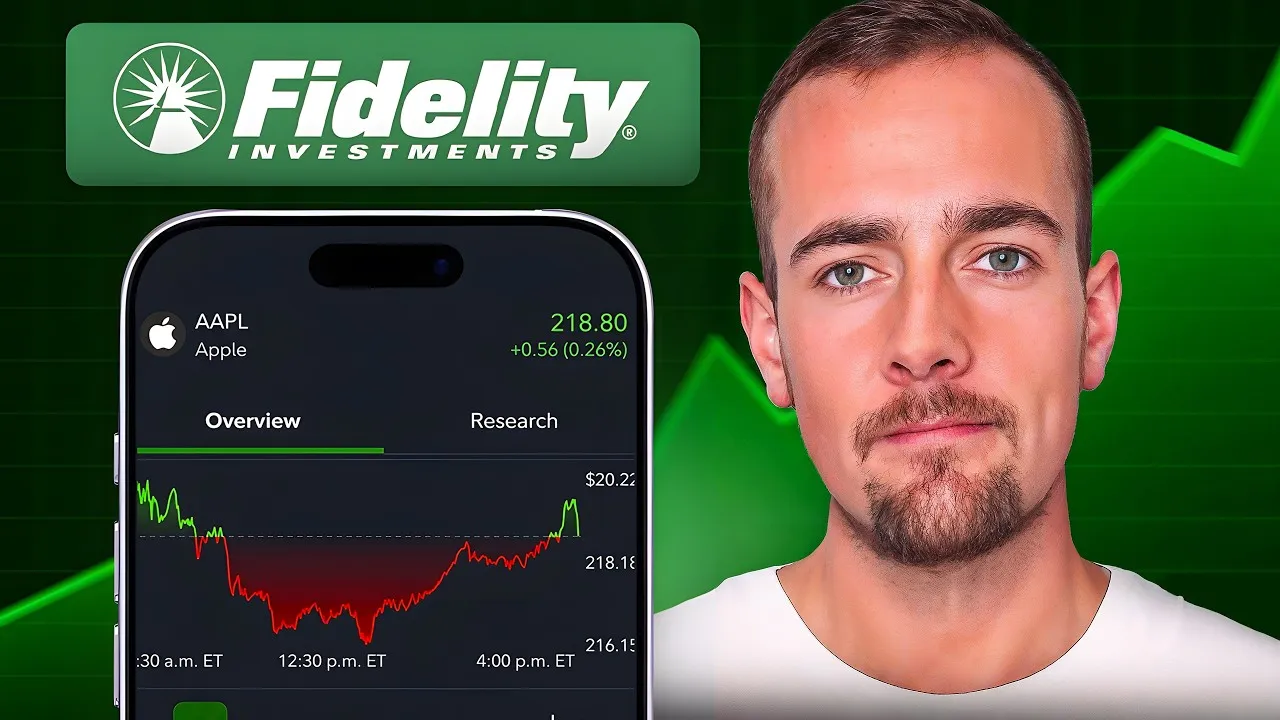
Fidelity Empowers New Investors with Low Entry Points
New investors can now start building a portfolio with as little as $1 on Fidelity, thanks to the platform’s introduction of fractional share investing. This feature allows individuals to buy portions of high-priced stocks and Exchange Traded Funds (ETFs), making investing more accessible than ever before.
Key Steps for New Fidelity Investors
Depositing Funds
Getting money into your Fidelity account is a straightforward process. First, tap the green ‘Transact’ button located at the bottom center of the app. From there, select ‘Transfer.’ You’ll need to choose your linked bank account as the ‘from’ account and your desired Fidelity account (like an individual taxable account or a Roth IRA) as the ‘to’ account. You can set up one-time transfers or opt for recurring deposits to automate your savings. For a demonstration, a $10 deposit was initiated. After entering the amount, tap ‘Review’ to see the confirmation details and then ‘Submit’ to complete the transfer. While funds typically take 1 to 3 business days to process, Fidelity allows you to start investing the deposited amount instantly. It’s important to keep the funds in your bank account until the transfer is fully processed to avoid potential issues.
Buying Stocks and ETFs
Once funds are available, investing is the next step. Click the ‘Transact’ button again and select ‘Trade.’ To invest in the S&P 500, you can search for the ticker symbol ‘VO,’ which represents the Vanguard 500 Index Fund ETF. The platform displays the current stock price, daily percentage change, and the bid and ask prices, which are the prices buyers are willing to pay and sellers are willing to accept, respectively. These prices update frequently.
Fidelity offers two ways to buy: whole shares or fractional shares. Buying one whole share of VO, for example, might cost around $590.12. However, for beginners with smaller budgets, fractional investing is a significant advantage. By changing the order type from ‘shares’ to ‘dollars,’ you can invest any amount, starting from just $1, up to over 7,000 different stocks and ETFs. For this example, a $10 investment was made in VO.
You can choose between a ‘market order,’ which executes the trade immediately at the best available price, or a ‘limit order,’ which allows you to set a specific price or better at which you want to buy or sell. For most beginners, a market order is recommended to ensure the trade goes through quickly. After selecting your order type and amount, click ‘Preview’ to review the order details and then ‘Buy VO’ to confirm. Your investment will then appear under the ‘Investing’ tab in your portfolio.
Viewing Investment Performance and Details
After making an investment, you can track its performance. The platform shows the total gain or loss as a percentage. For instance, a recent $10 investment in VO showed a small unrealized loss, while a longer-term investment in a Fidelity Index mutual fund tracking the S&P 500, FXAIX, was up 12.22% after several months.
To get more information about a specific stock or ETF, navigate back to the ‘Transact’ button, select the investment (like VO), and you’ll see a detailed profile. This includes price charts showing performance over different periods, statistics, and historical performance data (1-year, 3-year, 5-year returns). You can also find a news feed related to the investment and a ‘Research’ section offering deeper insights. This research section provides key metrics such as the expense ratio (0.03% for VO), net assets (around $870 billion), and dividend yield (1.23% for VO). It also lists the top 10 holdings within the fund, often highlighting significant investments in large U.S. tech companies.
Selling Investments
Selling an investment follows a similar process to buying. Go to ‘Transact,’ select ‘Trade,’ and choose the security you wish to sell. Toggle the order type to ‘Sell.’ You can choose to sell a specific number of shares or select ‘Sell All.’ For fractional shares, you can specify the dollar amount to sell. After confirming the amount, select ‘Preview’ and then ‘Sell VO’ to submit the order. The proceeds from the sale will be reflected in your account.
Understanding Fund Settlement
It’s crucial to understand fund settlement, often referred to as T+1 settlement. This means that when you buy or sell a security, the transaction officially finalizes one trading day after the order is placed. For example, if you sell a stock on a Monday, the cash will be available to withdraw on Tuesday, assuming no holidays. While you might see the funds or shares in your account immediately, they are not fully settled until the T+1 period is complete.
Cashing Out to Your Bank Account
To withdraw funds to your bank account, click the ‘Transact’ button and select ‘Transfer.’ This time, choose your Fidelity account as the ‘from’ account and your linked bank account as the ‘to’ account. The screen will show your available cash to withdraw. Enter the amount you wish to transfer, select ‘Review,’ and then ‘Submit’ to initiate the withdrawal. Similar to deposits, withdrawals typically take 1 to 3 business days to appear in your bank account.
Market Impact and Investor Considerations
Fidelity’s emphasis on fractional share investing significantly lowers the barrier to entry for new investors. By allowing investments as small as $1, the platform democratizes access to potentially high-growth assets like ETFs and individual stocks. This can encourage more people to start investing earlier, benefiting from the power of compounding over the long term.
For beginners, understanding the difference between market and limit orders is important. Market orders prioritize speed and execution certainty, while limit orders offer price control but may result in the order not being filled if the desired price is not reached. The T+1 settlement rule means that cash from sales isn’t immediately available for withdrawal, a detail new investors should be aware of to manage their cash flow effectively.
The ability to instantly invest deposited funds, even before they fully settle from the bank, is a key feature that allows investors to capitalize on market opportunities without delay. However, it requires careful management of bank balances to avoid overdrafts or account restrictions. The detailed research and performance tracking tools available on Fidelity’s platform empower investors to make informed decisions and monitor their portfolio’s progress over time.
Source: How To Invest On Fidelity For Beginners (In 10 Minutes) (YouTube)