Rethink How You Use Your Brain for Better Social Connections
Do you find yourself overthinking social interactions, trying to calculate the perfect thing to say? You might be using your intelligence in the wrong way for social situations. While intelligence is a powerful tool for solving problems, it’s not always the best approach for navigating the complexities of human connection. Experts suggest that relying too heavily on logical thinking can actually hinder your ability to connect with others.
Intelligence vs. Social Intuition
We often think of intelligence as our main problem-solving ability. However, the way we use this intelligence matters, especially in social settings. Many people struggle in social situations because they are performing a constant stream of mental calculations. They try to figure out exactly what to say or do, which can lead to anxiety and awkwardness. This over-reliance on logic is like trying to use a hammer to milk a cow – it’s the wrong tool for the job.
How Intelligence Evolved
From an evolutionary perspective, intelligence developed to help us tackle new and unfamiliar challenges. It allows us to gather information and create novel solutions when faced with unexpected problems. For instance, when you encounter a completely new puzzle, your intelligence helps you analyze the pieces and devise a strategy to solve it. This is where analytical thinking shines.
The Role of Empathy in Socializing
Social interactions, however, are different. Our brains have evolved specific circuits for empathy. These circuits help us integrate a wealth of information from non-verbal cues. We naturally pick up on body language, tone of voice, and facial expressions. These subtle signals provide a rich understanding of how others are feeling and reacting. Trying to logically deduce these things often misses the mark.
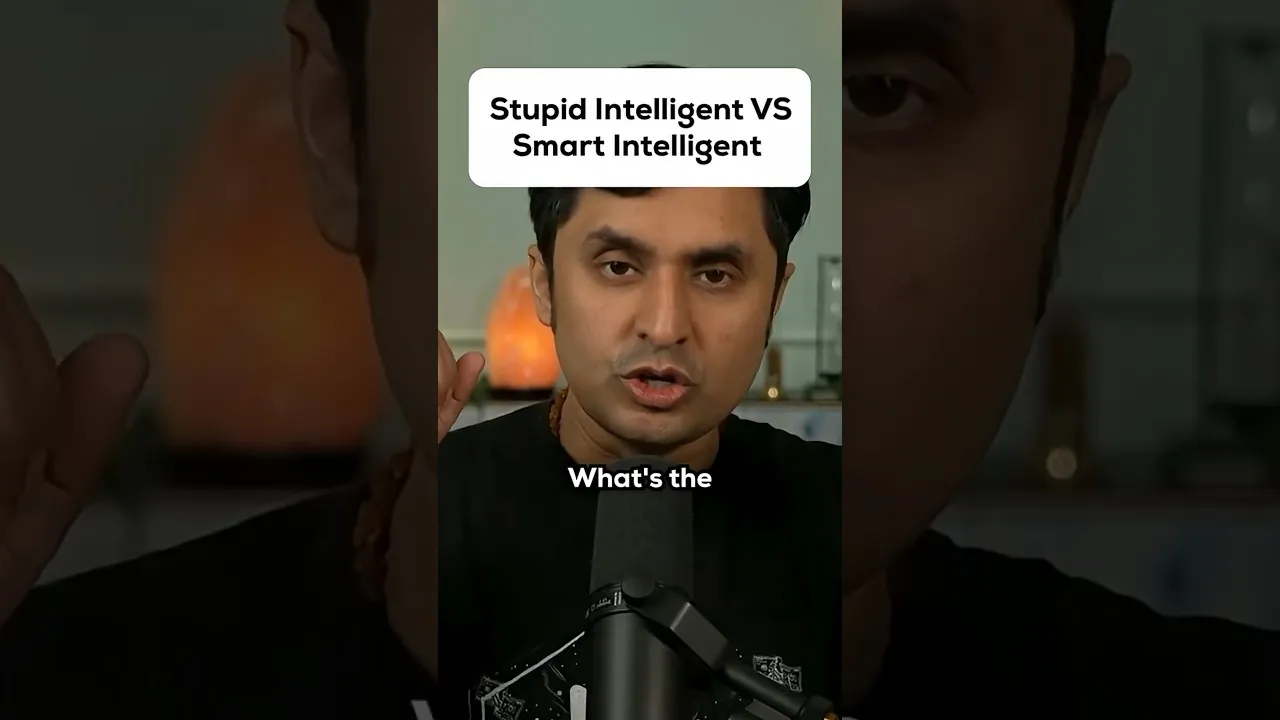
The “Stupid Intelligent” Trap
The term “stupid intelligent” might describe someone who is highly intelligent in analytical tasks but struggles socially. This happens when they apply their logical, problem-solving mindset to situations that require emotional understanding and intuition. Instead of responding naturally to a friend’s mood, they might try to logically analyze why the friend is upset. This can make them seem out of touch or insensitive, even if they have a high IQ.
Becoming “Smart Intelligent” Socially
Becoming “smart intelligent” in social contexts means learning to rely less on pure logic and more on social and emotional cues. It involves trusting your intuition and allowing yourself to connect on a more natural, empathetic level. This doesn’t mean abandoning your intelligence altogether. Instead, it means knowing when to use your analytical skills and when to tap into your emotional intelligence.
Tips for Better Social Connection
To improve your social interactions, try these approaches:
- Listen more than you speak: Focus on understanding what the other person is communicating, both verbally and non-verbally.
- Pay attention to body language: Notice posture, gestures, and facial expressions. These can tell you a lot about someone’s feelings.
- Practice empathy: Try to put yourself in the other person’s shoes and understand their perspective.
- Be present: Avoid overthinking your responses. Focus on the current conversation and connection.
- Embrace imperfection: Not every social interaction needs to be perfect. Allow for natural conversation and occasional awkwardness.
Who Can Benefit?
This advice is relevant for anyone looking to improve their social skills. It can be particularly helpful for individuals who tend to overthink, feel anxious in social settings, or have been told they seem aloof or overly analytical. It applies across different age groups and backgrounds.
Consult Your Doctor
This article is for informational purposes only and does not constitute medical advice. Always consult with a qualified healthcare provider for any health concerns or before making any decisions related to your health or treatment.
Source: Stupid Intelligent VS Smart Intelligent (YouTube)