Salesforce CEO Marc Benioff Discusses AI’s Future
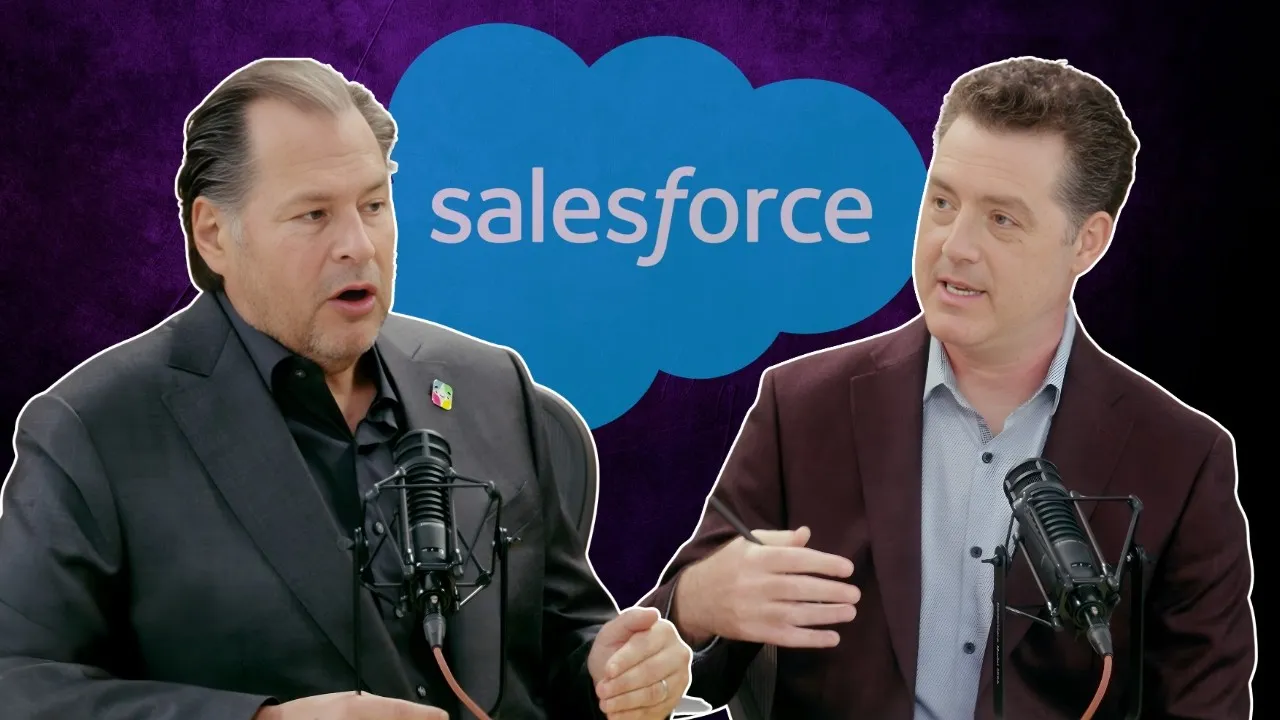
Salesforce CEO Marc Benioff is a prominent voice in the tech world, often sharing his thoughts on the future of work and artificial intelligence. In a recent discussion, Benioff highlighted how Salesforce is integrating AI deeply into its products, with a particular focus on Slack as a central hub for these new capabilities.
Slackbot: The Everywhere Assistant
Benioff explained that the vision for Slack as a primary interface for work has been brewing for nearly a decade. He credits Peter Schwartz, Salesforce’s chief futurist, who foresaw the rise of AI and the need for a conversational, open interface with a broad ecosystem. Slack, with its extensive network of integrations, is seen as the perfect platform for this.
The goal is for AI agents, like Slackbot, to be accessible wherever work happens. This means Slackbot won’t be confined to Slack itself. Benioff stated that Slackbot should be a “highly composable object” that can be integrated into other collaboration tools like Microsoft Teams and Google Workspace, as well as within all of Salesforce’s own applications, such as Sales Cloud and Service Cloud.
The Agentic Enterprise
Benioff envisions a future where humans and AI agents work together to create an “agentic enterprise.” These agents, built on large language models (LLMs), excel at language-based tasks. This includes customer service conversations, marketing, sales, and even coding, which has become more language-like in its modern form.
He acknowledged that humans are currently a bottleneck as AI agents become more capable. However, he stressed the critical importance of keeping humans in the loop. LLMs can still be inaccurate, making human oversight necessary for verification and synthesis. Salesforce is implementing this with its Agentforce for customer service, where human agents step in when AI reaches its limits.
The Evolving Workforce: Generalists vs. Specialists
The rise of AI is also changing the nature of work and team structures. Benioff believes we’ll see an “explosion of agents” coordinated by AI or humans. He also sees a renaissance of the generalist, particularly in software engineering. With AI coding assistants, engineers can become more productive, acting as supervisors for AI agents.
Despite AI’s advancements, Benioff emphasized that companies, even top AI firms like Anthropic and OpenAI, still need to hire many humans. This need for human talent, he suggests, is a sign that AI models are not yet fully autonomous.
Navigating Workforce Changes and AI Scapegoating
Benioff addressed the trend of some companies cutting staff, suggesting it’s not always solely due to AI. Reasons can vary, including high operating costs, financial commitments to data centers, or a necessary workforce rebalancing. He cautioned against making AI the scapegoat for these decisions, calling it a “lazy way out” for some CEOs.
For those entering the workforce, Benioff advises focusing on areas being transformed by AI. He specifically highlighted sales and engineering as key fields. He expressed concern about students questioning their majors due to AI but reassured them that companies like Salesforce desperately need top computer science talent to build the future.
Salesforce’s AI Investments and Partnerships
Salesforce has made significant investments in AI, including a $330 million stake in Anthropic. Benioff revealed that Salesforce initially wanted to invest in OpenAI but was blocked by Microsoft. This led them to explore other AI companies like Cohere and Mistral, as well as Anthropic.
Anthropic’s models, along with those from OpenAI, are powering Salesforce’s AI products, including Slackbot and Agentforce. Benioff outlined Salesforce’s AI architecture, which starts with LLMs at the base, followed by a critical data layer (Data 360), then the application layer, and finally the agentic layer.
OpenClaw and Future Risks
Benioff also discussed OpenClaw, an open-source project for running LLMs locally. While he finds it promising, he noted it’s not yet enterprise-grade. Salesforce is researching its own enterprise-ready version called Albert.
Looking at the broader risks of AI, Benioff drew parallels to social media, warning against a lack of safety and trust. He cited examples of LLMs acting as “suicide coaches” for children, emphasizing that companies must prioritize safety and responsible AI development. He believes the industry is still in the early stages of AI adoption and needs to focus on building trustworthy and secure AI systems.
Source: Salesforce CEO on Microsoft Blocking OpenAI Investment, AI Scapegoating, OpenClaw, and Regulation (YouTube)