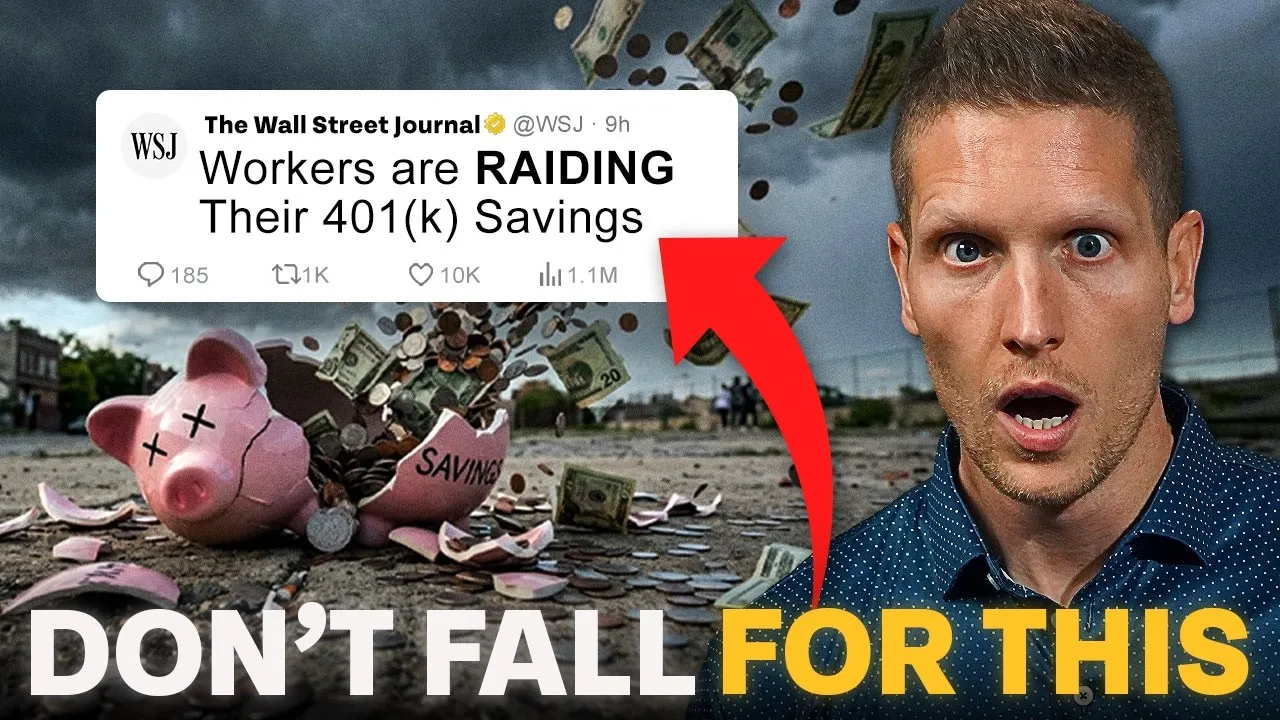
Billions Vanish from 401(k)s Due to Hidden Fees
A growing trend is quietly siphoning billions of dollars out of Americans’ retirement accounts. High fees within 401(k) plans are costing workers more than they realize, impacting their ability to build wealth for the future. Certified Financial Planners (CFPs) Brian Preston and Bo Hanson of the Money Guy Show highlight this critical issue, warning that it’s getting worse.
The Real Cost of 401(k) Fees
Many people think their 401(k) is a straightforward savings tool. However, the fees charged by plan providers, fund managers, and administrators can add up significantly over time. These fees might seem small, perhaps 1% or 2% per year, but they have a massive effect on your nest egg, especially over decades of saving.
For example, a 1% annual fee might not sound like much. But imagine you have $100,000 saved. That 1% fee is $1,000 gone each year. Over 30 years, with investment growth, those seemingly small fees can erode tens of thousands, even hundreds of thousands of dollars from your final retirement balance. The presenters estimate that the average 401(k) plan costs participants around 1.5% per year. Over 30 years, this could mean losing approximately $200,000 in potential growth.
Why Fees Are So High
Several factors contribute to these high costs. Large companies often negotiate lower fees due to their size. However, smaller businesses may not have the same bargaining power. This can lead to higher fees being passed on to employees. Additionally, some plans include revenue sharing, where fund managers pay a portion of their fees back to the plan provider. This can create conflicts of interest and incentivize higher-cost funds.
The presenters point out that many employers aren’t aware of the true cost their employees are bearing. They may choose a plan based on convenience or perceived value, without fully understanding the long-term fee structure. This lack of transparency is a major part of the problem. It’s hard to fight something you don’t know is happening.
The Impact on Retirement Readiness
When a significant portion of your investment returns is eaten up by fees, it directly impacts how much money you will have when you retire. This means you might have to work longer, save more aggressively, or accept a lower standard of living in retirement. For many, this trend is making the goal of a comfortable retirement much harder to reach.
The average American worker is in a 401(k) plan that costs about 1.5% annually. This means that for every $10,000 invested, $150 is paid out in fees each year. Over 30 years, this 1.5% fee could cost the average investor around $200,000. This lost money could have grown substantially through compounding, significantly boosting their retirement savings.
What Investors Should Know
It is crucial for individuals to understand the fees associated with their 401(k) plan. Look for the expense ratios of the mutual funds offered. These are listed in the fund’s prospectus, which is a document detailing the fund’s investment objectives and risks. Also, check for administrative fees charged by the plan provider.
If you have a high-cost 401(k), consider if your employer offers any lower-cost options. If not, and if your employer allows it, you might explore rolling over your 401(k) to an Individual Retirement Account (IRA) once you leave that job. IRAs often have lower fees and a wider range of investment choices.
The key takeaway is to be an educated consumer of your own retirement plan. Don’t just assume your 401(k) is working as efficiently as possible. Take the time to investigate the fees and understand their impact. Small changes in fees can lead to massive differences in your retirement wealth.
Long-Term Implications
The long-term consequence of high 401(k) fees is a significant reduction in retirement security for millions. As people rely more on their 401(k)s for retirement income, the drag from fees becomes a major obstacle. This trend could lead to a future where more retirees face financial hardship.
Financial professionals urge individuals to take action. Understanding your investment fees is the first step. Then, advocate for lower-cost options within your workplace plan. Your future self will thank you for managing your retirement savings wisely today. The difference between a 0.5% fee and a 1.5% fee is substantial over a career.
Source: This 401(k) Trend is ABSOLUTELY DEVASTATING (And Getting Worse) (YouTube)