Government’s Financial Strain Worsens as Debt Interest Mounts
A stark financial reality is unfolding for the United States. Government obligations, particularly interest payments on its massive debt, are consuming a significant and growing portion of tax revenue. This trend means less money is available for crucial public services like infrastructure and education.
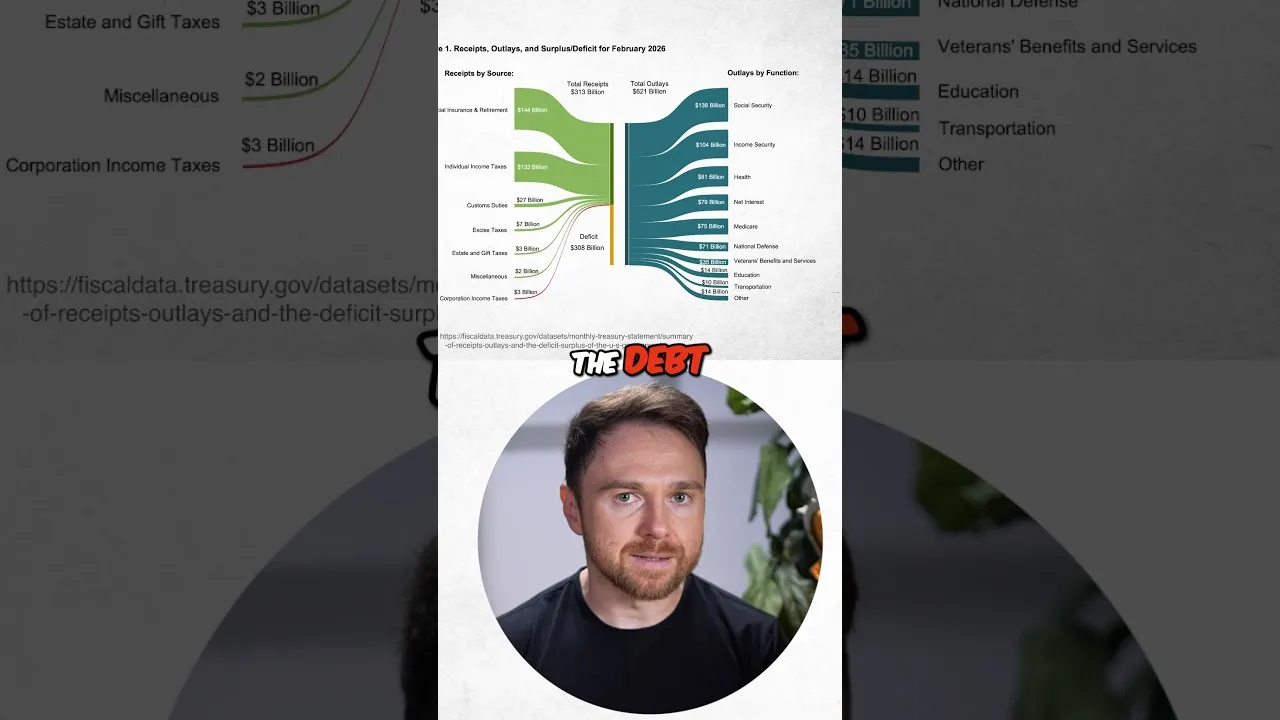
New analysis reveals a critical metric: “true interest expense.” This figure measures how much of the government’s income, collected through taxes, is already committed to paying off its debts and essential programs before funding other priorities. It combines major outlays such as Social Security, Medicare, overall health spending, and the interest paid on the national debt.
February 2026 Data Highlights Alarming Trend
In February 2026, the nation’s true interest expense reached $48 billion. This is the amount the U.S. government spent simply to cover these core obligations. In the same month, the total tax revenue collected by the U.S. government, often referred to as tax receipts, stood at $313 billion. This represents the total income generated from all sources of taxation.
The gap between spending on these essential obligations and total income is widening. The $48 billion spent on true interest expense in February 2026 represented about 30% of the $313 billion in tax receipts collected that month. This means that nearly one-third of all the money the government brought in was already earmarked for debt servicing and key social programs.
Understanding True Interest Expense
True interest expense is a vital indicator of fiscal health. Think of it like a household budget. If your mortgage payment and essential bills take up 70% of your salary, you have much less money left for groceries, entertainment, or saving for the future. Similarly, when the U.S. government’s interest and core program costs consume a large chunk of its tax income, its flexibility to respond to new challenges or invest in growth is severely limited.
This metric provides a clearer picture than just looking at the budget deficit alone. It directly links government spending on its obligations to its income, showing the real strain on taxpayer money. A higher percentage of true interest expense signals a more precarious financial situation.
Market Impact and Investor Considerations
The increasing burden of debt servicing has significant implications for the broader economy and financial markets. When a large portion of government revenue goes towards paying interest, it can lead to several outcomes:
- Reduced Fiscal Flexibility: The government has less capacity to fund new initiatives, respond to economic downturns with stimulus, or invest in long-term projects like infrastructure upgrades.
- Potential for Higher Taxes or Spending Cuts: To manage the debt, policymakers might eventually need to raise taxes, reduce spending on other programs, or both.
- Impact on Interest Rates: A growing debt load can put upward pressure on interest rates as the government borrows more. Higher interest rates make borrowing more expensive for businesses and consumers, potentially slowing economic growth.
- Investor Confidence: Persistent high levels of debt and interest payments can affect investor confidence in the long-term stability of the U.S. economy.
For investors, this trend underscores the importance of monitoring government fiscal policy and debt levels. While the U.S. dollar remains a global reserve currency, sustained fiscal challenges could eventually impact its standing and the value of U.S. assets.
Long-Term Outlook
The current trajectory suggests that the U.S. debt problem is not a short-term issue. Without significant changes in spending or revenue, the proportion of tax income dedicated to interest payments is likely to continue its upward climb. This could lead to a challenging economic environment where growth is constrained by the need to manage an ever-increasing debt burden.
Understanding metrics like true interest expense is crucial for investors seeking to navigate the complexities of the current economic climate. It provides a tangible measure of the financial pressures facing the government and their potential ripple effects across markets.
Source: The Chart Shows a Serious U.S. Debt Problem (YouTube)