Floor Strength: Build Muscle with Low-Impact Workout
Discover a full-body strength workout you can do entirely on the floor, designed for mindful movement and effectiveness without any equipment. This 30-minute routine focuses on slow, controlled exercises to help you build muscle and improve core strength.
Core Activation and Strength
The workout begins by lying on your back with your legs in a tabletop position (knees bent at 90 degrees over your hips) and arms reaching towards the ceiling. This setup is crucial for spinal alignment and core engagement.
Dead Bug: This exercise involves extending one arm and the opposite leg away from your body while keeping your core stable and your back pressed gently into the floor. If a full extension is too challenging, you can simply tap your toe to the floor instead of hovering a straight leg. This movement focuses on coordinating your limbs while maintaining core control.
Leg Drops: Staying in the tabletop position, with hands placed on your abdomen to feel the muscles working, you’ll slowly lower both legs towards the floor and then lift them back up. The key here is to prevent your lower back from arching off the floor and to avoid your abdomen bulging outwards, a common sign of overexertion. If you notice this ‘bread loafing’ or ‘doming,’ lower your feet only as far as you can maintain a flat, engaged core.
Crunches: With arms extended overhead and maintaining a neutral spine, you’ll perform crunches by lifting your shoulder blades off the floor and bringing your chest towards your knees. Exhaling as you lift can help further engage your abdominal muscles. Focus on keeping your neck long and relaxed.
Side Body and Oblique Work
The routine then moves to side-lying exercises to target the obliques and hip muscles.
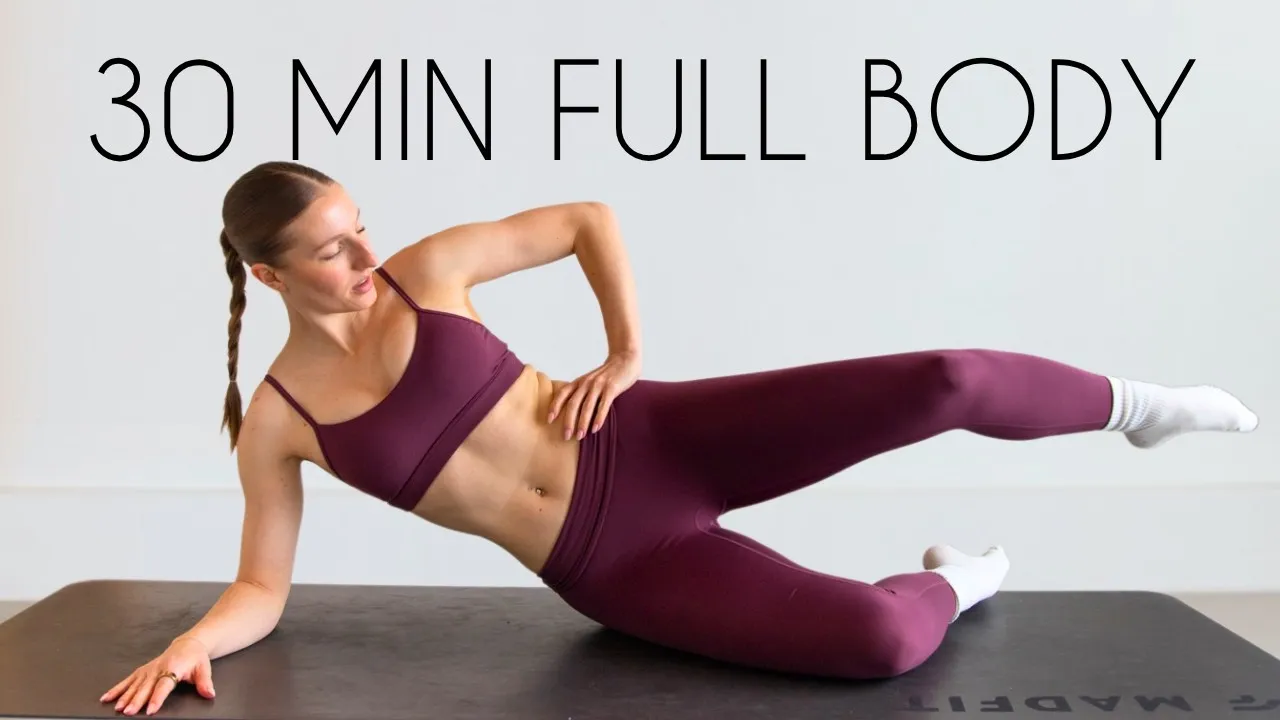
Modified Side Plank with Leg Lifts: Lying on your side with your bottom knee bent at about a 45-degree angle and your top arm extended upwards, you’ll lift your hips off the floor, hold briefly, and then lower. This engages your side core muscles. To further challenge the area, you’ll extend the top leg with a slight bend, turning the toe towards the front corner of your mat, and lift and lower it. This targets the outer hip and glute. You’ll then switch the leg movement, extending it towards the back corner of your mat while keeping the hips stacked and squeezing the glute on the lift. This focuses on the glute and hip stability.
Inner Thigh Crunches: While still on your side, with your bottom leg extended and top leg bent, you’ll place fingertips by your ear. From this position, you’ll lift your inner thigh towards your elbow in a crunching motion, focusing on engaging the inner thigh muscles. It’s important to stay rolled forward slightly to keep the focus on the inner thigh and not sink back into your hips.
Glute and Hamstring Strength
The workout transitions to exercises that build strength in the glutes and hamstrings.
Glute Bridges: Lying on your back with feet flat on the floor, you’ll lift your hips towards the ceiling, squeezing your glutes at the top, and then slowly lower back down. The focus is on lifting the hips high without arching the lower back or over-tucking the pelvis. A variation involves holding the bridge at the top and alternating lifting one leg a few inches off the floor while keeping the hips stable and at the same height. This challenges your core and glute stability.
Upper Body and Core Stability
The final section targets the upper body and reinforces core stability through dynamic movements.
Arm Circles in Plank: Starting in a modified high plank (on your knees) or a full high plank (on your toes), you’ll maintain a stable core and square hips. From here, you’ll lift one arm, sweep it forward, around in a circle towards your back, and then return it to the floor. The key is to keep your body as still as possible, preventing any rocking or shifting of the hips. This challenges shoulder stability and core control.
Push-ups: Performed from either a modified or full plank position, push-ups are done with a focus on controlled movement. The entire body moves as one unit, lowering down and pressing back up.
Forearm Plank with Leg Lifts and Pulses: Moving to a forearm plank, with your body in a straight line from head to heels, you’ll engage your core. You’ll then extend one leg straight back and perform small, rapid pulses upwards, focusing on glute activation without allowing your back to wobble. This is followed by a variation where you lift the leg, bend it to 90 degrees, extend it, and then lower, targeting the hamstring and glute while maintaining hip stability.
Triceps Extensions and Leg Lifts: In a tabletop position with toes tucked, you’ll perform a triceps dip by bending your elbows towards your knees while keeping your back flat and core engaged, then pressing back up. This is followed by extending one leg straight back and simultaneously performing a triceps extension with the opposite arm, while also lifting and lowering the extended leg. This compound movement challenges multiple muscle groups simultaneously.
Key Health Takeaways
- This workout requires no equipment, making it accessible anywhere.
- Focusing on slow, mindful movements enhances muscle engagement and reduces injury risk.
- Core strength is a primary focus, crucial for overall stability and preventing back pain.
- Low-impact exercises are suitable for various fitness levels and can be easier on joints.
- Consistency with strength training, even with bodyweight exercises, contributes to better metabolism and functional fitness.
Disclaimer: This article is for informational purposes only and does not constitute medical advice. Always consult with a qualified healthcare provider before beginning any new exercise program, especially if you have pre-existing health conditions.
Source: SLOW & ON THE FLOOR – 30 Min Strength Workout (No Equipment, Full Body, Low Impact) (YouTube)