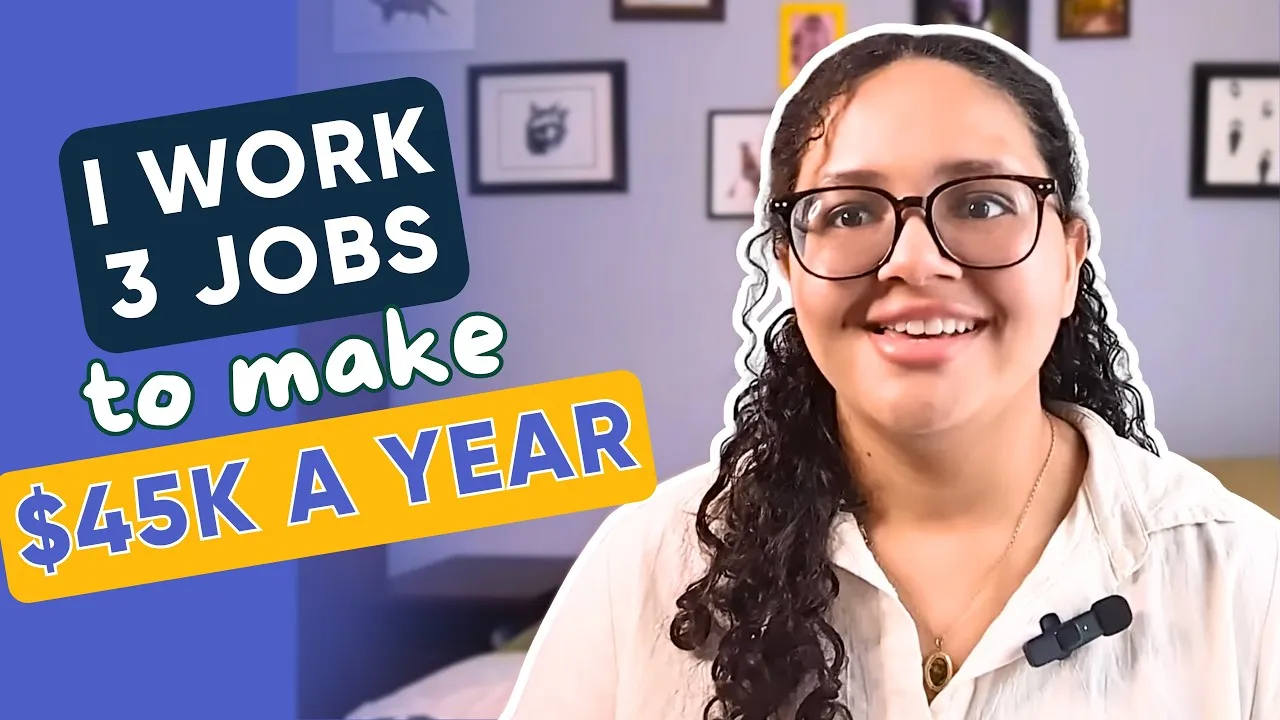
Artist Budgets on $45K: Juggling Three Jobs for Stability
Earning $45,000 a year often means making tough choices. For Michaela, a 27-year-old living in Chicago and working in the arts, it means juggling three jobs to make ends meet. Her story highlights the financial realities many artists face, balancing passion with the need for stability.
The Financial Tightrope
Michaela’s income comes from a call center job, guest services at a theater, and a puppetry cohort. This demanding schedule is a necessity, especially after experiencing job loss and depleting her savings. “I went from having almost $10,000 in savings to have $1,000 in savings,” she recalls. This experience fueled her primary financial goal: building a two-month emergency fund.
Her monthly expenses show a careful approach to budgeting. Rent is $750, utilities and gas total around $95, and car insurance is $138. Health insurance and medications cost about $259 monthly. She dedicates $200 to food and $140 to her cats. Student loans add $80 per month.
Beyond necessities, Michaela prioritizes her future. She puts $200 towards retirement and $100 towards vacation or fun spending annually. An additional $15 per month is set aside for taxes, and another $15 for celebrating friends. The $300 car payment she previously managed is now gone, freeing up funds.
Navigating the Arts Industry
Working in the arts presents unique challenges. Michaela describes it as an industry often filled with “smoke and mirrors,” where many artists are underpaid or work for free to build experience. This is particularly true for entry-level positions, where employers often expect candidates to have job-ready skills without prior paid experience.
“The only way that we’re all going to keep getting underpaid is if we keep putting these numbers through smoke and mirrors,” Michaela states, advocating for transparency in pay.
She notes a significant divide between those who can afford to work for free, often with parental support, and those who must work multiple jobs to sustain themselves. “If I had an extra $300 just being sent to me every month, what a godsend,” she remarks, illustrating the financial strain.
The Toll of Constant Hustle
Michaela’s demanding schedule, often exceeding 60 hours per week, has led to significant burnout. She rarely has full weekends off, with her last one dedicated to family during Christmas. “I am working on trying to find that balance so that I’m not always so so so exhausted,” she admits.
The lack of personal time impacts her social life. “I basically don’t” have a social life, she says, spending most of her free time on household chores, with her cats, or making phone calls to friends. The constant grind leaves little room for rest or enjoying the city she moved to.
Seeking Future Stability
Despite the challenges, Michaela finds fulfillment in her work. She loves being part of the nonprofit arts sector and believes in its value. Her long-term career goal is to become a financial or managing director of a theater, balancing artistic needs with financial sustainability.
Achieving this goal may require further education or gaining experience in lower-level positions. She recognizes that this is likely a five-year plan. For now, she is focused on rebuilding her savings and finding a better balance between her passion and her well-being.
Market Impact
Michaela’s situation reflects a broader trend in the creative industries, where individuals often face precarious financial situations. The arts sector, in particular, struggles with underfunding and fluctuating support, making stable careers challenging. Her multi-job approach is a common strategy to mitigate income instability.
What Investors Should Know
For investors, Michaela’s story underscores the importance of financial planning and emergency funds, especially for those in less stable industries. Her journey from near-zero savings to building an emergency fund highlights the resilience required. The reliance on a partner’s income for shared expenses, like rent, also shows how financial partnerships can impact individual budgeting and stability.
Her practical approach to spending, prioritizing future financial health over immediate wants, is a key takeaway. This mindset, while difficult, is crucial for long-term financial security, particularly when income streams are unpredictable.
Source: How I Budget On $45K A Year (YouTube)