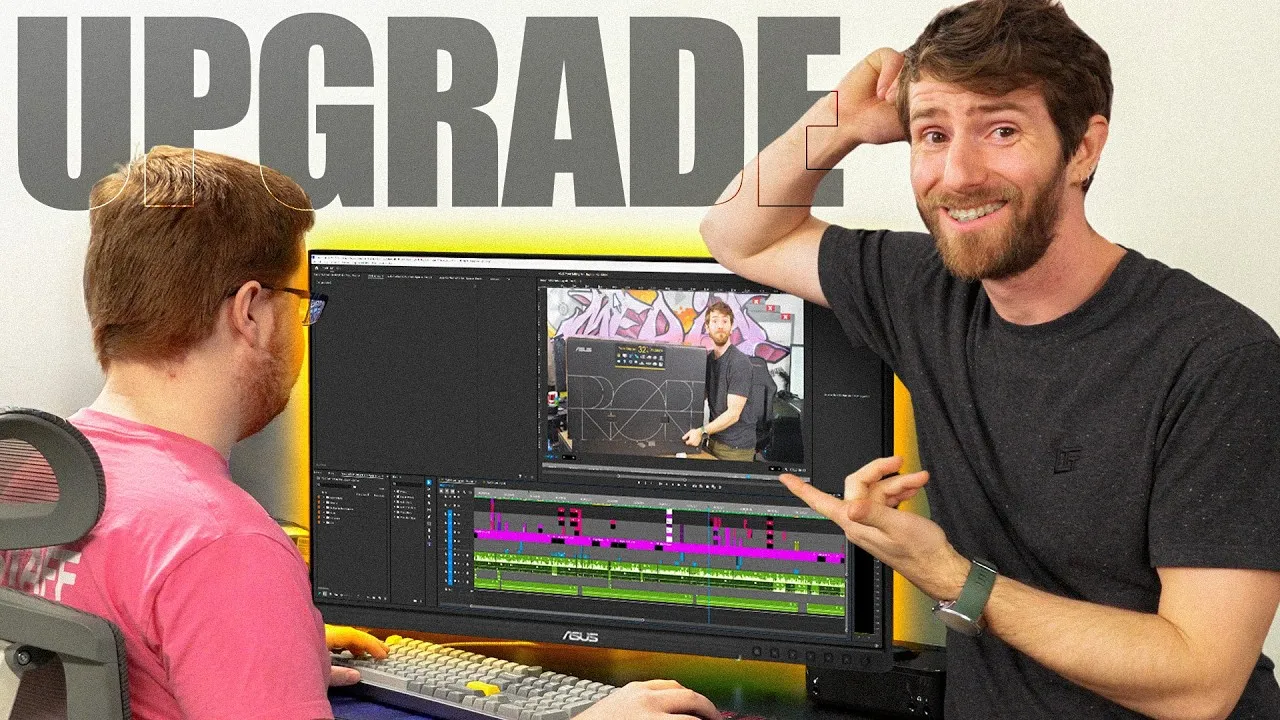
ASUS ProArt Displays Redefine Professional Visuals
In a significant upgrade for creative professionals, ASUS has launched its latest ProArt displays, and the initial impressions are overwhelmingly positive. After years of using older models, the team has moved to ASUS’s new 32-inch PA32QCVS monitors, bringing a substantial boost in resolution and features. This move comes as a response to the evolving needs of video editing and content creation, aiming to provide a superior visual experience without breaking the bank.
A Worthy Successor: The PA32QCVS Takes Center Stage
The new PA32QCVS monitors boast a larger 32-inch screen with a 6K resolution (616 x 3384 pixels), a step up from the previous 5K. While both the new ASUS displays and Apple’s Studio Display offer similar brightness and a 60Hz refresh rate, the ASUS models come in at $300 less. They also feature a built-in KVM switch, allowing users to control multiple computers with a single set of peripherals, a highly sought-after feature for efficient workflows. Although it uses Thunderbolt 4 instead of Thunderbolt 5, the overall value proposition is strong.
Comparing Past and Present: What Changed?
The transition involved replacing older PA32UCX monitors, which had impressive mini-LED backlights with local dimming, enabling true HDR performance with peak brightness up to 1200 nits. The new PA32QCVS, while supporting HDR, lacks local dimming and reaches a lower peak brightness of around 600 nits. This might seem like a step back for HDR enthusiasts, but the decision reflects a pragmatic shift. The team found that the HDR workflow was more complicated than anticipated, and the benefits, while present, weren’t as impactful for their day-to-day editing tasks as initially hoped.
The older monitors, despite their HDR capabilities, also suffered from noticeable blooming, a common issue with mini-LED displays. The new PA32QCVS, while not reaching the same HDR heights, offers a cleaner visual experience for general productivity. A standout feature on the new models is the improved matte coating, which drastically reduces glare compared to the glossy finish of the older displays. This anti-glare surface makes a significant difference in various lighting conditions, enhancing viewing comfort.
Packed with Features for Editors
Beyond the resolution and anti-glare properties, the PA32QCVS monitors offer excellent connectivity. They include HDMI 2.1, DisplayPort 1.4, and two Thunderbolt ports, one of which provides up to 96 watts of power delivery for charging laptops. Additional USB-A and USB-C ports are also included, ensuring compatibility with a wide range of devices. The integrated cable management system in the stand further contributes to a clean and organized workspace.
ASUS has also focused on software integration. The ProArt Display Widget Center allows users to adjust various settings through software on both Windows and macOS, simplifying the process of fine-tuning color profiles and other display options. The monitors support new color standards like M-Path P3, designed for better color consistency across Apple devices and ProArt displays.
The Extreme: ASUS PA32KXS Pushes Boundaries
ASUS didn’t just send the workhorse monitors; they also provided a glimpse into the future with the PA32KXS. This 8K display is a true behemoth, featuring over 4,000 dimming zones and a sustained brightness of 1,000 nits. It also boasts a built-in colorimeter and supports virtually every color space imaginable. While its 60Hz refresh rate is a limitation for high-end gaming or extremely fast-paced video work, its sheer pixel density (27.5 PPI) and advanced mini-LED technology promise unparalleled image quality. This display represents the pinnacle of visual technology, offering a tantalizing preview of what’s possible, even if it comes with a premium price tag and requires top-tier hardware like an RTX 4090 to truly appreciate.
Who Should Consider ProArt?
The ASUS ProArt monitors are clearly aimed at content creators, video editors, graphic designers, and anyone who relies on color accuracy and high-resolution displays for their work. The PA32QCVS models offer a compelling blend of features, performance, and price for professionals who need more screen real estate and a sharper image for detailed editing. For those just starting out or on a tighter budget, ASUS also offers the PA27JCV, a 27-inch 5K monitor that still includes key features like the KVM switch and excellent color support, available for around $700-$800.
Availability and Pricing
The ASUS ProArt PA32QCVS monitors are now being deployed as the new standard for the editing team. Pricing for these 32-inch 6K displays is competitive, coming in at $300 less than Apple’s Studio Display. The more entry-level PA27JCV is available for approximately $700-$800. The flagship PA32KXS 8K display, while not given a specific price, is positioned as a top-tier professional tool, likely commanding a significant investment.
Specs & Key Features
- ASUS ProArt PA32QCVS: 32-inch, 6K (616 x 3384) resolution, 60Hz refresh rate, 600 nits peak brightness (HDR), Thunderbolt 4 (96W PD), built-in KVM switch, matte anti-glare coating.
- ASUS ProArt PA32KXS: 32-inch, 8K resolution, 60Hz refresh rate, 1000 nits sustained brightness, 4000+ dimming zones, built-in colorimeter, mini-LED backlight.
- ASUS ProArt PA27JCV: 27-inch, 5K resolution, 60Hz refresh rate, built-in KVM switch, Apple color space compatibility.
- Color Accuracy: All models emphasize color accuracy, with features like M-Path P3 support and calibration options.
- Connectivity: HDMI 2.1, DisplayPort 1.4, multiple USB-C and USB-A ports.
Source: We Chose the WRONG Monitors 5 Years Ago (YouTube)