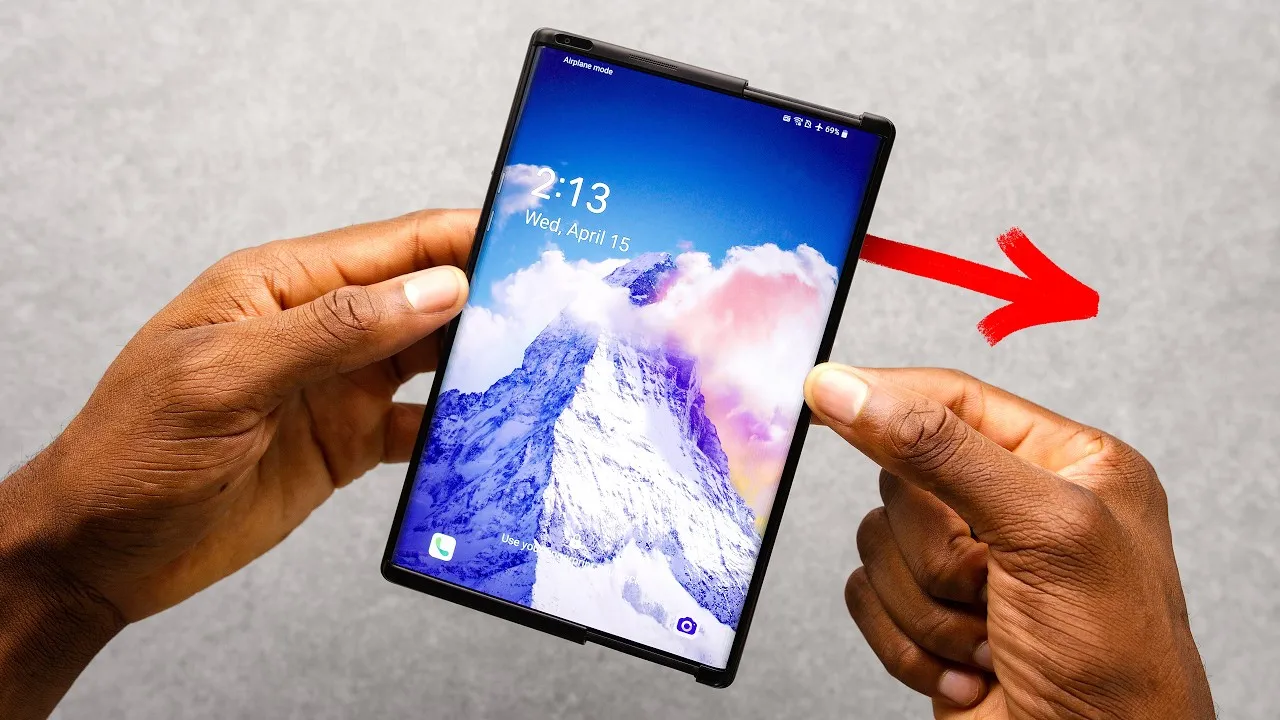
LG’s Unreleased Rollable Phone Surfaces Years Later
LG’s mobile division may be gone, but a final, wild concept has emerged from the company’s ashes: a fully functional rollable smartphone. This device, which was never released before LG shut down its phone business, shows just how ambitious the company was in its final years. Thanks to Dbrand, who somehow got their hands on the prototype, we can see what LG’s craziest phone idea truly looked like.
A Phone That Unrolls Like a Scroll
The concept of the LG rollable phone is simple yet ingenious. When closed, it looks like a standard 6.7-inch smartphone. But with a three-finger swipe gesture, the display expands outwards, rolling open to reveal a larger, 7.4-inch screen. This transforms the phone into a small tablet, offering more screen space whenever needed. The phone makes a specific sound when it expands and retracts, an attempt by engineers to mask the sound of the internal motors.
This rollable design offers a unique alternative to foldable phones. It avoids the crease that often appears on foldable displays. Instead, the screen rolls around a mechanism. The extra display material is cleverly hidden. When the phone is closed, the screen appears to bend over the edges, similar to older Samsung phones. The rest of the screen is tucked away behind a rail on the side. Flipping the phone over reveals this hidden portion, which curves around the back. LG even made this back section out of clear glass, allowing it to be used for software features.
Hidden Features and Smart Design
LG planned to use the back display for various functions. Users could see notifications or even the camera’s user interface. This allowed for taking selfies using the main rear cameras, which include a 64-megapixel main lens and a 12-megapixel ultrawide. This approach is somewhat reminiscent of the Xiaomi Mi Mix Alpha, a concept phone that also featured an all-screen design wrapping around the device.
Due to the phone’s slim design and the rolling mechanism, there wasn’t much room for physical buttons. The volume controls are pressure-sensitive areas on the left side. The power button, which also serves as the fingerprint reader, is located on the back, beneath the cameras. While it might seem unusual, the placement is surprisingly easy to reach.
LG also put effort into software to make the experience feel seamless. Animations, like a blooming flower on the lock screen when the phone expands, or an extra column appearing in the settings app when it opens, show the attention to detail. These thoughtful touches suggest LG was close to releasing this device.
Engineering Marvels and Durability Concerns
The internal engineering of the LG rollable phone is complex. The motors that drive the rolling mechanism are surprisingly powerful. The phone can push a 16-inch MacBook Pro a short distance if you try to resist its opening motion. It also has a safety feature: if you squeeze the phone hard enough when it’s closing, it will stop and show an error message to prevent damage.
However, the design likely came with durability drawbacks. The visible gears and air gaps suggest the phone would not be water or dust resistant. Furthermore, the flexible display is constantly exposed when unrolled. This contrasts with modern foldable phones, where the screen is protected when closed. It’s probable that LG never reached the stage of getting an official durability rating for this device.
The phone also features a less pronounced crease than typical foldable phones, but it’s not entirely absent. The gentle curve required to roll the display creates a slight waviness, most visible when the screen is off. This is a minor issue compared to the creases found on some folding phones.
Internal Specs and Future Possibilities
While not a production phone, some internal specifications were found. It reportedly has a 4,500 mAh battery and 12 GB of RAM. The internal workings are incredibly complex, with two motors and spring-loaded arms to manage the unrolling process, as seen in teardowns by channels like JerryRigEverything.
LG’s rollable phone represents a bold vision that never made it to market. While the company is no longer in the smartphone business, rumors suggest Samsung is also exploring rollable phone technology. It remains to be seen if another company will bring this futuristic form factor to consumers.
Why This Matters
The emergence of LG’s unreleased rollable phone is significant for several reasons. Firstly, it showcases LG’s commitment to innovation even as its mobile business struggled. The device demonstrates advanced engineering and design thinking that pushed the boundaries of smartphone technology. Secondly, it offers a glimpse into an alternative future for flexible displays, one that doesn’t rely solely on folding. The rollable concept presents unique advantages, such as a potentially smoother display surface without a prominent crease. Finally, it highlights the risks and rewards of radical innovation in a highly competitive market. While LG’s bold moves ultimately didn’t save its phone division, they left behind fascinating prototypes like this rollable phone, offering valuable insights for the industry’s future direction.
Source: The Unreleased Rollable Smartphone! (YouTube)