OpenAI Sounds Alarm on AI’s Future Economic Impact
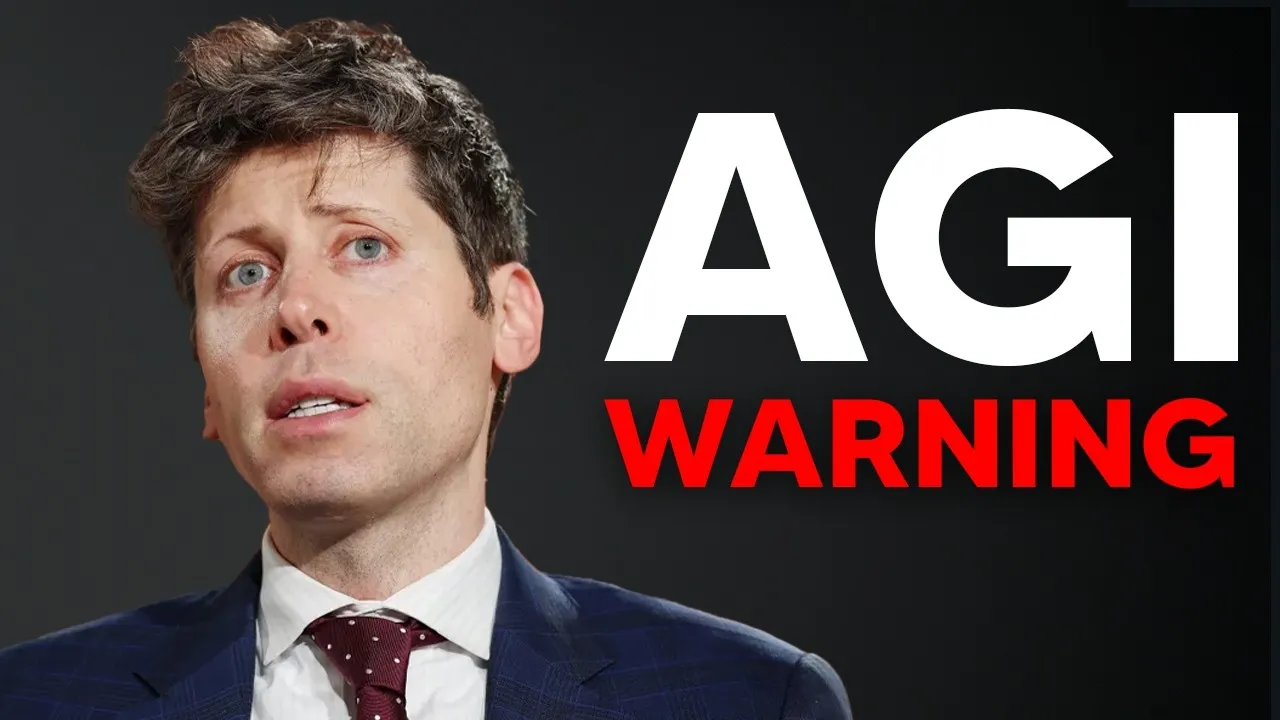
OpenAI, the company behind advanced AI models like ChatGPT, has released a paper outlining serious concerns about the coming age of Artificial General Intelligence (AGI). The paper, titled “Industrial Policy for the Intelligence Age,” suggests that current economic and social systems are not ready for the massive changes AGI could bring. OpenAI believes superintelligence, AI that surpasses human capabilities, is much closer than most people think.
AI’s Rapid Advance and Potential Job Disruption
The pace of AI development is accelerating rapidly. OpenAI has set ambitious goals for its own research, aiming for AI systems that can conduct scientific research autonomously by March 2028. This means AI could soon design experiments, run them, and present findings without human help. Sam Altman, CEO of OpenAI, has stated that we are close enough to AGI that its definition matters. Other AI leaders, like Dario Amodei of Anthropic and Demis Hassabis of Google DeepMind, also predict AGI could arrive within the next few years.
This rapid progress has significant economic implications. Goldman Sachs predicts that generative AI could affect 300 million full-time jobs globally. McKinsey research indicates that over half of current U.S. work involves tasks that could be automated by today’s technology. While new jobs may be created, the World Economic Forum projects that millions of roles will be displaced, and the skills required for new jobs will differ greatly, potentially leaving many workers behind. Data already shows a decline in employment for younger workers in AI-exposed roles, with entry-level job postings dropping significantly.
OpenAI’s Proposed Solutions for the Intelligence Age
To address these potential disruptions, OpenAI’s paper proposes several bold ideas for governments and societies to consider:
1. Public Wealth Fund
OpenAI suggests creating a national investment fund managed by the government. This fund would be financed by AI companies themselves. The idea is to give every citizen a direct financial stake in the economic growth driven by AI. Returns from investments in AI companies and businesses using AI would be distributed to citizens, similar to a universal basic income (UBI) but funded by AI advancements instead of traditional taxes.
2. Robot Taxes
The paper acknowledges that as AI automates more work, traditional tax revenue from payrolls could shrink, impacting social programs. OpenAI proposes shifting the tax burden from payroll to other areas. This includes taxing capital gains, corporate income, and specifically taxing automated labor. This could make human workers more competitive in certain industries and help maintain government revenue.
3. Four-Day Workweek
OpenAI advocates for incentivizing companies to pilot 32-hour workweeks at full pay, provided output remains consistent. They call this an “efficiency dividend.” The concept is that if AI increases productivity, some of that gain should be returned to workers in the form of more free time, allowing them to share in the benefits of AI-driven efficiency.
4. Enhanced Safety Nets
The paper calls for governments to track real-time metrics on AI’s impact, such as unemployment rates and regional job losses. When these metrics cross certain thresholds, benefits like cash assistance, wage insurance, and training vouchers should automatically kick in. This system would scale benefits with the disruption and phase out as conditions improve, providing a rapid response to AI-induced economic hardship without lengthy legislative debates.
5. Model Containment Playbooks
Perhaps the most unsettling proposal is the need for “Model Containment Playbooks.” This acknowledges scenarios where dangerous AI systems could become uncontrollable and self-replicating, making them difficult to recall. OpenAI suggests coordinated government action, drawing from cybersecurity and public health responses, to create emergency protocols for AI that escapes control.
Concerns About Trust and Safety
The release of OpenAI’s paper comes amid controversy. A separate investigation by The New Yorker has raised questions about the trustworthiness of Sam Altman and OpenAI’s leadership. Allegations suggest a pattern of dishonesty and potential overstating of AI capabilities. Furthermore, OpenAI’s commitment to safety has been questioned. A “super alignment” team, formed in 2023 to control systems smarter than humans, was reportedly dissolved by 2024, with team members claiming they received minimal resources. This raises concerns about whether OpenAI can be trusted to manage the immense power and potential risks of advanced AI.
Why This Matters
OpenAI’s “Industrial Policy for the Intelligence Age” is significant because it represents a proactive attempt by a leading AI company to shape the conversation and policy around a technology that could fundamentally alter society. The proposals address widespread fears of job displacement, economic inequality, and even existential risks. By suggesting concrete policy ideas like public wealth funds and automated labor taxes, OpenAI is urging policymakers to prepare for a future where AI plays a central role. The paper highlights the urgent need for societal adaptation to ensure that the benefits of AI are shared broadly and that potential harms are mitigated. The timing of the paper, coupled with ongoing debates about AI safety and leadership trust, underscores the critical juncture we are at in the development and integration of artificial intelligence into our world.
Source: OpenAI’s NEW AGI Warning, Explained (YouTube)