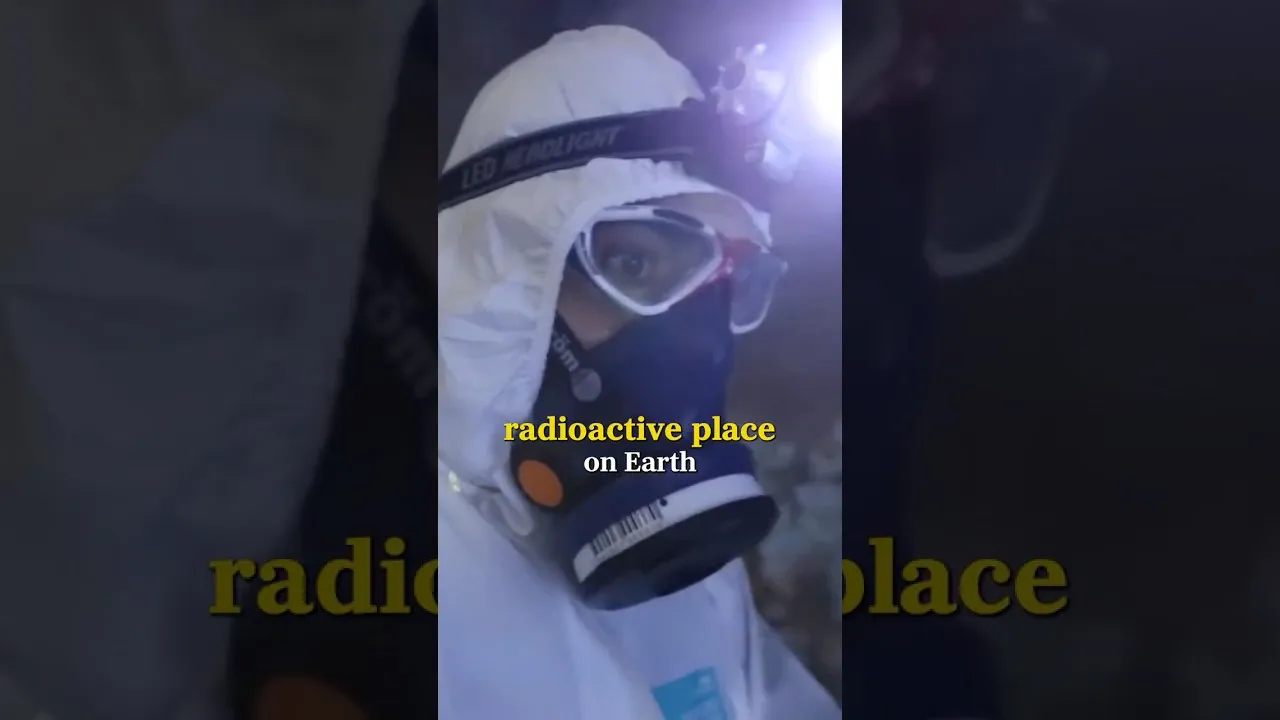
Chernobyl’s Shadow: Unveiling Earth’s Most Radioactive Zone
When imagining the most radioactive places on Earth, your mind might wander to distant, alien worlds. However, some of the most intense radiation exposure can be found right here, in the exclusion zone around the Chernobyl Nuclear Power Plant in Ukraine. This area, forever marked by the 1986 disaster, presents a clear reminder of nuclear power’s potential dangers.
To understand the scale of radiation, consider a common banana. Bananas contain potassium, and a tiny fraction of potassium atoms are naturally radioactive.
Eating a single banana exposes you to a small amount of radiation, roughly equivalent to 50 micrograys. It would take consuming about 20 million bananas simultaneously to reach a lethal dose, a scenario where many other factors would pose immediate threats long before radiation sickness.
Everyday life also involves background radiation. Spending a day in a park exposes you to radiation from the soil and cosmic rays, comparable to eating about 65 bananas. A five-hour flight from New York to Los Angeles exposes you to more radiation, about 150 banana equivalents, because the atmosphere above the plane is thinner, offering less protection from space radiation.
However, spending 24 hours within the Chernobyl exclusion zone exposes you to significantly higher levels. The radiation dose there equates to eating approximately 1,200 bananas. This highlights the concentrated and persistent nature of radioactive contamination in the disaster’s aftermath.
Life Beyond Earth: Radiation in Space
Astronauts aboard the International Space Station (ISS) face a different kind of radiation environment. Orbiting above Earth’s protective atmosphere, they are exposed to much higher levels of cosmic rays. Each day on the ISS is equivalent to consuming over 4,300 bananas worth of radiation.
This constant bombardment from space is a major concern for long-duration space missions. Scientists are developing advanced shielding and medical countermeasures to protect astronauts. The goal is to ensure human explorers can safely travel further into the solar system and beyond.
The Unseen Danger: Radiation in Everyday Habits
Perhaps surprisingly, one of the most significant sources of radiation exposure for many people isn’t a disaster zone or outer space, but a common habit: smoking. Tobacco plants absorb radioactive elements from the soil, including polonium and lead. When tobacco is smoked, these radioactive atoms are inhaled directly into the lungs.
Once in the lungs, these radioactive elements continuously release radiation, directly bombarding sensitive lung tissues. The radiation dose received by smokers can be comparable to that experienced by astronauts on the ISS. Unlike the temporary exposure in space, smokers face this daily, often for decades, leading to a cumulative and substantial increase in their risk of lung cancer and other health problems.
Looking Ahead: Understanding Radiation’s Impact
The study of radiation, whether from natural sources, accidents like Chernobyl, or human activities, is crucial. It helps us understand the risks associated with our environment and our choices. Continued research into radiation effects and protection is vital for space exploration and public health.
Future missions to Mars and beyond will require a deeper understanding of radiation’s long-term effects on the human body. Scientists are working on innovative solutions to safeguard astronauts. This ongoing effort aims to make deep space travel a safer reality for humanity.
Source: The Most Radioactive Place On Earth (YouTube)