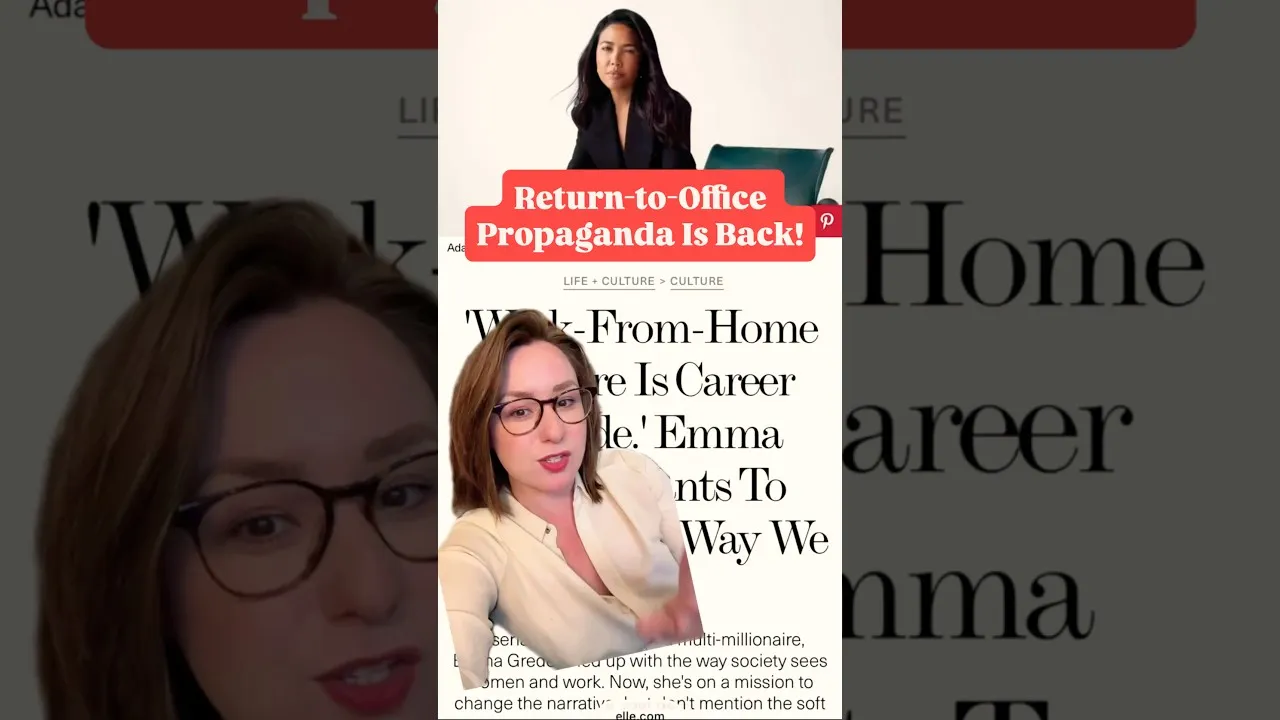
Return-to-Office Push Faces Data Scrutiny
A new wave of arguments pushing for a return to traditional office environments is gaining attention, this time framed through a feminist lens. An executive associated with Kardashian brands has authored a book suggesting remote work is detrimental to women’s careers. This viewpoint, while effective at generating buzz for her new book, is being met with strong disagreement from those who point to data supporting remote work’s benefits.
The core claim that remote work harms women’s careers is being challenged as factually incorrect. Numerous studies show that for jobs suitable for remote work, employees are often more productive and stay with their companies longer. Remote work is considered a highly competitive benefit for employees seeking better work-life balance.
Data Supports Remote Work Effectiveness
For roles that can be performed remotely, evidence suggests employees become significantly more effective. Productivity levels often increase, and employee retention rates see a notable rise. This makes remote work a powerful tool for companies looking to attract and keep talent in a competitive job market.
When focusing specifically on women, remote work has demonstrated a reduction in gender discrimination. This is a significant finding for female employees who may face bias in traditional office settings. The benefits extend beyond the workplace, impacting personal lives as well.
Commuting Hits Women Disproportionately
Women, on average, still handle a larger share of domestic responsibilities at home. This reality means that eliminating long and unnecessary commutes directly benefits women more than others. Saving hours each week previously spent traveling to an office can be redirected to personal or family needs.
The advantages seen with remote work often mirror those found in a four-day work week. Companies that have adopted a four-day schedule report that employees accomplish as much, if not more, in four days than they did in five. This also leads to higher employee satisfaction.
Four-Day Week Potential
A four-day work week offers a similar boost in productivity and happiness, similar to remote work. Theoretically, this model could be applied to nearly any job if employers were willing to adjust staffing. This offers another avenue for improving work-life balance without necessarily requiring full remote setups.
While the current narrative is being promoted by a prominent woman using feminist talking points, the broader push for return-to-office often benefits other groups. These include commercial real estate interests and certain male executives who may prioritize workplace presence over family time.
Who Really Benefits?
The primary financial beneficiaries of forcing employees back into offices are often those who own or manage commercial real estate. These entities profit from occupied office buildings. For some executives, particularly in fields like finance, law, and tech, the workplace is a central part of their identity, and they may resist changes that reduce their time there.
For instance, one company reported saving over $60,000 annually by eliminating its physical office space. This highlights a potential financial advantage for businesses that embrace remote or flexible work models. The current push, despite its glossy presentation, echoes older arguments that data does not support.
Market Impact
The ongoing debate over return-to-office policies has significant implications for commercial real estate values and the broader labor market. Companies heavily invested in office buildings face pressure to maintain occupancy, potentially influencing their strategies for attracting or retaining tenants. Conversely, businesses that offer remote or flexible work options may gain a competitive edge in attracting top talent.
This debate also affects employee morale and productivity. Data suggests that forcing employees back to offices against their preferences can lead to decreased job satisfaction and higher turnover. Understanding the factual basis for these policies is crucial for both employers and employees navigating the future of work.
What Investors Should Know
Investors in commercial real estate may need to monitor vacancy rates and the long-term viability of office-centric business models. Companies that can adapt to flexible work arrangements may prove more resilient. For investors in publicly traded companies, examining their remote work policies and employee satisfaction metrics can offer insights into operational efficiency and future growth potential.
The success of return-to-office mandates often hinges on factors beyond pure productivity, including company culture and management preferences. However, as data continues to emerge, the economic and social arguments for flexible work arrangements are becoming increasingly compelling. The pushback against the current return-to-office narrative is grounded in tangible benefits for both employees and employers, challenging the traditional workplace model.
The effectiveness of remote and hybrid work models will likely continue to be a key discussion point throughout the year, with potential impacts on employment trends and corporate real estate strategies.
Source: The Propaganda Continues (YouTube)