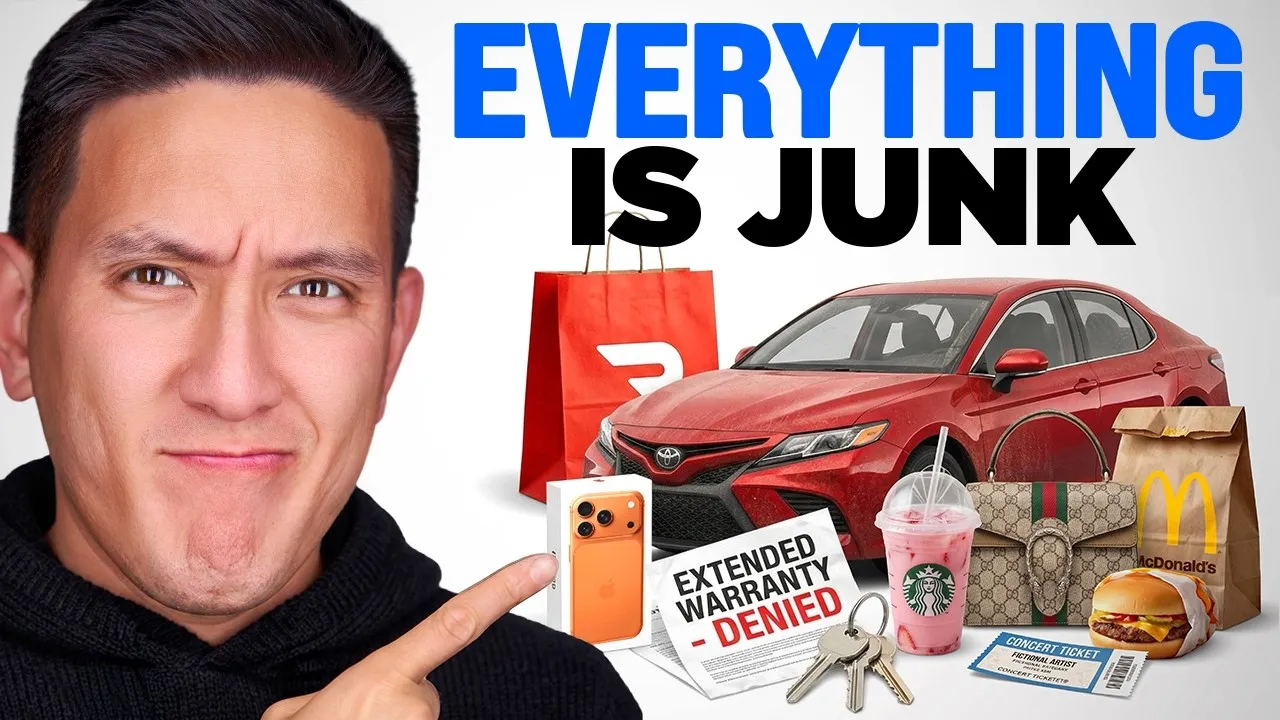
Inflation Erodes Value: 10 Purchases No Longer Worth Your Money
Since 2020, rising prices and shrinking product sizes have made many everyday purchases questionable. Inflation and ‘shrinkflation’—where companies reduce product size while keeping prices the same—have forced consumers to rethink their spending habits. This article examines ten categories where the value proposition has dramatically decreased, offering insights for smarter financial decisions in 2026.
Food Delivery Apps: A Costly Convenience
Food delivery apps like DoorDash and Uber Eats, once a novelty, are now financially draining. In their early growth phases, these services often subsidized delivery costs to attract users.
Today, however, the combined fees—delivery, service, bag fees, taxes—plus mandatory tips, significantly inflate the cost of your meal. Menu items on these apps can be 1 to 2 dollars, or even up to 30% more expensive than dining in.
As of April 2026, the average DoorDash order is commonly 30% to 40% pricier than eating at the restaurant. Even with a subscription service like DashPass, which costs $9.99 monthly, the overall expense remains high. For example, a Chipotle burrito that costs $15.35 in the app can reach $22.16 after fees and a tip.
Without DashPass, this same order could approach $29, more than double the original meal price. The practical alternative is to pick up your food yourself, eliminating these added costs.
New Cars: An Expensive Depreciation Trap
Buying a brand-new car and taking on monthly payments is becoming an unsustainable financial burden. The average new car price has climbed to around $50,000, with monthly payments averaging $750 in early 2026. This is a significant jump from a decade ago when payments were closer to $490 per month, often with lower interest rates and shorter loan terms.
High interest rates and vehicle prices have pushed many buyers into 7- or 8-year loans. This means financing a depreciating asset for longer than most people keep their cars. Consider a $50,000 car financed over 72 months at a 7% interest rate: you’d pay over $11,376 in interest alone.
By the time the loan is paid off, the car’s value could be cut in half. This situation can leave owners ‘underwater,’ owing more than the car is worth, especially in the first few years. The opportunity cost is substantial; investing that $750 monthly could potentially yield over $1.1 million in 30 years.
A more sensible approach is purchasing a 3- to 5-year-old used car, ideally with cash or a small loan. Most of the initial depreciation has already occurred, offering a 30% to 40% discount. Owning a reliable used car outright provides financial freedom that a new car payment cannot match.
Annual iPhone Upgrades: Diminishing Returns
The practice of upgrading your iPhone every year is a prime example of paying for minimal innovation. Apple, a highly profitable company, releases new models annually, encouraging frequent upgrades. However, the significant hardware and feature improvements seen in earlier iPhone generations have largely disappeared.
The differences between recent iPhone models, like the 14, 15, and 16, are often negligible. Unless you are upgrading from a much older device, like an iPhone 11 or 12, the benefits of a yearly upgrade are questionable.
With phones now costing over $1,000, holding onto your device for three to four years allows for meaningful upgrades without the constant expense. Resisting the urge to upgrade annually can save considerable money, preventing you from falling for marketing that emphasizes minor changes.
Actively Managed Mutual Funds: High Fees, Low Returns
Investing in actively managed mutual funds, where managers try to beat the market, often comes with high fees. These funds typically charge an expense ratio of 0.75% to 1.5% annually on your investment.
While some funds may temporarily outperform, many, like the ARK Innovation ETF, have shown significant underperformance compared to broad market indexes. Over five years, this specific ETF lost 40%, while the S&P 500 gained over 65%.
Data from S&P Global indicates that between 2005 and 2025, only a small percentage of actively managed funds consistently beat their benchmarks. Most funds, often in the 85-90% range, underperform. In contrast, low-cost, passively managed index funds like VOO, VTI, or IVV have expense ratios around 0.03%.
The difference in fees can be staggering over time. For instance, a $500,000 investment growing at 8% annually for 30 years could result in around $5 million with a 0.03% fee, but only $3.8 million with a 1% fee—a difference of $1.2 million, primarily due to fees.
Investors should review their 401(k)s and other investment accounts for high expense ratios, ideally looking for funds below 0.25% or 0.3%. Otherwise, consider switching to lower-cost alternatives.
Extended Warranties: Redundant Coverage
Extended warranties offered on electronics, such as laptops or TVs, are often an unnecessary expense. Many premium credit cards, like the Chase Sapphire Preferred or American Express Gold, automatically extend the manufacturer’s warranty by an additional year on eligible purchases at no extra cost. This means you might be paying for protection you already have.
These warranties often come with exclusions that may not cover all types of damage or repair. Retailers offer these warranties because they are high-margin products, preying on consumer anxiety about potential damage.
The reality is that many warranties are lost, forgotten, or expire before a product needs repair. It is often more financially sound to accept the risk and budget for potential repairs or replacements.
Wellness Products: Marketing Over Health
The wellness industry, now a multi-trillion dollar global market, often preys on consumer anxieties about health and well-being. Once a niche for simple self-care like face masks or baths, it now promotes overpriced items like $25 smoothies or $300 yoga sets. It also pushes supplements and injectables promising quick fixes for weight loss and health.
The industry sells the idea that expensive products are necessary for health. However, genuine well-being often comes from simple, consistent habits: daily walks, adequate sleep, a balanced diet of whole foods, and regular exercise.
These ‘boring’ activities are usually more effective and far less expensive than trendy wellness products. The wellness industry has become a shortcut for those seeking results without the effort.
Starter Homes: Renting is Often Cheaper
The concept of a starter home as an affordable entry into homeownership is increasingly out of reach. Ten years ago, the cost of owning was often comparable to renting, with mortgage rates around 4%. Today, with mortgage rates hovering around 6.5% to 7%, renting is financially advantageous in most major metropolitan areas.
Data from LendingTree indicates that homeowners with mortgages pay approximately 36.9% more monthly than renters. In expensive markets like the Bay Area, a $1.2 million starter home with 20% down and a 7% mortgage could cost around $8,500 monthly after taxes, insurance, and maintenance.
A comparable rental might cost $5,000, leaving homeowners paying an extra $3,500 monthly for the privilege of ownership. Unless a long-term commitment to a specific location is essential, renting and investing the difference is often the more financially prudent choice.
Status Spending: A Drain on Net Worth
Spending money on items purely for status—designer clothes, luxury cars, exclusive event access—does not build net worth. In today’s economy, the difference between being financially secure and struggling can be as little as a few hundred dollars per month saved or spent. Prioritizing purchases that do not contribute to financial health can have significant long-term consequences.
To assess if a purchase is driven by status, ask: ‘Would I still want this if no one else could see it?’ If the answer is no, the item is likely being bought to impress others rather than for personal value. This self-reflection can help distinguish genuine needs and wants from superficial spending. Focusing on building a solid financial foundation is more critical than projecting an image of wealth.
Fast Food: Price and Quality Gap Narrows
Fast food, once a budget-friendly option, has seen its prices rise significantly, closing the gap with casual dining. A McDonald’s Double Quarter Pounder meal, for instance, can cost close to $14. At this price point, the value proposition diminishes, especially when compared to healthier, potentially better-quality meals at local eateries for a similar cost.
While fast food prices have climbed, the quality difference between fast food and casual dining remains substantial. Paying $14 to $15 for a meal at a local restaurant often means getting fresh ingredients rather than pre-prepared, frozen items shipped from afar.
Pizza prices have also surged, with some large pies costing $40. Value options like Costco’s $1.50 hot dogs and $10 pizzas remain exceptions in an increasingly expensive fast-food market.
Concert Tickets: Astronomical Costs
The cost of attending concerts has become prohibitively expensive for many. Ten years ago, tickets for major artists typically ranged from $50 to $100. Today, these events can easily cost $200 to $400 or more, factoring in Ticketmaster fees, transportation, and on-site purchases.
Factors contributing to this price surge include pent-up demand following the pandemic and the normalization of high prices, partly influenced by tours like Taylor Swift’s Eras Tour. Aggressive fees from ticketing platforms like Ticketmaster—service fees, processing fees, facility fees—further inflate the final cost.
A $200 ticket can quickly become $275 after all added charges. A more affordable alternative is to attend shows by local artists or at smaller venues, offering a better experience for a fraction of the cost compared to mega-concerts in large stadiums.
Market Impact
Consumers are increasingly scrutinizing discretionary spending as inflation and rising costs impact budgets. The shift away from these previously valued purchases suggests a move towards more practical, value-driven choices. This trend could impact industries reliant on high-volume, lower-margin sales, pushing them towards either price reduction or innovation to justify costs.
What Investors Should Know
Investors should monitor companies in sectors experiencing declining consumer value perception. Food delivery services, automotive manufacturers focused on new vehicles, and electronics companies relying on frequent upgrades may face slower growth.
Conversely, companies offering value, such as used car dealerships, low-cost index funds, and businesses focused on essential goods or services, might see increased demand. The shift highlights the importance of cost-efficiency and genuine value in long-term investment strategies.
Upcoming Event: The Federal Reserve’s next policy meeting is scheduled for mid-December, where interest rate decisions could further influence consumer spending and investment trends.
Source: 10 Things That Are No Longer Worth Your Money (YouTube)