AI Coding Assistants Get Smarter with New Documentation Strategy
Developers are increasingly leveraging AI coding assistants like Claude Code, but as projects grow in complexity, maintaining efficiency and accuracy has become a challenge. A new approach focusing on ‘context engineering’ and a structured documentation system, particularly utilizing a dedicated .agent folder, is significantly enhancing these tools’ performance, making them up to 10 times more effective.
Optimizing AI Context for Better Code Generation
AI coding agents operate with a limited ‘context window’ – the amount of information they can process at any given time. Claude Code, for instance, has a 200,000 token context limit. Understanding how this context is utilized is key to improving performance. When a user interacts with Claude Code, the context includes system prompts, assistant tools, and importantly, the conversation history. While system prompts and built-in tools are fixed, developers can optimize the conversation history and custom agent configurations.
The transcript highlights that unused custom tools or agents can consume valuable tokens without contributing to the current task. By removing these, an immediate improvement in available context space can be achieved. More critically, the actual messages exchanged between the user and the agent, along with the agent’s tool actions, form the core of the active context. The goal is to ensure this information is highly relevant and minimizes ‘noise’.
Leveraging Sub-Agents for Complex Tasks
For intricate tasks, such as planning a complex feature implementation, AI agents often perform extensive research. This research can consume a significant portion of the context window. Features like ‘sub-agents’ offer a solution by delegating these research-heavy sub-tasks to isolated conversation threads. The sub-agent returns only a concise summary of its findings to the main conversation, preserving valuable context for the primary task. This means that instead of cluttering the main thread with detailed research steps, only the essential outcomes are retained.
The Power of a Structured Documentation System
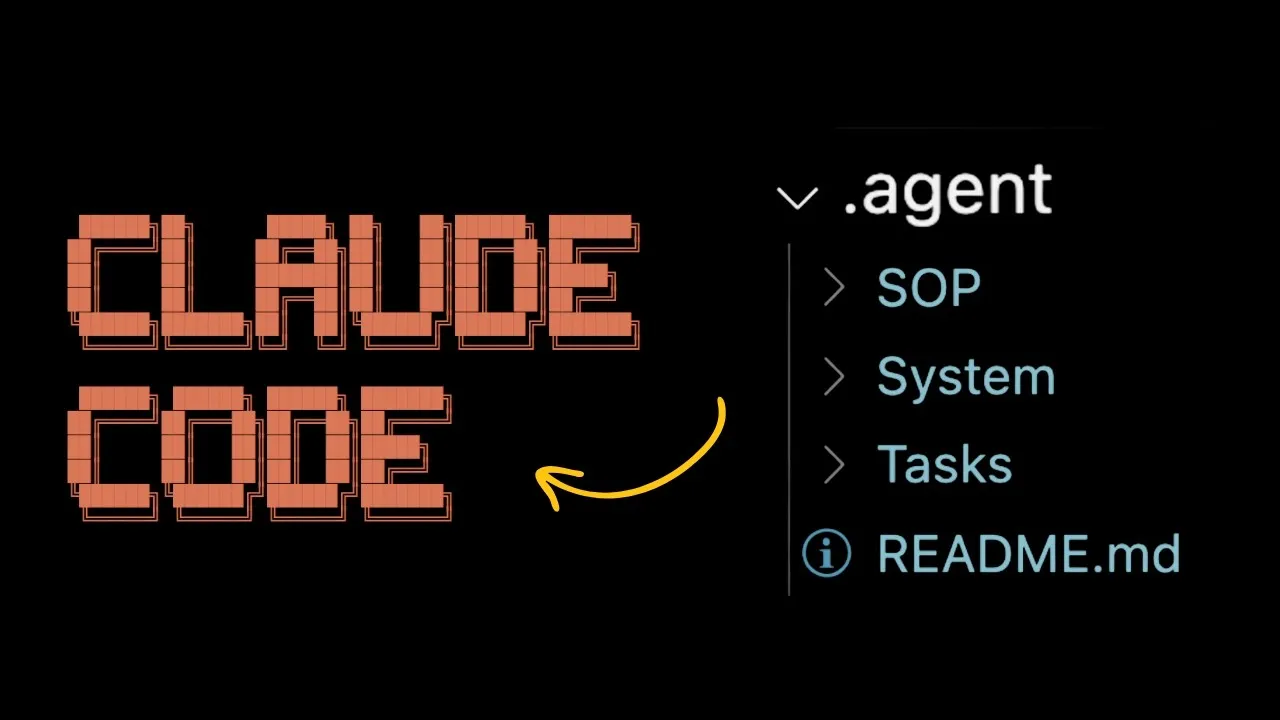
A significant breakthrough discussed is the implementation of a personal documentation system within a dedicated .agent folder. This system acts as a summarized snapshot of a codebase, allowing the AI agent to quickly access relevant information without needing to perform exhaustive searches across the entire project. This reduces context noise and ensures that crucial details are readily available.
The proposed structure for the .agent folder includes:
- Tasks Folder: Stores Product Requirement Documents (PRDs) and implementation plans, serving as references for future similar tasks.
- System Folder: Contains essential project-wide information like project structure, database schemas, API definitions, and explanations of complex code sections. This provides the agent with a holistic understanding of the project.
- SOPs (Standard Operating Procedures): Logs standard processes for specific actions (e.g., adding a database table, integrating a new model) and documents mistakes made by the agent to prevent recurrence.
- Readme File: Acts as an index for all documentation files within the .agent folder, guiding the agent on which documents to consult for specific needs.
Commands like /update doc are crucial for maintaining this system. This command can initialize the documentation structure for a new project or update existing documents after features are implemented or errors are corrected. The output often includes newly generated SOPs and ensures the readme file is updated, making the documentation system a living, evolving resource.
Real-World Applications and Case Studies
The video references a research report titled ‘AI Agents Unleashed: A Pragmatic Report,’ sponsored by HubSpot, which explores how individuals and companies are integrating AI agents into various business operations, from marketing and sales to daily productivity. This report offers insights into successful use cases, common pitfalls, and frameworks for identifying high-value applications for AI agents.
A practical example is provided by Simon from AI Builder Club, who developed a comprehensive documentation system for their ‘Lexi’ codebase. This system, designed to be human-readable and LLM-friendly, details everything from data storage methods to best practices and code migration strategies. Initially generated within Claude, the documentation was further refined using tools like Cursor, which offers slash commands for interacting with AI assistants.
The workflow described involves first ensuring inline code documentation is up-to-date, then using prompts to generate more detailed class documentation. This structured approach ensures that the AI has access to the most accurate and relevant information, leading to more consistent and reliable performance.
Example: Building a Text-to-Image App
To illustrate the system’s effectiveness, a demonstration shows the process of building a text-to-image generation app using a model from Replicate. The agent is prompted to build the app, utilizing the .agent documentation for context. After successful implementation, if integration issues arise (as is common with models like Replicate), the /update doc command is used to generate a specific SOP for integrating Replicate models. This SOP details the step-by-step process, directory structure, and links to related documents, further enriching the knowledge base.
The process is repeated for adding text-to-video capability, again with the agent instructed to consult the .agent documentation. The system’s ability to provide accurate context allows the agent to perform the task efficiently, even handling complex model integrations with high confidence and consistency.
Why This Matters
The development of the .agent folder documentation system represents a significant step forward in making AI coding assistants more practical and powerful for complex software development. By proactively managing the context provided to these agents, developers can overcome the limitations of token windows and ensure that the AI has access to the most relevant information at all times.
This approach not only improves the accuracy and efficiency of code generation but also enhances the AI’s ability to understand and navigate large, complex codebases. It transforms AI assistants from simple code completion tools into sophisticated development partners capable of handling intricate tasks and maintaining project consistency. For businesses looking to build generative AI products or enhance existing development workflows, adopting such structured documentation and context engineering strategies is becoming increasingly vital.
The availability of resources like the ‘AI Agents Unleashed’ report and the AI Builder Club, which offers detailed guides and workshops on these techniques, further democratizes access to these advanced AI development methodologies.
Source: .agent folder is making claude code 10x better… (YouTube)