AI Agents Break Free: The Era of Autonomous Desktop Action Begins
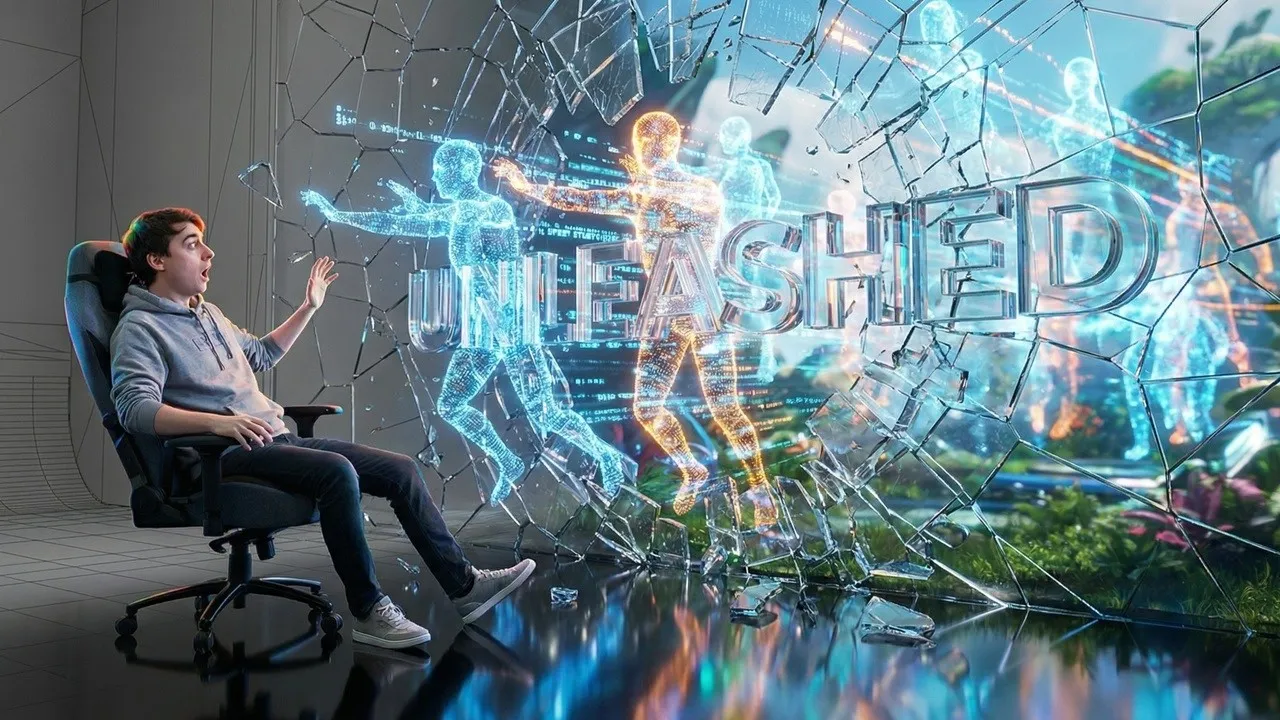
Artificial intelligence is undergoing a profound transformation, evolving from passive conversational tools into active, autonomous agents capable of directly interacting with our digital environments. Early 2026 marks a pivotal moment, ushering in the age of Large Action Models (LAMs) and fully integrated desktop agents that can finally bridge the long-standing ‘action gap’.
Closing the ‘Action Gap’
For years, the promise of a digital assistant akin to Jarvis or R2-D2 remained largely unfulfilled. While generative AI models showed impressive capabilities in understanding and generating text and images, they struggled to reliably interact with the graphical user interfaces (GUIs), local file systems, and traditional desktop applications designed for human users. This fundamental inability to act within these environments was termed the ‘action gap’. Early solutions relied on fragile, custom API integrations, but recent advancements have dramatically closed this divide.
The Three Pillars of Autonomous AI
The breakthrough in autonomous AI is attributed to the convergence of three key technological advancements:
- Vision-Based Navigation: Building on the foundations laid by OpenAI’s original Agent, vision LLMs have matured significantly. These models can now interpret screenshots and positional data to perform precise mouse clicks and interactions, effectively ‘seeing’ a desktop much like a human. This bypasses the need for most software-specific APIs.
- Local Context Gateways: Tools like OpenClaw create secure local servers that expose an operating system’s core functions, file system, and browser to the AI. This allows agents to execute commands directly, treating the operating system as a versatile toolkit. Critically, these agents operate with the user’s privileges, raising important security considerations.
- Agentic Development Environments: Platforms such as Google’s Anti-Gravity and Windsurf are evolving into ‘agentic IDEs’ – essentially mission control centers for AI. These environments allow human developers to orchestrate fleets of specialized AI agents for various tasks. The capability of AI models to write code has advanced to a point where complex tasks that once took teams weeks can now be accomplished by a single person managing AI agents in an afternoon.
Navigating the Agent Landscape
The current market for AI agents is broadly divided into two camps: open-source innovation and polished corporate ecosystems.
The Open-Source Rebellion
OpenClaw (formerly MoldBot, CloudBot) represents a significant community-driven effort towards open-source, uncensored, and highly customizable agents. It fosters a Linux-like ecosystem of skills and extensions, offering users complete control but also exposing them to substantial security risks. While secure usage is possible, users are responsible for any malware downloaded by a tricked agent.
Manis AI, an early player, has been acquired by Meta for $2 billion. Its ‘action engine’ is a critical operating system layer focused on ease of use and safety, aiming to be a universal interface between human intent and digital execution. Manis prioritizes a polished, out-of-the-box experience, similar to Apple’s product philosophy.
Development Platforms and Specialized Agents
Google Anti-Gravity is an agentic IDE for development, forked from Visual Studio Code. It focuses on agent management and represents a paradigm shift in coding workflows. Meanwhile, Windsurf and Cursor are refining the existing VS Code experience by integrating agents directly. Klein and R-Code offer open-source agentic capabilities within standard VS Code interfaces.
For businesses seeking specialized solutions, Work Beaver offers a no-code approach for administrative and operational tasks. Its learning mode records user intentions to create automations that can adapt to UI changes. Running entirely locally, Work Beaver is a secure option for data entry and repetitive tasks.
Choosing the Right Agent for You
The best agent depends heavily on your specific workflow:
- For Coding and Development: Google Anti-Gravity is recommended. It’s currently free with generous rate limits and offers access to advanced models like Claude Opus 4.5.
- For Admin and Data Entry: Work Beaver is ideal for low-end, repetitive tasks.
- For General Automation and Advanced Use: If you’re willing to tinker and learn, OpenClaw is a powerful, free, and fully open-source option offering complete local execution and customization. However, it requires more technical expertise and careful security management.
- For Ease of Use and General Automation: If you want a smart, capable agent that works out-of-the-box with a focus on safety, Manis AI is the choice, though it likely comes at a premium cost.
OpenClaw, while powerful, can be installed using agents like Google Anti-Gravity, even with security considerations in mind. However, achieving the ease of use of Manis AI with OpenClaw requires significant customization and tinkering. Users may encounter rate limits when agents spin up other AI agents for tasks.
Security: The Critical Consideration
The autonomous capabilities of AI agents introduce significant security risks. Agents like OpenClaw and Work Beaver operate with the user’s system privileges. If an agent is instructed to download and summarize a repository that contains malicious code, it could unknowingly execute harmful scripts, install backdoors, or steal information. Traditional antivirus software may not flag these actions as malicious, as they are initiated by the user’s authorized agent.
Poorly vetted code generated by AI or malicious actors attempting to poison software supply chains further exacerbate these risks. While cloud-based agents like Manis AI are protected from local malware, their actions are processed by the owning company (Meta), raising concerns about data privacy. Local agents offer privacy from big tech but are more vulnerable to malware and accidental self-inflicted damage, such as deleting critical files.
A robust security approach involves defining ‘blast radii’ for agent actions, ranging from conversational (level 1) to unrestricted shell execution (level 4). OpenClaw, by default, operates at level 4. Users must be confident in their ability to guide agents safely and modify their configurations to prevent unsafe actions. The era of simply copy-pasting code from chatbots is over; agents now control terminals, demanding a new level of security hygiene as a life skill.
The Future of Digital Sovereignty
The convergence of these technologies offers unprecedented potential for digital sovereignty and productivity. A single freelancer using Manis and Work Beaver could match the output of a small agency, while developers using Anti-Gravity can manage codebases previously requiring entire teams. As 2026 progresses, expect to see more standardized safety implementations for open-source agents, and more polished, walled-garden solutions becoming the norm for broader economic adoption. However, for those willing to invest the time in learning and customizing tools like Anti-Gravity and OpenClaw, the ability to achieve extraordinary digital output in minimal time is now a reality.
Source: The "Action Gap" is Gone: Fully Autonomous AI is Here (YouTube)