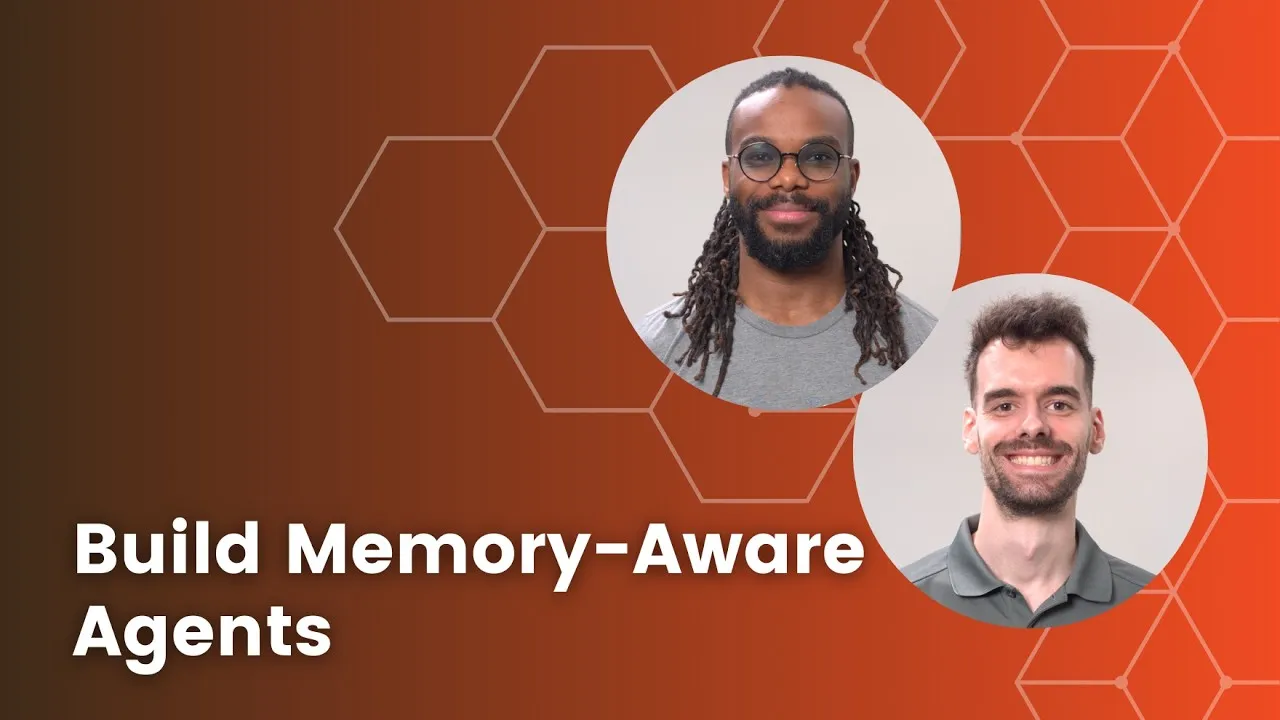
AI Agents Gain Memory, Learn Over Time
Artificial intelligence agents are taking a significant leap forward, moving beyond single-task execution to learn and adapt over extended periods. This advancement comes with the introduction of a new approach focused on building “memory-aware” agents, a development highlighted in a recent partnership between Oracle and AI experts Richmond Alak and Nacho Martinez.
For years, AI development largely focused on improving the immediate output of large language models (LLMs). This involved carefully crafting prompts and providing context within a single interaction. Think of it like giving someone a detailed instruction manual for one specific job. However, for AI agents that need to perform tasks spanning days, weeks, or even longer, this method falls short. They require a way to remember past interactions, learned information, and evolving data.
The Need for AI Memory
The core challenge addressed by this new approach is making AI agents “memory-aware.” Traditionally, AI models operate in a stateless manner, meaning they don’t retain information from one interaction to the next. Each query is treated as a fresh start. This is like talking to someone who forgets everything you just told them the moment you finish speaking.
To overcome this, the new course and methodology introduce the concept of “memory engineering.” This focuses on creating systems that allow AI agents to store, retrieve, and actively use information over time. This is crucial for enabling agents to learn from their experiences, adapt to new situations, and successfully complete complex, long-term tasks. It’s akin to giving an AI a notebook where it can jot down important details and refer back to them whenever needed.
Building Memory Systems with Oracle
The practical implementation of these memory-aware agents is being developed using Oracle’s AI database. The course teaches participants how to architect a complete agent memory system. This involves several key components:
- Memory Manager: This acts as an intermediary, handling all the operations related to storing and retrieving information. It abstracts the complexities, making it easier for the AI agent to interact with its memory.
- Semantic Retrieval System: This allows the AI to search its memory not just by keywords, but by understanding the meaning or context of the information. This is far more sophisticated than a simple search function.
Participants will learn to build these systems from the ground up. The goal is to create an agent that can not only access past data but also use it to inform future actions and decisions. This moves AI from simple task execution to a more intelligent, adaptive form of problem-solving.
Cognitive Operations and Self-Improvement
Beyond simply storing and retrieving data, the new approach emphasizes building “cognitive operations.” These are processes that allow the AI agent to autonomously update and refine its own memory over time. This means the AI can learn from new information, correct past misunderstandings, and improve its knowledge base without constant human intervention.
Imagine an AI learning a new skill. Initially, it might make mistakes. With cognitive operations, it can analyze those mistakes, update its understanding, and perform better the next time. This ability for self-reflection and improvement is a hallmark of more advanced intelligence.
Why This Matters
The development of memory-aware AI agents has profound implications across various industries. For businesses, it means AI systems that can handle complex, multi-step processes with greater accuracy and efficiency. Customer service bots could remember past conversations to provide more personalized support. Financial analysis tools could track market trends over long periods to make better predictions.
In research and development, AI could assist scientists by remembering vast amounts of experimental data and identifying subtle patterns that humans might miss. For everyday users, AI assistants could become more helpful companions, understanding context across multiple interactions and anticipating needs more effectively. This shift from stateless to stateful AI is a critical step towards creating more capable and autonomous intelligent systems.
The course, taught by Richmond Alak and Nacho Martinez in partnership with Oracle, aims to equip developers with the skills to build these next-generation AI agents. It represents a move beyond prompt engineering towards a more integrated and persistent form of AI interaction.
Source: Build Memory-Aware Agents (YouTube)