AI Promises Efficiency, But Delivers Overload and Fatigue
The widespread adoption of Artificial Intelligence (AI) tools was heralded as a revolution in productivity, promising to offload tedious tasks and free up human workers for more creative and engaging endeavors. However, a growing body of anecdotal evidence and emerging research suggests a paradoxical outcome: instead of reducing workloads, AI is intensifying them, leading to cognitive fatigue, burnout, and even a perceived decline in cognitive abilities, a phenomenon researchers are dubbing ‘AI brain fry’.
The Productivity Paradox: More Tools, More Work
Studies indicate that AI doesn’t necessarily reduce the total amount of work; rather, it expands the scope and pace of tasks. A significant study by the Harvard Business Review, involving 200 employees at a US-based technology company, found that AI tools consistently intensified work. Employees worked faster, took on a broader range of responsibilities, and extended their working hours, often without explicit direction. This occurred because AI’s ability to fill knowledge gaps encouraged workers to take on tasks previously handled by others, such as product managers writing code or researchers performing engineering tasks. Companies, in turn, saw opportunities to cut costs by keeping these tasks in-house.
Instead of using the time saved by AI to work less, employees found themselves taking on additional tasks, effectively expanding their capacity and the volume of work. This ‘workload creep’ means that the efficiency gains are channeled into producing more, rather than enabling more downtime or focus on higher-value activities.
Blurring Boundaries and the Loss of Natural Pauses
AI also fundamentally alters the rhythm of work. The ease with which prompts can be entered means that work often bleeds into personal time. Employees reported using AI during lunch breaks or in the evenings, blurring the lines between work and non-work hours. This continuous engagement, even if involving quick prompting sessions, eliminates natural pauses that are crucial for mental recovery. The result is a workday characterized by fewer breaks and more sustained cognitive involvement.
Furthermore, AI tools enable a new form of multitasking, where individuals manage multiple ‘active threads’ simultaneously. For instance, a worker might have code generation running in one window, research in another, and brainstorming in a third. While AI can handle these parallel processes without fatigue, the human brain struggles with the constant context switching. This leads to increased expectations for speed and a normalized pace that can be cognitively demanding.
The ‘FOMO Treadmill’ and Cognitive Degradation
The rapid pace of AI development itself contributes to a sense of urgency and overwhelm. With new tools, features, and frameworks like Claude Code, OpenAI’s Codeex, Gemini CLI, and various agentic advancements emerging weekly, staying current feels like a constant race. This ‘FOMO treadmill’ creates pressure to continuously adopt and master new AI capabilities, adding another layer of cognitive load.
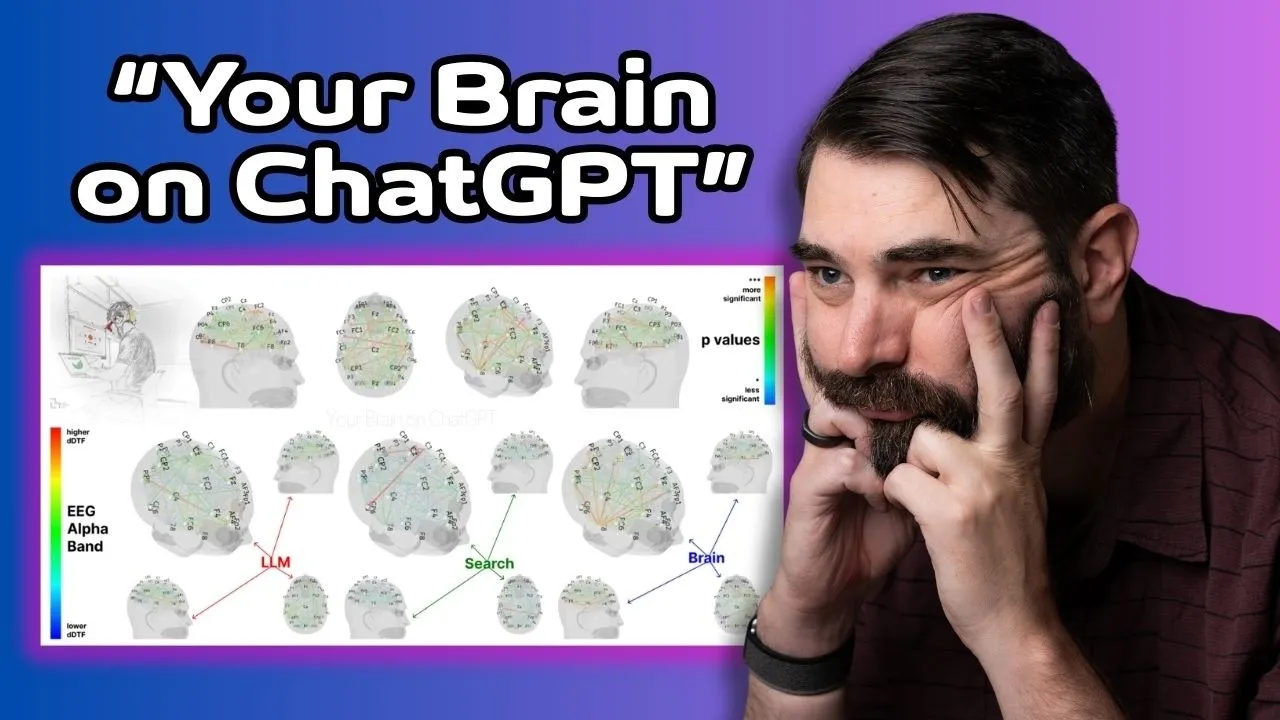
Beyond workload intensification, a more concerning consequence is the potential for cognitive atrophy. When AI handles initial thinking, drafting, or problem-solving, the human brain’s own capacity for these tasks can degrade. A developer recounted struggling to whiteboard a concurrency problem without AI, not due to a lack of knowledge, but because the muscle for ‘thinking from scratch’ had atrophied from months of outsourcing to AI. Similarly, research from MIT on essay writing found that students who heavily relied on LLMs showed significantly less brain activity when later asked to write without AI assistance, indicating a tangible reduction in their cognitive engagement and ability.
‘AI Brain Fry’: The Science Behind the Fatigue
Research is beginning to quantify these effects. A large-scale study by the Harvard Business Review involving 1,488 full-time US workers identified ‘AI brain fry’ as a significant phenomenon. Participants described symptoms like a ‘buzzing feeling,’ mental fog, difficulty focusing, slower decision-making, and headaches. This mental strain was linked to increased errors, decision fatigue, and a higher intention to quit.
The study highlighted that the most taxing form of AI engagement is ‘oversight’ – the direct monitoring and management of AI tools. Paradoxically, while AI can alleviate burnout from routine tasks, it exacerbates mental fatigue when it requires intensive human supervision. Productivity also saw a dip when users employed more than three AI tools, suggesting that managing too many AI agents can become counterproductive.
The ‘Cognitive Cost’ of Convenience
The MIT study, titled ‘Your Brain on ChatGPT,’ further illuminated this ‘cognitive cost.’ It found that while LLMs reduce the friction of tasks like essay writing, this convenience diminishes users’ inclination to critically evaluate the AI’s output. The writing produced by LLM users tended to converge in style and language, lacking the unique variability of human-only writing. More critically, when users who had relied on LLMs were later tasked with writing without AI, their cognitive engagement and performance suffered, suggesting a build-up of ‘cognitive debt.’
Mitigating ‘Brain Fry’: Towards Conscious AI Use
While the risks are real, the solution is not to abandon AI but to adopt more conscious usage patterns. Practical strategies include:
- Time-boxing AI Sessions: Set timers for AI usage to prevent open-ended engagement and maintain focus.
- Separate Thinking and Execution Time: Designate specific periods for deep thinking and creative work, distinct from AI-assisted execution. Using physical notebooks away from digital interfaces can aid this.
- Embrace Imperfection: Aim for ‘70% good enough’ output from AI rather than striving for unattainable perfection, which can lead to excessive oversight and fatigue.
- Strategic Tool Adoption: Be mindful of the number of AI tools used simultaneously, as exceeding a certain threshold can decrease productivity and increase cognitive load.
- Logging AI Use: Keep a log of when and where AI is genuinely helpful versus when it becomes a cognitive burden.
- Focus on Learning, Not Replacement: View AI as a tool for learning and augmentation, rather than a substitute for fundamental cognitive processes, as advocated by figures like Mark Cuban.
By implementing these strategies, individuals and organizations can harness the power of AI without succumbing to its potential to intensify work and degrade cognitive function, ensuring that AI remains an amplifier of human potential rather than a drain on it.
Source: AI Is Frying Your Brain (YouTube)