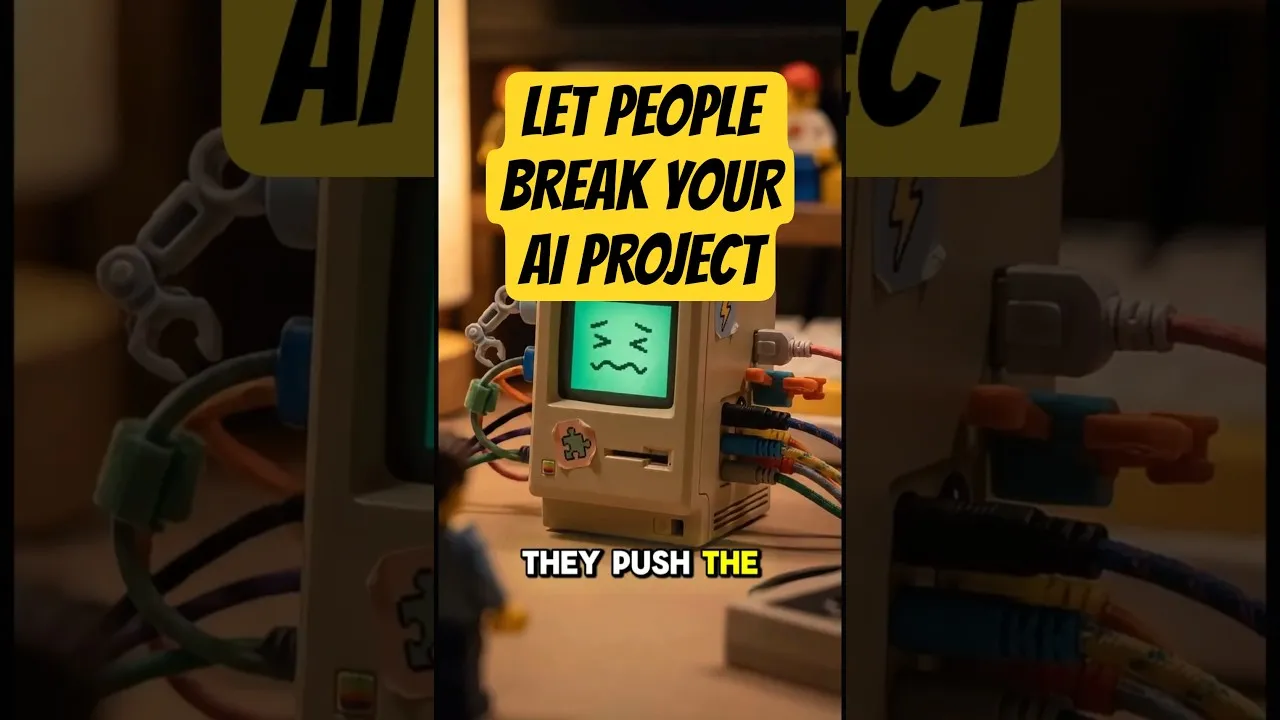
Unleash User Feedback for Rapid AI Advancement
In the fast-paced world of artificial intelligence development, a counterintuitive strategy is emerging as the most effective path to success: actively encouraging users to “break” your AI project. This approach prioritizes real-world interaction and iterative feedback over polished, theoretical perfection, arguing that user-driven discovery is the quickest route to robust and reliable AI systems.
From Slide Deck Dreams to User Realities
Imagine building a sophisticated support chatbot. On paper, the design is flawless. It’s programmed to answer common queries with polite efficiency and to skillfully escalate complex or unusual cases. This vision, perfect for a presentation or a product roadmap, often crumbles when faced with actual users. Real people, with their unpredictable questions and unique interaction styles, will inevitably push the boundaries of what the AI was designed to handle. They might ask questions the developers never anticipated, deviate from the intended conversational flows, or exploit loopholes the team hadn’t considered.
The Power of Imperfect Prototypes
This isn’t a sign of failure; it’s the intended outcome. The core principle is that prototypes don’t need to be visually stunning or feature-complete to be valuable. Their primary purpose is to be usable, allowing for tangible interaction. Once users can engage with a functional, albeit imperfect, version of the AI, the development team transitions from making assumptions to gathering concrete data. This empirical learning process is invaluable. In the rapidly evolving landscape of AI, delaying deployment for weeks or months to achieve a polished build can render the project obsolete before it even launches. Prototypes serve not to impress stakeholders, but to reveal the unvarnished truth about the AI’s performance in real-world scenarios.
Iterative Improvement: The AI’s Secret Weapon
The philosophy behind this user-centric approach is that small, timely corrections based on actual usage are far more efficient and cost-effective than extensive, late-stage rebuilds. By exposing the AI to a diverse range of user inputs and behaviors early on, developers can identify and address critical flaws, usability issues, and unexpected behaviors before they become deeply embedded in the system. This iterative cycle of deployment, feedback, and refinement allows the AI to evolve organically, adapting to user needs and real-world complexities.
Why This Matters
The implications of this user-driven development model are significant for the entire AI ecosystem. For businesses, it means faster time-to-market for AI-powered products and services, reducing the risk of investing heavily in solutions that don’t meet user expectations. It fosters a culture of continuous improvement, ensuring that AI applications remain relevant and effective as user needs and technological landscapes shift. For developers, it offers a more practical and less frustrating development process, focusing on solving actual problems rather than chasing theoretical perfection. Ultimately, this approach leads to AI solutions that are more resilient, user-friendly, and impactful in their intended applications, whether it’s customer service, data analysis, or creative content generation.
By embracing the chaos of real-world user interaction, AI projects can accelerate their learning curve, mitigate risks, and deliver more robust and valuable solutions. The message is clear: don’t fear user feedback; leverage it as the ultimate testing ground for your AI innovations.
Source: Why You Need Users to Break Your AI Project (YouTube)