AI Clones Codebase in 2 Hours, Reshaping Software Development
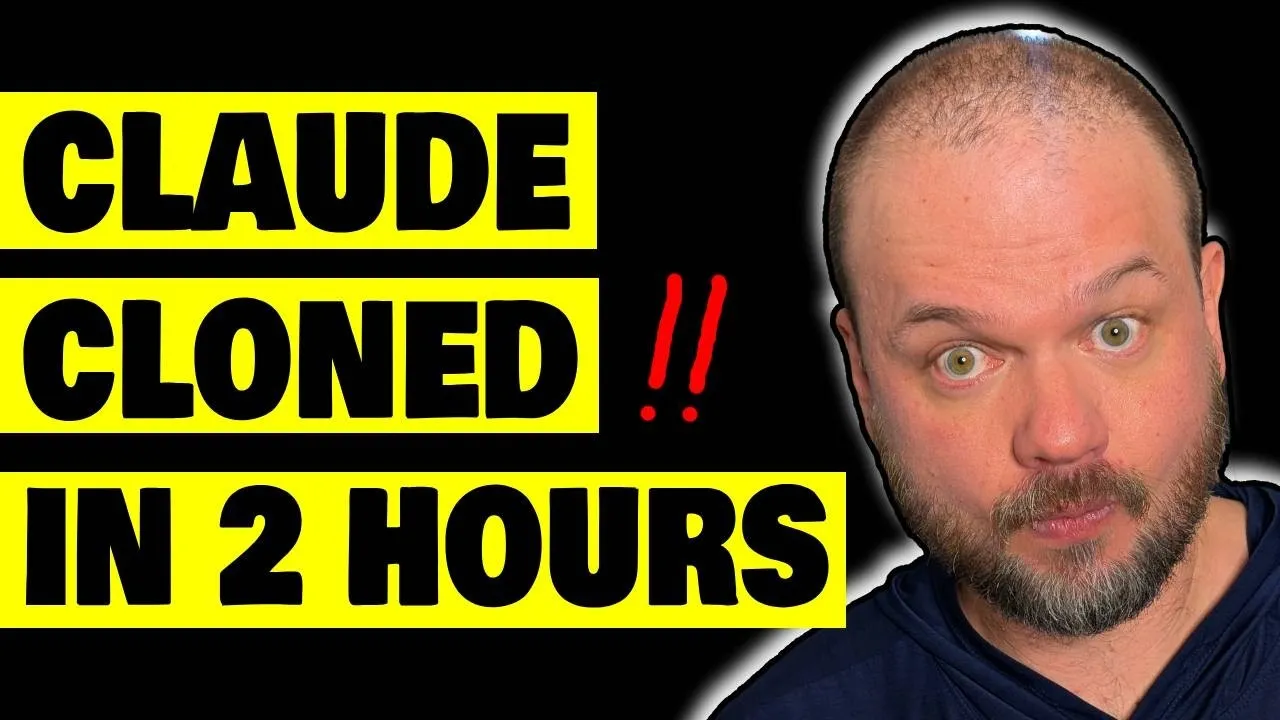
The world of artificial intelligence saw a stunning development recently when a complex software project, Claude Code, was reportedly recreated and open-sourced in just two hours. This rapid duplication, dubbed ‘Claw Code,’ has sent shockwaves through the tech industry, highlighting the accelerating power of AI in software development and raising questions about the future of coding jobs.
The Accidental Leak and Rapid Response
The saga began when Anthropic, the company behind Claude Code, updated its AI model. During this update, a significant portion of Claude Code’s source code was accidentally leaked. Within 48 hours, the internet’s AI community had not only extracted the leaked code but also copied and adapted it numerous times. Anthropic responded with a wave of Digital Millennium Copyright Act (DMCA) takedown notices, attempting to reclaim their intellectual property.
However, this aggressive response inadvertently spurred a new creation. A developer named Sigrid Jin, recognizing the potential implications and the legality of recreating functionality without using the original code, embarked on a ‘clean room’ development process. This method involves understanding a software’s functions and features and then rebuilding them from scratch using entirely new code, thereby avoiding copyright infringement.
‘Clean Room’ Development Goes Hyperdrive with AI
Traditionally, ‘clean room’ development is a meticulous, often lengthy process involving separate teams to analyze and then independently recreate software. This ensures no proprietary code is directly copied. Jin, however, utilized AI tools, specifically a workflow layer called ‘Oh My CodeX’ (OMx) built on OpenAI’s open-source Codex model. This AI-powered approach allowed him to achieve in two hours what might have previously taken months.
The result, Claw Code, is a Python rewrite of Claude Code that mirrors its functionality. It quickly became the fastest-growing open-source project on GitHub, reaching over 50,000 stars in just two hours after its release. The project is now available under the permissive MIT license, allowing for wide use and modification.
Why This Matters: The Future of Software Creation
The creation of Claw Code by AI in such a short timeframe has profound implications for the software development industry. It demonstrates that AI can not only assist in writing code but can also independently reverse-engineer and reimplement complex systems. This raises concerns for some about job security, as AI may soon perform tasks previously requiring highly skilled human developers.
However, the creator of Claw Code, Sigrid Jin, emphasizes a different perspective. He argues that the true innovation isn’t the code itself, but the AI system that orchestrated its creation. He describes a process where AI agents, coordinated through a system called ‘Clawhip,’ can take high-level instructions via simple chat interfaces (like Discord), break down tasks, write, test, and fix code autonomously. The human role shifts from direct coding to system design and oversight.
Jin suggests that the future value will lie not in the ability to write code, but in the skills of architectural clarity, task decomposition, system design, and understanding what needs to be built. As AI handles the ‘how,’ humans will focus more on the ‘what’ and ‘why.’ This could lead to a future where a single individual, by directing AI agents, can achieve the impact previously requiring large teams or even entire companies.
Anthropic’s Response and the DMCA Controversy
Anthropic’s handling of the leaked code also drew criticism. Their initial broad DMCA takedown requests reportedly affected repositories that were not infringing on their copyright, leading to accusations of overreach. The company later retracted some of these notices, acknowledging that their network-wide process had mistakenly targeted legitimate projects. This situation, ironically, highlighted the power of open-source collaboration and the limitations of traditional IP enforcement in the face of rapid AI advancement.
The incident also revealed a previously unknown ‘undercover mode’ within Claude Code, designed to allow the AI to make changes to repositories without attributing them to Anthropic. This feature, leaked during the process, suggests Anthropic was exploring ways to use AI for stealthy development contributions.
A New Era for Developers
The rapid AI-driven recreation of Claude Code is more than just a technical feat; it’s a signal of a significant shift. The gap between what can be built and who can build it is rapidly closing. While some developers may fear obsolescence, experts like Jin argue that the most valuable skills will evolve. Instead of focusing on manual coding, developers will need to excel at designing AI systems, decomposing complex problems, and providing the strategic direction that AI agents will execute. The future of software development appears to be one where human creativity guides powerful AI collaborators, enabling unprecedented levels of innovation and impact.
Source: Claude Code Cloned in 2 hours…. (YouTube)